Plastic waste has reached some of the planet’s most remote environments, from the frozen waters of Antarctica to tropical coastlines and densely populated communities in developing countries. The documentary Homo Plastic traces this global spread, examining how a material once associated with technological progress has become a source of environmental contamination, with potential consequences for human health and other forms of life. Directed by Julio Pérez del Campo and narrated by the renowned Spanish palaeontologist Juan Luis Arsuaga, the film is available on Movistar Plus.
The documentary follows the movement of plastics, microplastics and nanoplastics through vulnerable ecosystems, travelling to locations including the coasts of Hong Kong and Bangladesh and examining the conditions under which plastic waste accumulates. The materials contain more than 10,000 chemical substances, including carcinogens and endocrine disruptors, although the long-term health effects of microplastic exposure remain incompletely understood. Pérez del Campo argues that the issue extends beyond environmental damage to include social inequalities and the circumstances in which communities are exposed to waste.
“It is a fundamental and indispensable material in our lives; the problem is how we use it,” the director told El País, which reported on the documentary. He said he had chosen the subject because he expected it to become increasingly important over the coming decades, while believing that its full implications, particularly the social consequences alongside the environmental ones, had not received sufficient attention.
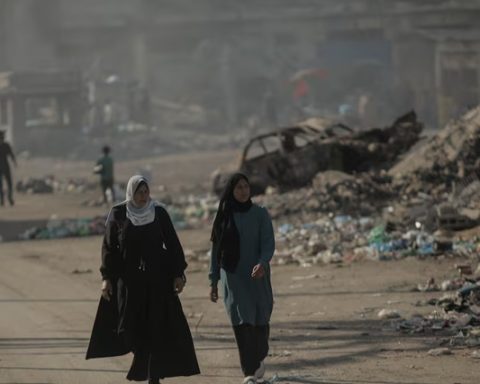
Some of the film’s most disturbing sequences were recorded at the Dandora rubbish dump in Nairobi, Kenya, which has exceeded its capacity by several times and has long posed serious problems for surrounding communities. The site is controlled by criminal groups, and the documentary crew had to enter clandestinely to film there. Schools and homes stand close to the dump, exposing residents to potential toxic hazards from the accumulated waste.
“It is a place where the police will never come looking for you; if something happens, it is very difficult for them to find you,” Pérez del Campo said, describing the risks associated with filming at the site.
Dandora also illustrates the unequal distribution of the consequences of global consumption. Developing countries must contend with their own discarded materials as well as waste originating in Western countries, while poverty forces some residents to depend on rubbish collection for their livelihoods. The documentary presents this combination of imported waste, local environmental exposure and economic hardship as a central part of the plastic pollution problem.
Pérez del Campo, whose previous documentary work has included social issues in Gaza and central Africa, also takes the film beneath the ocean’s surface. The result combines investigative social documentary with nature filmmaking, recording marine environments and the behaviour of whales. The director, who trained as a biologist, said the experience allowed him to explore a field in which he had not previously worked professionally.
“I had never filmed nature at a professional level before, nor had I spent time with whales analysing their behaviour,” he said, describing nature documentary-making as a demanding genre with extensive technical and practical requirements.
The film also addresses the limits of current understanding of microplastics. Because research into the subject is relatively young, Pérez del Campo believes public awareness has not kept pace with the scale of the problem. He compares the situation to the historical experience of tobacco consumption, when the risks were not widely recognised until many years after the product had become commonplace.
“It is something similar to what happened to us with tobacco in the past. At the time, people did not see that it could generate such a major problem, and when they realised many years later, it was often already too late,” he said.
Among the practices he identifies as particularly problematic is the use of single-use plastic packaging, including individual portions common in the tourism industry and in developing countries. His argument is not that plastic itself should be abandoned, but that unnecessary consumption and the disposal of products designed for brief use must be addressed.
Pérez del Campo sees public education as one means of changing behaviour. He recalls that in Spain four decades ago, people routinely threw rubbish and cigarette packets from car windows or discarded them on the ground, practices that would now provoke widespread disapproval. He argues that attitudes towards plastic waste can also change if people understand the consequences of their actions.
Legislation, he believes, must accompany education. “We should be stricter. If all single-use plastics that are not absolutely and radically essential were banned outright, it would completely change the situation we are in,” he said. He added that such a measure was not a priority on the political agenda of any country, in his assessment.
The director is also concerned that the problem receives insufficient attention in a society characterised by high consumption and an overwhelming volume of information. Environmental issues of this kind, he said, can remain outside the content people encounter through digital platforms, leaving them largely absent from public awareness.
For Pérez del Campo, the failure to confront the issue is particularly troubling when people either ignore the evidence or recognise the problem without taking action. The documentary seeks to make the consequences visible by moving between remote natural environments and communities living beside accumulated waste.
His previous work has addressed other humanitarian and political crises. In 2019, Pérez del Campo and Carles Bover won the Goya award for best documentary short film for Gaza, which portrayed the human rights violations and restrictions experienced by Palestinians in the Gaza Strip. Reflecting on the wider political context, Pérez del Campo argued that international public opinion and political leaders had responded too slowly to worsening conditions.
“We are in a cycle in which many countries are returning to models that resemble fascist models and are allowing these things not only to continue happening but are encouraging them,” he said.
He also condemned the killing of civilians in Gaza and what he described as the impunity surrounding the violence. “They have gone so far that it has become absolutely impossible to silence it,” he said, referring to the growth of public awareness in recent times.