Editorial
Washington has moved from threatening an “Economic D-Day” against Iran to putting it into operation. On Monday, U.S. Treasury Secretary Scott Bessent announced “Operation Economic Outcast”, an expanded sanctions campaign intended to sever Iran’s remaining financial and commercial lifelines and intensify pressure on Tehran to change course. The measures target Iran-linked networks across several countries and sectors, while Washington has warned governments and companies continuing significant business with Iran that they could face secondary sanctions.
The announcement marks a significant shift in the U.S. campaign. President Trump has increasingly framed economic coercion as the alternative to a renewed large-scale military offensive, describing the sanctions effort as an “Economic D-Day”, a reference to the Allied landing in Normandy in 1944. Bessent has presented the operation as a campaign against Iran’s financial connections around the world, extending the pressure beyond Tehran itself to the networks and intermediaries that help sustain its economy.
The Soufan Center, whose assessment forms the basis of this analysis, had identified the impending shift as a move towards reliance on economic pressure rather than kinetic military action. The central objective is to pressure Iran into returning to the June Memorandum of Understanding (MOU), which sought but failed to end the war.
The new measures come as Iran’s economy is already under extraordinary strain. Wartime destruction, the ongoing U.S naval blockade of Iranian ports and the cumulative effects of decades of existing U.S. sanctions have placed the Iranian economy under pressure. Existing U.S. restrictions have already shut Iranian banks out of the global financial system and sharply limited customers for Iranian oil and other products.
That raises the central question surrounding the new campaign: how much additional pressure can sanctions generate against a country that has already spent years adapting to economic isolation?
The U.S. measures announced Monday target a broader network of Iran-linked economic activity, including shipping, aviation, technology, gold and digital assets. The campaign has also extended to entities and intermediaries in countries including China, the United Arab Emirates and Singapore.
Yet the effectiveness of the campaign will depend partly on what happens beyond Iran’s borders. China remains Tehran’s most important financial lifeline and buys 90 percent of Iran’s oil, although the naval blockade has brought those exports to a standstill. Washington has therefore faced a difficult calculation: how aggressively can it enforce the new policy against Chinese companies without turning an economic campaign against Iran into a broader confrontation with Beijing?
That tension was visible in Monday’s announcement. The United States expanded sanctions pressure on Chinese-linked entities but stopped short of immediately imposing the most consequential penalties on major Chinese financial institutions. China remains Iran’s largest oil customer, making Beijing an essential factor in Washington’s attempt to squeeze Tehran.
The issue is particularly sensitive ahead of the planned visit of China’s paramount leader, Xi Jinping, to Washington on September 24. Beijing has already opposed the new U.S. measures, arguing that sanctions and pressure will not resolve the conflict and calling instead for political and diplomatic measures.
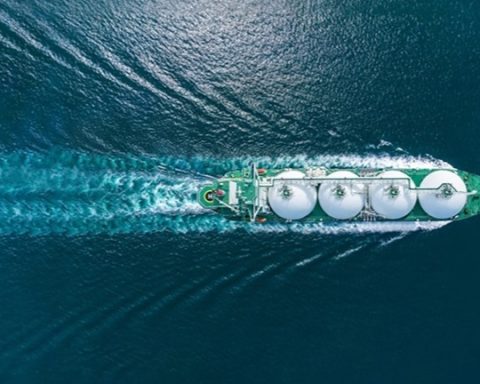
The Strait of Hormuz remains the other critical element of the strategy. Energy industry experts and some Iranian officials accept that the U.S. Navy is demonstrating increasing success escorting commercial tankers through the waterway. The operation is eroding Tehran’s leverage over the Strait, although energy exports remain well below pre-war levels and continue to be vulnerable to Iranian escalation.
The MOU collapsed in early July amid Iranian perceptions that Washington had failed to implement all of its commitments. Iranian regime hardliners subsequently insisted that Tehran should maintain its military closure of the Strait. The new economic offensive is intended to alter that calculation by making the economic consequences of continued obstruction increasingly severe.
Bessent had already signalled the change in strategy before Monday’s announcement. “If we are doing the maximum economic pressure, then that means that likely there will not be a large-scale kinetic restart…But I would emphasize, that is for now,” he told journalists Thursday.
Iran, meanwhile, has condemned the U.S. pressure campaign. Its Ministry of Foreign Affairs described the planned measures as “economic terrorism”. Following the latest sanctions announcement, Tehran has continued to reject Washington’s strategy, while Iranian officials have warned that further economic pressure could provoke a response.
The United Arab Emirates has emerged as another important part of the pressure campaign. Dubai, the UAE’s commercial hub, has historically been a major source of Iran’s imports from the West and has maintained extensive commercial links with Iran. UAE banks have also served as an important offshore financial channel for Iranian commerce, a role that has previously led Washington to sanction some UAE financial institutions.
On Wednesday, the UAE suspended all trade with Iran in support of the U.S. strategy after UAE authorities claimed that Iran had launched several ballistic missiles at the country. Iran denied firing on the UAE, and there was no independent corroboration of the claim. In recent weeks, however, Iran has attacked UAE ships transiting the Strait under U.S. protection.
Experts assess that Iranian and UAE companies may attempt to circumvent the restrictions by exploiting lax enforcement and informal trading and financial mechanisms developed over decades.
Inside Iran, the economic pressure is feeding a growing debate over how the war should end. Senior leaders appear united in viewing U.S. economic pressure as an existential threat to the regime, but they differ sharply over the response.
Moderate senior figures have increasingly argued that deteriorating economic conditions could produce regime-threatening unrest unless sanctions relief is secured. On Friday, President Masoud Pezeshkian openly called for an end to the war, stating: “It is better that we bring the war to an end now as we are in a position of power and dignity…The whole world acknowledges our victory and emphasizes that America has attacked our schools, hospitals and infrastructure in violation of all regulations and is hated around the world.”
Majles Speaker Mohammad Baqr Ghalibaf, who has close ties to hardline IRGC senior leaders and is far more influential than Pezeshkian, also called for compromise.
“No matter how much military power we have, if our people are struggling and the country lacks financial circulation and economic growth, we will not achieve progress…As someone who has experienced war, we understand the true value of peace,” he said.
Iran has reportedly begun re-engaging regional mediators from Pakistan, Oman, Qatar and Egypt to explore a possible return to talks with Washington. Pakistan’s Army Chief of Staff Asim Munir, described as a mediator trusted by both sides, is scheduled to visit Tehran today, reportedly to help organise new U.S.-Iran talks and restore the MOU.
But the argument for compromise is facing resistance from Iran’s hardline establishment. Mohsen Reza’i, Secretary General of the Supreme National Security Committee (SNSC) and an IRGC stalwart, and current IRGC commander Ahmad Vahidi argue that escalation, rather than compromise, is necessary to deter Washington.
The hardline camp extends beyond the IRGC, including the Majles and the office of Supreme Leader Mojtaba Khamenei, who still has not appeared publicly. Its opposition to an unconditional return to the June MOU comes after IRGC leaders indicated that Iran was moving towards an “offensive doctrine” under which it could attack key targets pre-emptively rather than wait to respond to further U.S. escalation.
Last week, Reza’i threatened renewed Iranian attacks on key energy targets in the Gulf states to compel Washington to accept Iranian control of the Strait and reposition its forces away from Iran.
Danny Citrinowicz, the former head of the Iran division of Israeli defence intelligence, told journalists: “…despite the signals coming from Ghalibaf and Pezeshkian, the probability of escalation is currently increasing rather than decreasing.”
Other hardliners are advocating economic adaptation rather than immediate military escalation. On Thursday, Shamseddin Hosseini, chairman of the Majles economic commission, said Iran should reduce its reliance on southern ports, where the U.S. blockade is in place, and expand trade routes across the north-eastern land border, according to Iranian state media.
That debate now confronts Tehran with competing choices: negotiate, adapt or escalate.
For Washington, the calculation is equally difficult. The United States has launched the economic offensive it had promised, but the effectiveness of the strategy will depend on whether Iran’s remaining financial networks can be closed, whether China will continue to provide Tehran with an economic lifeline, and whether pressure can force concessions without provoking a wider military response.
The “Economic D-Day” has therefore begun, but its decisive battle may not be fought in a Treasury sanctions announcement. It may be fought through Iran’s ability to withstand economic isolation, China’s willingness to absorb pressure from Washington, the future of the Strait of Hormuz and an increasingly consequential argument inside Tehran over whether survival requires compromise or confrontation.