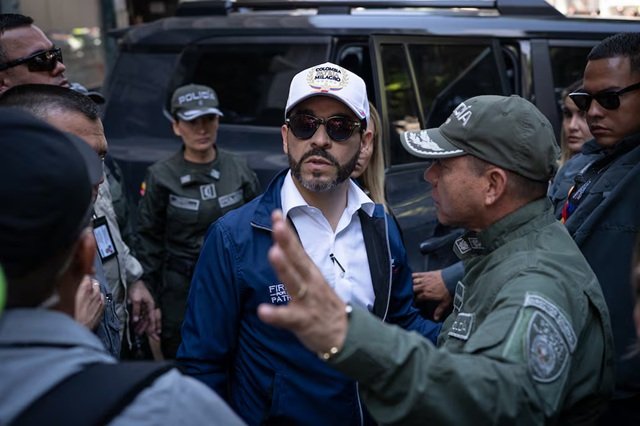
Colombia’s President Abelardo de la Espriella has ordered the immediate launch of police operations to identify and deport irregular migrants, signalling a dramatic shift in the country’s approach to migration after more than a decade of receiving and regularising large numbers of Venezuelans.
Speaking during a security council meeting in Barranquilla on Sunday, de la Espriella ordered coordinated operations involving the police and Migración Colombia. He said authorities should first target migrants “who are committing crimes” and then those “who do not have their situation regularised”, who, he said, would have to be deported within the shortest possible time.
The president, who has been in office for less than three weeks, said the operations should begin this week. “I am not going to accept illegal immigrants, wherever they come from, who are committing misdeeds in Colombia. They are leaving and we deport them. It is a political and administrative decision and I assume it,” he said.
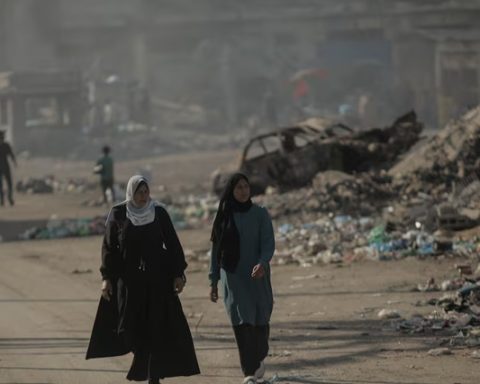
His announcement followed a strongly nationalist message: “First Colombians, second Colombians and third Colombians.” Although he did not explicitly identify Venezuelans, the policy would have particular consequences for the 2.8 million Venezuelans living in Colombia, who account for close to 90% of the country’s immigrant population.
According to official data from Migración Colombia, 848,000 Venezuelans are currently in an irregular situation in Colombia. Of those, 193,000 are children and adolescents, placing a large population potentially within the scope of the government’s proposed operations.
The announcement represents a significant departure from the policies pursued by Colombia’s previous three governments towards Venezuelan migrants. Ronal Rodríguez, a spokesperson and researcher at the Venezuela Observatory of the Universidad del Rosario, described it as a change of paradigm in the way Colombia has received and assisted migrants from its neighbouring country.
Rodríguez warned against language that equates irregular migration with criminality. “It is dangerous for the president to join a discourse that stigmatises migrants by assuring that they are illegal,” he said. Colombia, he added, had previously distanced itself from such rhetoric even as similar arguments gained ground elsewhere in the region and around the world.
Since the Venezuelan migration crisis began in 2015, when more than 7.8 million people left the country, Colombia had established legal and social mechanisms aimed at regularising Venezuelan migrants. Under governments from the centre, right and left, the country became an international example of migration regulation and received and integrated almost one-third of the Venezuelan diaspora.
Rodríguez stressed that people in an irregular immigration status should not be described as illegal or treated as criminals solely because of their immigration status. “The Government puts all migrants in the same bag and speaks of criminality clearly associated with irregularity. That is not the case in Colombia: a person who is in an irregular status is not a criminal,” he said.
De la Espriella’s announcement has drawn criticism from political opponents. María Fernanda Carrascal, a congresswoman from the left-wing Pacto Histórico party of former president Gustavo Petro, described the policy as both harmful and cruel.
“Linking irregular migrants with criminality simply because they have an irregular immigration status is an affront to human rights, and an absurd statement devoid of any evidence,” she said. Carrascal accused the government of turning migrants into scapegoats and warned that the policy could deepen xenophobia already present in parts of Colombian society.
The policy also places Colombia within a wider regional debate over tougher migration measures associated with right-wing governments, including those of Donald Trump in the United States, José Antonio Kast in Chile and Gabriel Milei in Argentina. Rodríguez, however, argued that Colombia’s circumstances are distinct because it shares a 2,219-kilometre border with Venezuela and faces a complex relationship with the Venezuelan government led by Delcy Rodríguez.
“Colombia is a very complex country where migrants have also been victims of illegal actors,” he said.
Andrés Sampayo, a doctor in Political Studies, also expressed concern about the potential consequences for Venezuela’s population in Colombia. He said he hoped immigration operations would not become a large-scale persecution of Venezuelans, whom he said contribute about USD 3 billion annually to Colombia’s economy through consumption, taxes and entrepreneurship.
The government’s proposed deportation campaign therefore marks a decisive change in Colombia’s treatment of irregular migration. Its implementation will determine whether the policy remains focused on criminality and immigration status, as the president has stated, or develops into a broader operation affecting a population that has been at the centre of Colombia’s migration policy for more than a decade.