Ukraine and Britain are to expand cooperation on the military use of artificial intelligence, combining Ukraine’s battlefield experience with Britain’s technology and research capabilities in a partnership that could extend from the war in Ukraine to the protection of critical infrastructure in Britain.
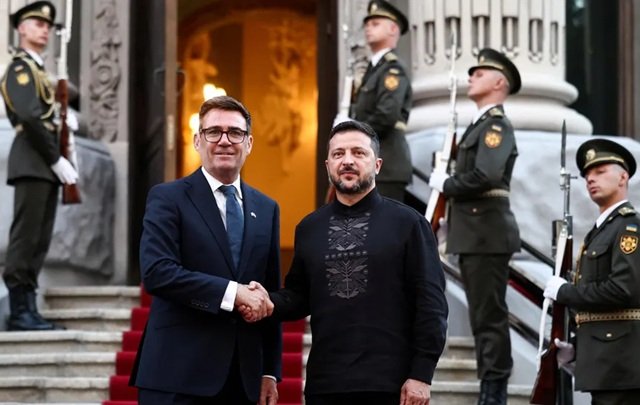
British Prime Minister Andy Burnham announced the cooperation on Monday in Kyiv after signing an agreement with Ukrainian President Volodymyr Zelenskyy on the sidelines of a meeting of the so-called Coalition of the Willing. Under the arrangement, Ukraine will provide Britain with millions of images collected from the war zone.
“This partnership combines Ukraine’s unmatched experience in the use of AI with the UK’s world-class AI ecosystem,” Burnham said. He said the cooperation would accelerate the development of capabilities that could strengthen national security, protect important infrastructure and support growth across the country.
Ukraine has increasingly used artificial intelligence in its defence against Russia. The technology is employed to control drones, identify targets for attacks and coordinate large-scale military operations. The experience gained from those battlefield applications is now at the centre of the new cooperation with Britain.
According to the British government, data gathered during Ukrainian military operations will soon be tested in Britain for applications designed to protect military facilities, airports, railway networks, power stations and prisons.
At the centre of the arrangement is a dataset known as “Avenger”, containing images from the war zone. The dataset is currently being used to train autonomous Ukrainian drones. The British government described the collection as a “goldmine”, reflecting the potential value of battlefield data generated through Ukraine’s extensive use of technology in combat.
The agreement creates a reciprocal arrangement. While Ukraine provides Britain with access to millions of battlefield images and its experience in applying AI during war, Britain is to support Ukraine through its universities, scientists and technology companies, as well as through its wider AI ecosystem.
The partnership forms part of a broader British commitment to supporting Ukraine. Britain is among the largest European supporters of the country, and its government has continued to pledge military assistance as Ukraine fights Russia.
At a meeting held in Kyiv on Ukraine’s 35th Independence Day, supporters of Ukraine agreed to strengthen military assistance. Britain also pledged to provide Ukraine with access to construction plans for British components of Storm Shadow cruise missiles.
The move is intended to allow French and Ukrainian partners to accelerate the assembly of the missiles in Ukraine, adding an industrial dimension to the wider military support being provided to Kyiv.
During the Kyiv meeting, Burnham also pledged that Britain would continue supporting Ukraine’s defence despite what he described as “outrageous threats” from Russia. He said the moment was “to maintain the pressure on Russia” and to restrict its ability to finance what he called “this illegal war”.
The AI agreement nevertheless extends cooperation beyond conventional military assistance. The millions of images gathered in the Ukrainian war zone are being transferred into a partnership in which battlefield data, academic research and commercial technology are brought together.
For Britain, the immediate focus is not limited to military applications. The data is also expected to be tested against challenges involving the protection of infrastructure, including transport networks, energy facilities and other sites considered important to national security.
For Ukraine, the arrangement offers access to British universities, scientists and technology companies, while allowing the country’s experience of deploying AI in an active war to contribute to the development of capabilities in Britain.
The partnership therefore links two distinct strengths: Ukraine’s experience of using AI under battlefield conditions and Britain’s established network of researchers, universities and technology companies. As both countries deepen their cooperation, millions of images generated by the war in Ukraine are set to become a resource for developing and testing new applications well beyond the battlefield.