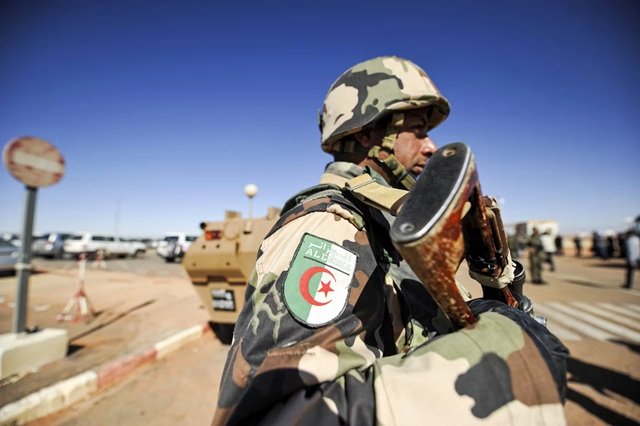
Algeria has deployed military personnel to Niger for the first time in more than five decades, marking a significant departure from its longstanding policy of non-intervention and signalling a growing determination to protect energy infrastructure and economic interests across the Sahel. The deployment, requested by Niger’s military government, comes amid an acute fuel shortage, persistent jihadist insurgencies and intensifying competition between Algeria and Morocco over competing natural gas pipeline projects connecting West Africa with international markets.
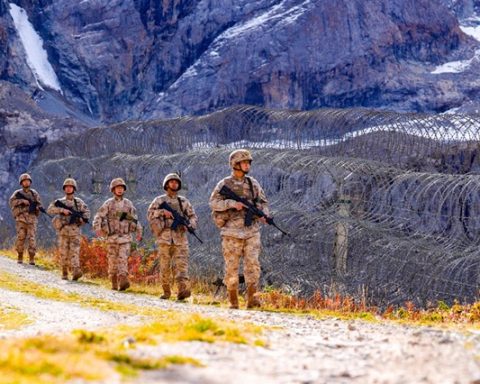
On 26 October, Algeria announced that it would send army units to Niger to safeguard what it described as “shared energy and economic interests” and strengthen security cooperation between the two countries. The announcement followed a military cooperation agreement signed on 21 October. A military convoy reportedly reached Arlit, an important uranium-mining centre, on 30 October. The deployment represents Algeria’s first ground military intervention abroad since 1973, when it sent an expeditionary force to fight Israeli troops during the Yom Kippur War.
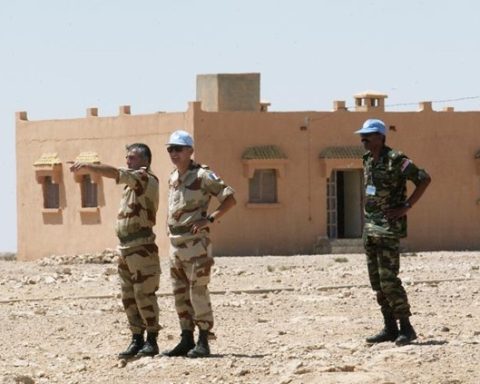
The precise number of troops and the duration of their deployment have not been disclosed. However, reports suggest that some personnel could be stationed in Niamey, while a parliamentary resolution indicates that military units will also be deployed in Madama, previously an important base for France’s counterterrorism operations in Niger. The move follows another demonstration of Algerian military support in August, when President Abdelmadjid Tebboune sent four fighter jets to Niamey after Nigerien forces and Russia’s Africa Corps narrowly contained an attempted coup against General Abdourahamane Tiani’s military government.
Although Niger faces several active insurgencies, the immediate motivation behind Algeria’s intervention appears to be the country’s deteriorating fuel supply situation. Niger has experienced an acute shortage since mid-October, despite producing crude petroleum. Its single refinery cannot adequately satisfy domestic demand, while informal fuel imports from Nigeria have declined substantially since Abuja removed fuel subsidies in 2023.
Algeria has responded with military personnel and emergency fuel supplies. Approximately 50 fuel tankers dispatched by Algiers reached Agadez on 31 October under a joint Algerian and Nigerien military escort. Protecting these deliveries and the wider energy relationship is particularly important because of the commercial interests of Algeria’s state-owned energy company, Sonatrach, which maintains investments and agreements in Niger.
One of the most significant projects is the Trans-Saharan Gas Pipeline (TSGP), an approximately 4,000-kilometre infrastructure project intended to transport natural gas from Nigeria through Niger to Algeria and subsequently to European markets. Sonatrach, the Nigerien government and the Nigerian National Petroleum Corporation are jointly developing the project. Continued insecurity along the proposed route threatens its implementation, giving Algeria a direct economic interest in maintaining stability in Niger.
The deployment also reflects Algiers’ efforts to rebuild its political and strategic influence in the Sahel following a breakdown in relations with the Alliance of Sahel States (AES), comprising Niger, Mali and Burkina Faso. Tensions escalated in April 2025 after Algerian air defence forces shot down a Malian drone near the border town of Tinzaouaten. All three countries subsequently recalled their ambassadors from Algeria.
Relations between Niamey and Algiers have since improved. Niger recalled its ambassador in February 2026, and Tiani subsequently made a state visit to Algeria. The two governments also agreed to revive joint energy projects. Relations with Mali remained strained for longer, although the two countries reinstated ambassadors and reopened their airspace to one another in July 2026.
Algeria’s renewed engagement with Niger must also be understood in the context of its deteriorating relations with France, its September break in diplomatic relations with the United Arab Emirates and its longstanding dispute with Morocco over Western Sahara. The expiration of the United Nations Mission for the Referendum in Western Sahara after 35 years has added another dimension to the regional tensions.
Morocco’s competing infrastructure ambitions are particularly relevant. While Algeria is promoting the Trans-Saharan Gas Pipeline, Rabat is advancing a Nigeria–Morocco pipeline designed to transport Nigerian gas along the West African coastline to Morocco. The projects represent competing routes for connecting Nigerian energy supplies to international markets. Algeria therefore has a strategic interest in preventing instability in Niger from undermining its own pipeline ambitions.
Morocco has simultaneously pursued closer relations with the Sahelian military governments through its Atlantic Initiative, which promises landlocked countries access to the Atlantic Ocean through a proposed port at Dakhla in Western Sahara. Niamey described the initiative as “a godsend” in 2025, before its subsequent rapprochement with Algeria.
Niger has also become an arena for competing international interests since the military takeover that removed democratically elected President Mohamed Bazoum in July 2023. Following the departure of French forces in late 2023, the military government increasingly relied on Russia’s Africa Corps for regime protection. However, Russian involvement has done little to reverse the insurgencies destabilising the country. China, meanwhile, has maintained a dominant position in Niger’s oil industry, although relations have recently come under pressure.
On 13 October, Niger’s authorities gave Chinese companies CNPC, WAPCO and SORAZ 45 days to repatriate oil export revenues and fulfil their contractual obligations. The dispute could further complicate the country’s relationships with external economic partners as Algeria expands its involvement.
The security risks facing the Algerian deployment remain substantial. Islamic State Sahel Province (ISSP) and al-Qaeda affiliate Jama’at Nusrat al-Islam wal-Muslimin (JNIM) continue to conduct attacks against government and civilian targets in western Niger, while Boko Haram and Islamic State West Africa Province (ISWAP) remain active in the south-east. ISSP demonstrated its operational reach in January by attacking Niamey’s airport and the adjacent Air Base 101.
Other potential threats include armed groups supporting Bazoum, particularly the Patriotic Liberation Front, which has previously sabotaged the Niger–Benin oil pipeline. Algeria’s military presence could therefore expose its personnel and supply convoys to attacks from multiple armed actors, as well as create friction with other external powers operating in the country.
The risks are particularly significant because JNIM has demonstrated an established capacity to attack energy infrastructure and transport convoys in Mali since September 2025. Although Algeria’s deployment appears primarily designed to protect energy assets rather than conduct counterterrorism operations, its troops could become directly exposed to the jihadist insurgencies they are not necessarily intended to confront.