US President Donald Trump has announced an unprecedented move to secure majority control, through private companies, over more than 65 billion barrels of Venezuela’s proven oil reserves, saying the arrangement will more than double US reserves. Trump said the deal came “without cost to the American taxpayer” and would allow US companies to revive Venezuela’s struggling energy industry while opening a new source of crude oil aimed at reducing petrol prices.
The announcement followed weeks of negotiations between the United States and Venezuela over an agreement intended to give US companies long-term access to a number of Venezuelan oilfields and guarantee supplies of Venezuelan crude to US refineries. Venezuela holds the world’s largest proven oil reserves, but years of underinvestment, mismanagement and sanctions have left production at about 1.25 million barrels a day.
The move comes as the Trump administration faces pressure over rising petrol prices ahead of the US midterm elections later this year. Since Washington stopped recognising the government of former president Nicolás Maduro, it has sought a stable supply of Venezuelan crude for US refineries.
Eight months after US special forces seized Maduro from Caracas and took him to the United States in early January, however, hopes of a rapid Venezuelan recovery have given way to growing disillusionment. Delcy Rodríguez, previously Venezuela’s vice-president, assumed the country’s leadership with Washington’s backing, while Trump encouraged US energy companies to consider investments of up to $100 billion in Venezuela’s oil industry.
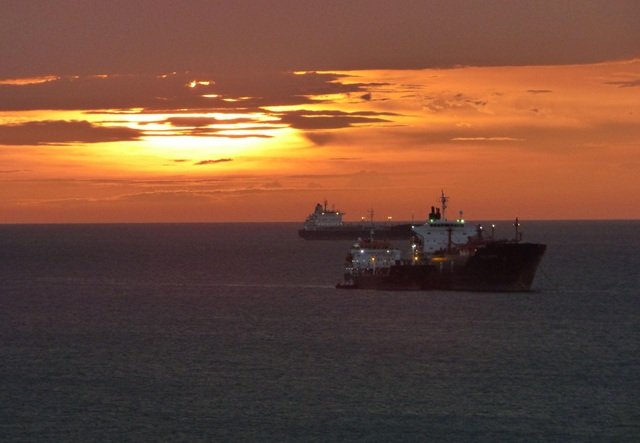
Oil production has increased from 942,000 barrels a day in January to more than 1.2 million in June, according to government figures. Venezuelan oil exports to the United States have risen to 630,000 barrels a day, making Venezuela the US’s second-largest oil supplier after Canada. Chevron increased its Venezuelan production by 15 per cent during the first half of the year, prompting Trump to describe the company as “bigger and stronger than ever”.
Yet major new investment remains limited. By August, no new contracts had been concluded despite Venezuela’s parliament approving liberalisation of the oil sector in January. Apart from Chevron, only Italy’s Eni and Spain’s Repsol had made new investments, while ExxonMobil and ConocoPhillips remained on the sidelines. ExxonMobil chief Darren Woods had described Venezuela as “uninvestable”, citing the absence of a legal framework and lasting investment protection.
For ordinary Venezuelans, higher oil production has so far brought little relief. Inflation rose by almost 130 per cent between January and June, according to Venezuela’s central bank, and by 544 per cent compared with June 2025. A teacher officially earns less than $5 a month and reaches more than $200 through state food allocations and additional bonuses. Yet a five-person family needed $756 for an average food basket in June, according to Venezuela’s teachers’ union.
At the same time, oil revenues are being held in an account controlled by the US Treasury, with releases authorised by US Secretary of State Marco Rubio after Venezuela submits monthly budget requests to Washington. According to the Financial Times, about $13 billion had flowed through the system to Washington by the end of July. A US diplomat put the amount returned to Caracas at about $3 billion, while Venezuela’s government tracking system showed only $300 million.
The fate of the remaining funds has become a source of intense controversy. Luigi Pisella, a former president of the Venezuelan industrial association Conindustria, accused the Trump administration of withholding about $4.7 billion in oil revenues. German-Venezuelan economist Alejandro Márquez-Velázquez has described Venezuela as a “US protectorate”, arguing that control over finances can amount to such a system without formal colonial administration.
Supporters of the financial trusteeship argue that it protects oil revenues from international creditors, who could otherwise seize funds transferred directly to Caracas. Márquez-Velázquez also argues that Washington’s broader objective is to reduce China’s influence, after Venezuela became heavily financially and strategically dependent on Beijing.
For Venezuelans, however, the central question remains whether the oil revival will translate into a better life. Severe power cuts of up to 12 hours a day continue to affect households, businesses, agriculture and the oil industry, while the country is still struggling to recover from June’s devastating earthquakes, which killed more than 6,300 people and caused nearly $20 billion in damage.
As Venezuela’s oil begins to flow more strongly again, the unresolved issue is where the money will ultimately go — and who will control the country’s economic future.