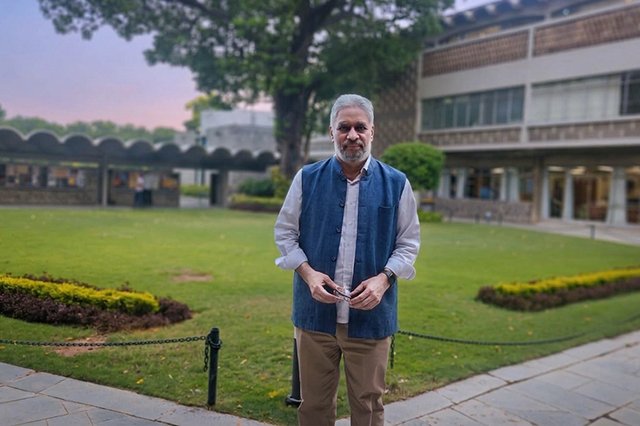
“Strategic autonomy is a fairly, I think it’s not of much use from my view,” says C. Raja Mohan. “All countries, some more Indians think they’re the only ones who do strategic autonomy. Sri Lanka, Maldives, the smallest country, would want to maximise its autonomy within a constrained circumstance. Nobody has a completely free, except the US and the old Soviet Union or China, even they are constrained. So every country tries to maximise its autonomy.”
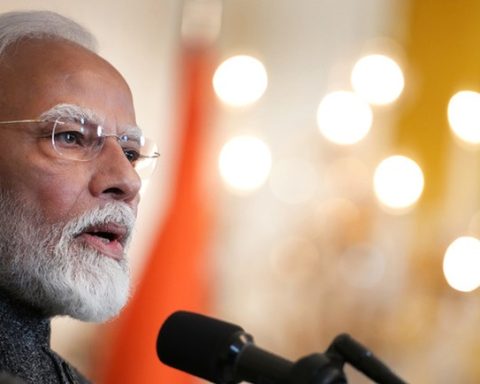
For one of India’s most influential strategic thinkers, this is not a semantic objection to a fashionable phrase. It is a direct challenge to one of the central assumptions through which Indian foreign policy has long been explained to itself and to the outside world. Raja Mohan is blunt about what he regards as an inflated conception of Indian exceptionalism, describing the presentation of strategic autonomy as a uniquely Indian characteristic as “a load of nonsense”. “Countries maximise their freedom of action,” he says. “But you don’t have a place where you say, look, I’m completely free. For a developing nation, you are tied to the rest of the world. So the smaller you get, the more complicated it gets.” Last week, I sat down with him in New Delhi for an exclusive discussion that ranged from the intellectual origins of his career and India’s nuclear history to China’s growing power, the future of the Indo-Pacific, the limits of Indian influence in South Asia, the politics of Sri Lanka and Bangladesh, and the domestic foundations of India’s claim to great-power status.
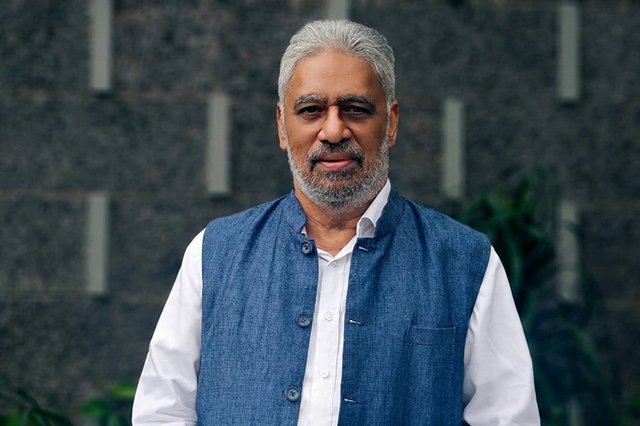
Professor Raja Mohan occupies an unusual place in India’s strategic establishment because his intellectual journey began not in international relations but in science. He studied nuclear science at postgraduate level before moving into international relations at Jawaharlal Nehru University, a transition shaped by the political circumstances of the time. “Throughout my undergrad I was a science student and I was very interested in nuclear physics,” he recalls. “Then the year I passed out, we had this nuclear test, India’s nuclear test. It was, what is it called, Operation Smiling Buddha, 1974 May.” The reference is to India’s first nuclear test, conducted in May 1974. His presence in Delhi and the interdisciplinary character of JNU gave him an opportunity that was then unusual in India. “Nehru University had this interdisciplinary staff and they were quite happy to admit a science student into an IR background,” he says. “So I think it gave me a chance to look at the politics of nuclear energy, nuclear weapons.” The importance of that institutional openness was considerable. “I don’t think, if there was no Nehru University openness, there was any other university in India which would have admitted me to a PhD programme in international relations when you have a science degree. So that was very useful. So that’s how I got in.” What followed was an intellectual career built around the relationship between technology, power and international politics. “For me, it was a chance then to talk politics of science, science policy. JNU also had a science policy centre. So there was a small community, in Delhi at least, those who were looking at the policy side of science, international relations of science.” Raja Mohan became part of that community, concentrating on “the international side of nuclear energy”. That scientific beginning remains important to understanding his subsequent work because his approach to geopolitics has generally resisted the separation of technological capability, economic capacity, military power and diplomatic influence.
His career subsequently placed him at the intersection of scholarship, journalism and policy. He has been a prominent foreign-policy columnist, a former member of India’s National Security Advisory Board, and an influential commentator on the transformation of India’s relations with the United States, China and the wider Indo-Pacific. He is now a distinguished professor at O.P. Jindal Global University’s Motwani Jadeja Institute for American Studies, while also serving as the Korea Foundation Chair on Asian geopolitics at the Council for Strategic and Defense Research and as a columnist for Foreign Policy. His recent writing has continued to question some of the orthodoxies surrounding Indian foreign policy. In a paper published by the Institute of South Asian Studies on 21 August, he argued that strategic autonomy had become a defensive formula associated with India’s political anxiety about the West rather than a precise doctrine for navigating contemporary power relations. He identified India’s industrial limitations, energy dependence, technological gaps, the border dispute with China and Beijing’s growing influence in India’s neighbourhood as more consequential constraints on Indian freedom of action. In conversation, however, he goes further than the language of his published analysis. His objection is not that India should surrender autonomy but that autonomy should be understood as a universal condition of international politics rather than elevated into an Indian doctrine. “That’s 101 of geopolitics,” he says. “Everyone uses their limited space to retain freedom of action.”
“There was premature celebration. I think we are still in a Deng Xiaoping kind of phase.”
That distinction between power as it exists and power as it is projected is central to Raja Mohan’s assessment of the political language surrounding India’s rise. Asked whether the intellectual community around the Modi government has become too comfortable with its assumptions about India’s emergence as a major power, and whether diplomatic visibility is sometimes being mistaken for national power, he gives an unusually direct answer. “Yeah, I mean, I think there was a premature… Yes, I would say short answer. I think there was premature celebration.” He attributes part of that tendency to “the celebratory style of Mr Modi”, but his deeper concern is what happens when political confidence begins to substitute for a sober assessment of national capability. “If you start believing in your own stuff,” he says, leaving the thought unfinished.
His point is that India’s growing aggregate economic weight cannot be separated from the condition of the population that produces it. “Whenever I write, I always say, four trillion dollars, someday we’ll be the third largest, but you’re still at $2,800 per capita.” The two measures, he argues, capture different dimensions of power. “Both are important. The macro gives you the capacity to do things.” He contrasts India’s enormous population and aggregate economic scale with Singapore, where per capita income is around $100,000 but the population is only about six million. India, by contrast, has roughly 1.5 billion people and a per capita income of around $3,000. “With India, $1.4 billion, $3,000 per capita income, it can do things.” The figure in his spoken remark refers to India’s population, but the larger argument is clear. Aggregate size gives India capabilities that a much smaller, wealthier state cannot match, while the per capita figure exposes the depth of the development challenge still facing the country. “If you look at the per capita, then you see underdevelopment, the whole domestic task that is ahead.”
This is why he places India in what he calls a Deng Xiaoping phase rather than an era of premature great-power triumphalism. “I think we are still in a Deng Xiaoping kind of phase where keep your head down, build yourself up phase, rather than talk about, you know, we’ve arrived, we’re going to be great.” The reference is to Deng’s emphasis on building national strength before seeking an overt leadership role. Raja Mohan recalls the principle associated with Deng’s famous 24-character strategy. “Don’t take leadership, so do get your strength. That’s what we should be focusing on.” When asked whether he believes India is still in that phase, his answer is unequivocal. “Absolutely.”
Forget all deserving, you’re not going to get it. I’m a realist.”
His realism becomes sharper when the subject turns to China. Raja Mohan rejects the assumption that India and China can still be treated as strategic equals. “The gap is enormous,” he says. “That 21 trillion, 20 trillion, we are at four. They spend four times more on defence than we do.” His figures are rounded, but the underlying disparity remains substantial. China’s economy is several times larger than India’s, while its military expenditure is also significantly higher. The latest estimates from the Stockholm International Peace Research Institute put China’s military expenditure in 2025 at $336 billion, compared with $92.1 billion for India, meaning Beijing spent roughly 3.6 times as much as New Delhi. China has also sustained decades of military spending increases as it continues to modernise the People’s Liberation Army. The disparity is therefore not merely economic. “Chinese are military, they’ve done modernise their military. So they’re in a much better place.” For Raja Mohan, the implication is that Indian strategy must begin from the reality of asymmetry rather than from an assumption of equivalence. “I would say deterrence. I would say, so you now have to develop asymmetric strategies. But there’s no case for victory when you have to manage, when you have to manage a stronger adversary.” Yet he rejects the conclusion that relative weakness makes resistance impossible. “It doesn’t mean the smaller guy has no chance. I mean, see what Ukraine has done with Russia, or Pakistan does with India for that matter. I mean, the context varies. So the thing is you have to develop an appropriate strategy.”
For Raja Mohan, the first requirement is intellectual honesty. “First thing is for us to recognise we’re not equals. Our discourse still thinks, you know, you go back to, until 1990, the sense of India, China, you know, same pedestal or equal. That world doesn’t exist.” His formulation is stark. “Now they’re four times bigger than us. So if I’m a realist, I should start with that reality, than with presenting myself as an equal to China. I’m not.” That admission does not lead him towards isolation or accommodation. It leads him towards coalitions. India, he says, cannot balance China alone. “So you need partners and allies, which is what, whether it’s Sun Tzu or whether it is Kautilya or whether, so you, Panchatantra, all talk about, you have to build a coalition if you want to deal with a stronger enemy.” But he is equally sceptical of the idea that alliances solve the problem automatically. “How do you align with a stronger power? Will the stronger power take you for a ride? Or if you’re the stronger power, you can say, look, am I being drawn into a conflict?” The answer is not permanent dependence but the continuous accumulation of national capability. “The key is keep building your national capabilities and build coalitions to the extent that you can.”
That approach also changes the way he views India’s relationship with Russia. For decades, Moscow was an important element in India’s strategic balancing against China. “Russia was balancing China for us in the 60s, because they fought the Chinese. Now they’re friends and partners.” The shift illustrates the unstable character of international alignments and the danger of treating any external power as a permanent strategic instrument. Coalitions, in his view, are useful precisely because they can expand a state’s room for manoeuvre, but they should not become substitutes for national strength. His formulation is pragmatic rather than doctrinal. “How do I use coalitions to build myself up? That would be the main thing.”
The same realism informs his response to India’s long campaign for a permanent seat on the United Nations Security Council. When told that Singapore-based strategist Kishore Mahbubani (Click here to read Part 1 and here to read Part 2 of my interview with Prof. Kishore Mahbubani.) had argued that India deserved a permanent seat, Raja Mohan immediately dismisses the language of deserving. “Forget all deserving, you’re not going to get it.” Asked whether India deserves a permanent seat, he answers without hesitation. “No, I’m a realist.” The word “deserve”, he argues, belongs to the language of diplomatic advocacy rather than the mechanics of international power. “Look, who’s deserving me? It’s again like an emotional claim, right? That’s the way diplomacy makes the case.” He would rather see India accumulate influence in ways that do not depend on institutional reform that may remain blocked by the interests of existing powers. “If India becomes a $10 trillion economy, it will be bigger than, at least, it’s already bigger than Russia in economics, not in weapons. Bigger than the UK and France. But that’s the remnants of a system. I would rather say India should look for ways of expanding its influence in the world through other means, rather than waiting for…” Those means, he specifies, are “economic means, through coalitions”.
You can’t have it both ways. You say, ‘I must take care of the Tamil rights’, and at the same time expect Sri Lankans to be nice to me.
The argument carries directly into his conception of the Indo-Pacific. Raja Mohan has spent years examining the strategic significance of the maritime balance between India, China and the United States, but he is sceptical of any suggestion that a single political statement signals an American retreat from the region. “It’s too early to say, look, the US is abandoning the Indo-Pacific,” he says. “They’ve been here since the Second World War. Or you can say when they came into the Philippines in 1898.” He rejects the notion that Washington could simply decide to hand the region to Beijing and walk away. “The idea that the US would simply fade in tonight gently and telling China that, look, you are the new guy and I’m just going home. It doesn’t happen a lot.” For him, the more important question is how the changing balance of power will force both countries and their partners to adjust. “I would say the conflict between them would continue.” China’s growing strength, he argues, has altered the strategic equation. “China has become more powerful. So everybody has to recalibrate. So that’s the reality again.” He also sees uncertainty within Washington itself over the extent of its global commitments. “The US is divided within itself. Some would say, look, focus on the Western Hemisphere. Some would say…” The pattern, he notes, has been visible in successive attempts to reduce American involvement in the Middle East, followed by renewed engagement. “They keep saying, look, we want to pivot away from the Middle East, but they keep going back.” In his assessment, the United States has not operationally withdrawn from the Indo-Pacific. “If you look at operationally, it has not pulled out.” The period ahead, however, is unlikely to be straightforward. “It will be a complicated phase.”
His assessment of Sri Lanka is more uncomfortable for India because it cuts through the easy language of goodwill and influence. India’s support for Sri Lanka during its economic crisis generated substantial goodwill, but Raja Mohan refuses to equate goodwill with strategic leverage. “As a realist, I wouldn’t confuse goodwill with…” He pauses before shifting the question towards what he considers the deeper failure of Indian policy towards its neighbourhood. His criticism reaches back not merely to the Modi era but across the post-Second World War decades. “In terms of the failure of India, I would say it’s not there. Failure is through the post-Second World War period. When India had a free run, it could have stitched this into a single region.” His argument is fundamentally economic. The countries of South Asia, he says, could have developed a much more integrated regional market, but political and ideological choices prevented it. “I think this way, you guys are more socialist than India. The socialist orientation meant you’re not interested in trade, you’re not interested in regional economic integration, you’re only interested in building socialism in one country.” The result was fragmentation. “So what was actually a fairly unified market under the British became a fragmented one. And so we lost our economic leadership.”
For Sri Lanka, the consequences remain visible. Raja Mohan expresses particular frustration that India has failed to become the dominant economic partner of a country immediately across the Palk Strait. “What is offensive for me, that the US, Europe or China should have more trade than India. Right now it’s changed a little bit in the last 20 years. But still, if you’re just across the Palk Strait, I should be your main economic partner, right? But we’re not.” For him, this is a measure of a much larger failure in regional strategy. “I think that is what tells you the failures of the last 60 years.” His prescription is notably less ideological than some of the language traditionally associated with Indian regional policy. “Forget being hegemonic or all that stuff, it’s not going to… Simply do what is good for you, business, connectivity, don’t mess around in your Tamil question, because we tried that, it didn’t work.” The objective should not be to impose a regional order but to build relationships that become valuable in themselves. “You’ve got to let be and focus on… And then see where it takes us, rather than claiming somehow I must maintain a regional order or something.”
His observation about the Tamil question exposes one of the enduring contradictions in India’s relationship with Sri Lanka. Delhi has domestic political pressures, particularly in Tamil Nadu, that make complete detachment from ethnic and political developments in northern Sri Lanka impossible. Yet intervention carries costs of its own. Raja Mohan puts the dilemma plainly. “You can’t have it both ways. You say, look, I must take care of the Tamil rights. And at the same time, expect Sri Lankans to be nice to me.” The difficulty is structural rather than simply diplomatic. “The politics doesn’t give neat solutions. So you’re trapped, in that sense, India with Pakistan, with all our neighbours. Overlapping populations, you have cross-border connections. So what happens in Jaffna will affect Tamil Nadu, right? There’s no escaping it. So how do you manage that without me getting drawn in and making things worse?” It is one of the clearest formulations in the interview of the limits of Indian power. Geography creates influence, but it also creates exposure.
His thinking about Bangladesh follows the same principle. Asked whether Delhi became too dependent on a single political leader and whether that damaged its strategic position, Raja Mohan identifies the problem as one of political over-personalisation. “You tie yourself to one leader, one particular party. I think that is the problem.” The alternative is a relationship capable of surviving electoral change. “You have to be open, because in the end, whether it’s Maldives, the smallest country, has its own domestic politics. So you can’t take preferences.” A durable relationship should be “bipartisan”, and the foundation for that durability should be economic rather than personal. “I want a relationship that survives without, you know, it doesn’t matter who comes up to power. That should be my goal.” His answer returns again to trade, economics and connectivity. “And for that, actually, economics becomes much more important. Trade, economics, connectivity. And avoid, depoliticise as much.” He immediately recognises that complete depoliticisation is impossible, but the direction of policy is clear.
He also rejects the temptation to describe every deterioration in India’s neighbourhood relations as an Indian strategic failure. Asked whether China’s ability to exploit worsening Indian relations with Bangladesh and Pakistan should be considered evidence of the failure of India’s naval policy, Raja Mohan answers, “It’s not a failure. If I were Chinese, I would do the same. It’s in the logic of things.” He points to the unavoidable contradiction between economic competition and economic interdependence. “Just as a minister has come, Mr Ajit Doval has come back from China, saying we’re going to do more trade with China. I can’t tell you not to do trade when I’m doing trade. So I think we’re trapped in that.” For him, the answer is not to retreat from interdependence but to understand it and use it. “My own sense is that we focus on economy, focus on maintaining relationship with all the powers rather than saying it’s failure of… See, things go up and down.”
The same logic applies to political shifts across South Asia. He recalls periods when the emergence of governments in neighbouring countries generated alarm in Delhi. “Some days it looks like, you know, when the JVP government came, they said, look, they’re very anti-India, they’re going to be very…” He compares such reactions with the earlier “India Out” politics seen in the Maldives. But political cycles do not erase geography. “There is a logic of interdependence, geography that exists. That has to be nurtured, you have to manage that.” The successful strategy, he argues, is therefore not the preservation of permanent political influence but the creation of enough economic, social and institutional ties to make the relationship resilient. “Trick of successful thing would be more interdependence, more trade, more connected, and more connection between political parties, people, so that you have more… They’re more stabilising elements.”
Keep your head down, build yourself up, rather than talk about, ‘we’ve arrived, we’re going to be great’.
For all the attention he gives to external power, Raja Mohan regards India’s domestic condition as perhaps the most important constraint on its ambitions. Asked about his warnings that political polarisation and institutional strain could weaken India’s great-power aspirations, he says the relationship between domestic coherence and foreign-policy capacity is unavoidable. “Domestic politics, internal coherence is the key, and if you fight with each other, your ability to do things abroad, automatically.” Yet he does not believe political disorder necessarily prevents strategic recovery. His own historical reference is the India of the 1990s. “We were in deep shit. In Kashmir, in Punjab, in Northeast, in Sri Lanka. I mean, things were burning every… There was Mandal, there was Mandir, there was… I mean, things were falling apart.” He invokes T. S. Eliot’s famous image of a world in which “there’s no centre to hold”, before pointing to what he considers the decisive development of that period. “But yet, in that period, what changed was the economic reforms, picking up the growth. That’s how eventually you manage some of these…” The lesson he draws is not that political consensus is unnecessary but that economic performance can help create the conditions in which political problems become manageable. “I would say focus on growth. Focus on building a consensus on foreign policy, consensus on economic strategy.”
That insistence on consensus takes him back to the question of India’s political narratives and the relationship between domestic ideology and external strategy. He acknowledges that the BJP’s political narrative has differed from parts of the earlier mainstream and that the divergence has produced its own difficulties. “In any political class, you need some coherence, some shared understanding.” The problem, as he sees it, is not simply disagreement between political parties but the difficulty of constructing a durable national understanding of what India wants economically and strategically. “Part of the problem, I think, the BJP came up with its own narrative, which was different from the mainstream in some ways and produced a set of problems in Nehru, do you agree with Nehru? Or, what do you say? How do you think about your domestic politics and linkages with the foreign policy? So all those made it more difficult.”