Editorial
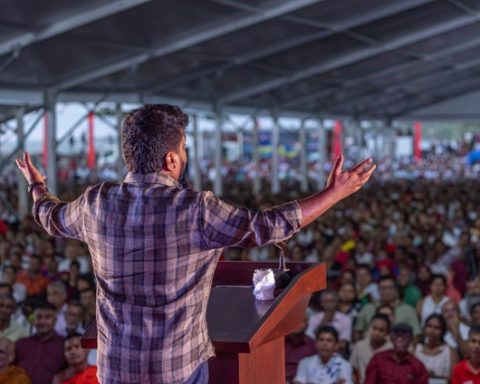
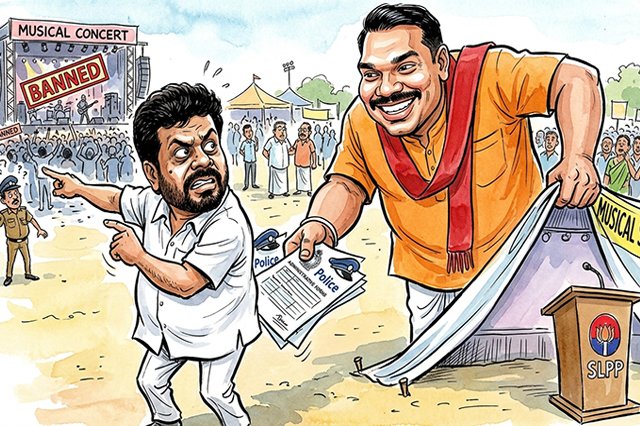
Namal is rising. We do not know whether we are going to witness what the Philippines witnessed over the Marcos family, and it is far too early to predict such a political trajectory. But Namal Rajapaksa’s political resurgence is visible. It has not yet seriously challenged the Government, nor has it established him as the next plausible political force capable of governing Sri Lanka. We also do not believe a single opposition party can easily win the next election in a fiercely contested and deeply polarised political environment. Yet according to political sources, Namal’s recent rally at Jualampitiya was a considerable success, and his political mobilisation was moving towards Anuradhapura for a district meeting scheduled for 12 September. Then came the decision by the Anuradhapura Municipal Council to deny access to both of the city’s principal grounds. The Municipal Commissioner’s official letter gives administrative reasons, stating that Walisinghe Harischandra Stadium had already been reserved for a musical show and that the Municipal Council Grounds had been reserved by Anuradhapura Headquarters Police. Those explanations may ultimately prove entirely legitimate. But the timing has created a political question that the Government cannot simply dismiss.
The Commissioner’s letter does not establish political interference, and responsible journalism must acknowledge that. Yet neither should democratic scrutiny end with the production of an administrative letter. The central issue is whether the rules governing public facilities have been applied transparently and equally. The SLPP says it applied for the Salgado Ground on 7 July. If another party subsequently received the facility, when was that reservation made, who made it and under what rules? Why did the Police reserve the Municipal Council Ground from 7 to 12 September, and for what purpose? When was that reservation entered? Who booked the musical show at Walisinghe Harischandra Stadium, and when? These are not partisan questions. They are basic questions of public accountability. Fiat justitia, ruat caelum (Let justice be done though the heavens fall). If the reservations are genuine and procedurally correct, transparency should settle the matter immediately.
But President Anura Kumara Dissanayake must recognise something larger than this individual dispute. A mature democratic government does not demonstrate its strength by making political competition administratively difficult. It demonstrates its strength by allowing its opponents to speak, organise and mobilise openly. If Namal Rajapaksa is politically weak, let him demonstrate that weakness before the electorate. If his appeal is exaggerated, let the crowd expose it. If the Rajapaksa political inheritance is exhausted, let the people deliver the verdict. There is no democratic justification for allowing a municipal decision to become a substitute for political judgment. Vox populi, vox Dei (The voice of the people is the voice of God) expresses an enduring democratic principle, whatever one’s view of the theological formulation. Political legitimacy belongs ultimately to the electorate.
Indeed, if the Government believes that Namal represents no serious threat, there is an extraordinarily simple response. Give him the ground. Let him hold his rally in Anuradhapura. Let his supporters come. Let the cameras record the crowd. Let his opponents scrutinise his speech. Let the public decide whether his political revival is real or merely theatrical. A government confident in its mandate should have nothing to fear from an opposition platform. Res ipsa loquitur (The thing speaks for itself). Sometimes the most powerful political response is to allow reality to reveal itself without administrative interference.
The NPP came to power promising a break with the political culture that preceded it. That promise demands a higher standard of conduct from its leadership. If institutional independence was once demanded from previous governments, it cannot now become negotiable when the political beneficiary is an opponent. Quis custodiet ipsos custodes? (Who will guard the guardians themselves?) That question goes to the heart of democratic accountability. The state must not become an instrument for determining which political movement deserves space to breathe.
Mr President, if Namal Rajapaksa wants the ground, give him the ground. If there is a legitimate prior booking, publish the evidence. If there is a genuine security requirement, explain it. If regulations prevent the reservation, apply those regulations to everyone without favour or fear. But do not permit ambiguity to cast suspicion over the institutions you govern. Your strongest answer to a rising opposition is not restriction. It is confidence. Let Namal speak. Let the SLPP assemble. Let the people judge. And let democracy decide.