Cuba’s Foreign Minister Bruno Rodríguez has accused the United States of inflicting severe damage on the country’s economy and healthcare system, linking the impact of the decades-long US economic blockade to disruptions in medical services and a sharp rise in infant mortality.
Speaking to national and international media accredited in Cuba on Monday, Rodríguez said the economic toll of the blockade reached a record $8.083 billion between March 2025 and February 2026. He said the figure represented a 7% increase over the previous reporting period and placed the accumulated damage caused by the policy at roughly $178.7 billion at current prices.
Rodríguez presented the figures as part of an official Cuban government report, arguing that the consequences extend far beyond conventional economic restrictions. According to the Cuban foreign minister, the measures have affected food supplies, water access, electricity, healthcare, education and transportation, describing the sanctions regime as a form of “collective punishment” directed at citizens rather than the state itself.
Healthcare has been among the sectors most severely affected, according to Rodríguez. He said power outages and diesel shortages have disrupted operating rooms and life-support equipment, including mechanical ventilators and neonatal incubators. In some cases, he said, medical staff have been forced to rely on manual procedures or phone flashlights during complex medical interventions.
Rodríguez also said more than 7,000 containers of medical supplies and medicines had been detained, attributing the delays to pressure placed on shipping lines. He linked these supply disruptions to a rise in infant mortality, saying the rate increased from 4 per 1,000 live births in 2018 to 9.9 in 2025.
The foreign minister also connected the country’s worsening energy shortages to restrictions affecting fuel imports. He referred to a presidential order signed by Donald Trump in late January that, according to Rodríguez, threatens tariffs linked to Cuba’s fuel imports and has intensified pressure on an already fragile energy system.
Rodríguez said shipping companies had been threatened against transporting fuel, spare parts and other components needed for Cuba’s electricity infrastructure. He also said companies bringing solar panels and batteries for new photovoltaic parks had faced pressure not to deliver the equipment, despite Cuba’s effort to rapidly expand solar power.
“If fuel oil and diesel could be imported for distributed generation generators, the outage could be minimized,” Rodríguez said in remarks published alongside his denunciation of the blockade. He added that Cuba had been rapidly changing its energy matrix through solar power and had learned to install new photovoltaic parks in as little as 45 days.
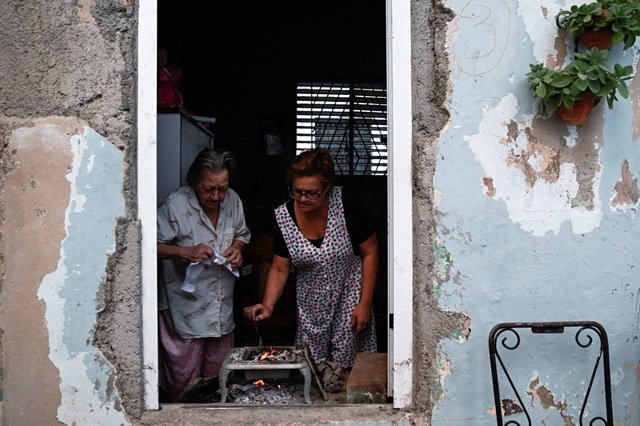
The consequences, according to the Cuban government, extend into basic services such as water supply. Rodríguez said water pumping stations depend on electric motors and generators that have themselves been weakened by shortages of fuel and spare parts. When electricity cuts occur, he said, water pressure falls and hydraulic systems can take hours to recover after power is restored.
The effects are also being felt in everyday family life, with Rodríguez citing difficulties sleeping during hot nights without functioning fans or air conditioning, interruptions to children’s schooling, and restricted access to communications and entertainment networks for young people and older people.
The dispute will return to the United Nations General Assembly on October 27 and 28, when member states are expected to consider Cuba’s annual resolution calling for an end to the US economic, commercial and financial blockade.
Rodríguez said Cuba expects the resolution to receive overwhelming international support despite what he described as intense US pressure and intimidation directed at other member states. The forthcoming vote will provide another international test of the long-running dispute, as Havana continues to seek support for an end to the blockade while Washington’s policy remains at the centre of Cuba’s economic and political grievances.