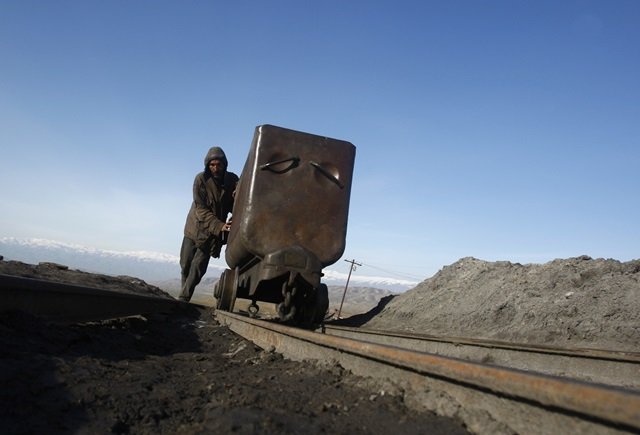
The Afghanistan’s mineral resources have traditionally been one of hidden wealth ready to be unlocked by peace, investment, and modern technology. This narrative is becoming outdated now. Even the much talked about figure of one trillion dollars has its limits. The US Geological Survey study pointed out that this valuation of minerals was based on the product of quantity of the minerals by price. However, it does not mean that there are no mineral resources in Afghanistan.
A more pertinent question is not whether there are minerals. It is who controls the institutions making decisions as to who will exploit the minerals, who will tax them, and where the profits will flow. The World Bank’s analysis of mining issues noted great potential of development, but also many problems in governance. The broader analysis of resource corridors in the same report argued that poor governance of extractive industries can make inequality worse and provoke political unrest. Afghanistan is increasingly becoming such a country.
The analysis of the structure of Taliban rule reveals a similar trend with the shifting of decision-making authority to Kandahar, where the supreme leader has established a network of loyal clerics and security forces that can supersede any powerful ministers operating in Kabul.
This issue becomes economically significant since control over the government translates into control over resources. The Haqqani Network retains its influence based on the security linkages, transport routes, businessmen, and eastern connections. The reporting of Foreign Policy about the mining sector indicates the interests of the Haqqani Network in the mineral sector, especially in chromite and logistics involved in mining activities. However, the system of the official finances becomes increasingly centralized. According to the assessment made by the United Nations, taxes, customs duties, minerals royalties, and other revenues were centralized in the hands of the Taliban.
Badakhshan is surely the clearest contemporary example of this. In June 2026, the findings of an inquiry into Badakhshan mining included a disclosure from Taliban officials that their leadership had sent out a new force of a thousand men at the same time that influential locals had been relocated, fired, or arrested. The sources indicated that these moves were part of efforts to tighten control over valuable gold and gemstone sites. A later report on Akhundzada’s mining regulations stated that this move was part of an effort to tighten control over the northeast gold economy.
However, the impact of such policies could be readily observed on the ground. Workers in Badakhshan mines protested about closures and threats, as well as preferential treatment of mines that were connected to politically well-connected people. Simultaneously, Amu TV news from Shaki reported on a lethal clash over gold mining. However, these instances cannot show that all conflicts begin in Kandahar. What these examples show is even more significant. With opaque rules governing extraction and access being tied to politics, any valuable deposits can end up being contested by everyone involved.
The extraordinary pace of mineral contracting makes this problem more serious. That represents an enormous expansion of commercial activity in a sector with limited independent scrutiny. The process continues. In July 2026, the Takhar gold agreement announced by the Ministry of Mines promised significant investment, employment, social spending, and a forty percent royalty for the authorities. Such agreements may create opportunities, but announced investment is not the same thing as accountable development.
Afghanistan has seen versions of this story before. The Global Witness investigation into lapis showed how Badakhshan’s famous mines enriched armed actors and political networks while delivering only a fraction of their potential value to the Afghan public. Greater centralization may reduce some forms of uncontrolled extraction, but it does not automatically create accountability. A mine can move from the influence of a local strongman into the hands of a centrally connected network and remain captured. Central control and public ownership are not the same thing. Meanwhile, child labour findings for Afghanistan continue to document children working in dangerous mining activities, including coal and salt extraction.
The deeper grievance is visible in communities located beside profitable deposits. Residents in Takhar have complained that gold extraction has continued while surrounding villages remain without adequate roads, electricity, and health services. The wider economic contrast is striking. The World Bank’s 2026 Afghanistan update found that recent economic growth was failing to improve living standards and that output per person had fallen amid rapid population growth and deep structural constraints. When trucks carry mineral wealth away while neighbouring communities remain poor, extraction stops looking like development. It starts looking like a political system for transferring value away from the places where that value originates.
The central issue is therefore more complicated than Kandahar versus the Haqqanis. That rivalry matters, but it forms only one layer of the mineral economy. Haqqani linked networks retain leverage, local commanders resist displacement, foreign companies seek concessions, and provincial communities absorb much of the immediate social and environmental cost.
That is what makes Afghanistan’s mineral question fundamentally political. Whoever controls a particular mine today matters less than whether institutions exist that can prevent any faction from treating the country’s geological inheritance as its private balance sheet. Afghanistan does not merely need extraction.