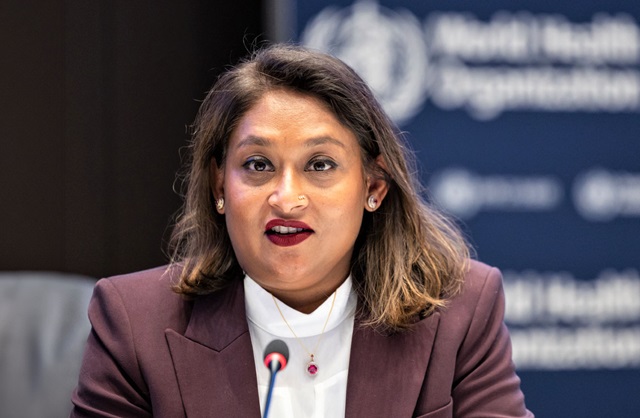
Nearly a year after being sidelined from one of the World Health Organisation’s most senior regional positions, former WHO South-East Asia Regional Director Saima Wazed has broken her silence over the investigations that overshadowed her tenure. Wazed, the daughter of former Bangladesh prime minister Sheikh Hasina, says the WHO closed its investigations in August 2026 and found allegations concerning her travel to China “unsubstantiated”.
According to Wazed, she was informed of the finding in early August and told that the reports had been sent to WHO DirectorGeneral Tedros Adhanom Ghebreyesus for a final decision. She says she has received no further communication from the organisation since then. WHO has not publicly confirmed her account that all investigations were closed with no findings against her.
Wazed took charge of the WHO South-East Asia Regional Office in February 2024 for a five-year term, becoming the first person from Bangladesh and the second woman to hold the position. Her appointment, however, drew scrutiny from the outset because of her family background. Hasina was in office when Wazed was nominated, creating questions over whether her political connections had influenced her elevation to the senior international health post.
Wazed rejects that suggestion. She argues that her family ties should have no bearing on her professional appointment and maintains that WHO’s established vetting procedures were followed in her case.
The controversy intensified after Hasina’s removal from power in 2024. Wazed says the investigation into her conduct was initiated at the request of Bangladesh’s interim government. She was subsequently placed on leave as allegations emerged concerning fraud, academic credentials and land dealings.
In her account, the investigation began in September 2025. She says she was initially placed on paid leave from September, with the arrangement expected to continue until January 2026. In December, however, her status was changed to unpaid leave.
Wazed describes that decision as retaliatory rather than the consequence of substantiated allegations. She says there was no substantial allegation or evidence requiring the change, no just cause for it, and that the decision violated existing WHO rules and procedures.
The timing, she argues, is particularly significant. Ten days before her leave was converted to unpaid status, she had submitted an official request for an investigation into the leak of a confidential letter and other information from the Office of the Director-General. According to Wazed, the leak occurred while the investigation into her own conduct was still under way and while she was fully participating in it during her paid leave.
She says she had been informed that her paid leave would continue until January 2026. The subsequent decision to place her on unpaid leave therefore became, in her account, part of a dispute extending beyond the original allegations and into questions of institutional procedure, confidentiality and accountability.
The most significant development, however, came in August 2026. Wazed says that all investigations were closed during the month and that allegations of fraud relating to travel to China were found to be unsubstantiated.
“I was duly informed of this in early August 2026,” she says, adding that the investigation reports were sent to Tedros for his final decision. She says no further information has since been forthcoming from WHO.
The distinction between what Wazed says happened and what the organisation has publicly confirmed remains central to the controversy. Her account presents the closure of the investigations as a formal finding that the allegations concerning her travel to China were unsubstantiated. But WHO has not publicly confirmed that all investigations were closed with no findings against her.
The unresolved public record leaves questions surrounding the status of the wider allegations, including those relating to fraud, academic credentials and land dealings. Wazed’s response is that the process did not establish the claims concerning her travel to China and that the decision to alter her leave status was itself unjustified.
Her case also raises a broader question about how international organisations assess senior candidates whose professional lives intersect with powerful political families.
Wazed rejects the premise that familial relationships should be treated as a legitimate basis for challenging a nomination. She says WHO has a sufficient vetting process for candidates nominated by member states and that all relevant procedures were followed in her case.
“Familial relationships are not a fair or valid category for questioning a nomination,” she says.
Her argument extends beyond her own circumstances. According to Wazed, many nominees for senior international positions have political backgrounds or are politically affiliated with the governments in power when they are nominated. To exclude an otherwise qualified candidate because of family background, she argues, could itself amount to discrimination against an individual’s professional rights and freedom to choose a career.
She compares such reasoning with an ordinary professional trajectory: the son or daughter of a farmer, she argues, should not be considered incapable of becoming a surgeon or heading a department at a medical institution simply because of their parentage.
The dispute therefore sits at the intersection of two competing principles. One concerns institutional vetting and the need for international organisations to ensure that senior appointments are based on proper qualifications and transparent procedures. The other concerns the extent to which a candidate’s family and political associations should influence scrutiny of an otherwise professional appointment.
For Wazed, the procedures matter because she says they were followed. Her position is that the existence of a prominent political relative cannot, by itself, invalidate a professional appointment. The controversy surrounding her tenure, however, demonstrates how difficult it can be to separate questions of professional conduct from the political circumstances surrounding an appointment.
Her tenure unfolded against a dramatic political change in Bangladesh, after Hasina’s removal from power in 2024. Wazed says that this political transition was directly connected to the investigation initiated against her, describing it as having been launched at the behest of Bangladesh’s interim regime.
The chronology has since become central to her account: appointment in February 2024, political upheaval later that year, an investigation beginning in September 2025, paid leave followed by unpaid leave in December, and the reported closure of investigations in August 2026.
Yet the final institutional position remains publicly incomplete. Wazed says she was informed that the allegations concerning her travel to China were unsubstantiated and that the reports were forwarded to Tedros. She says she has heard nothing further.
For an organisation whose senior officials are entrusted with global and regional responsibilities, the episode leaves two questions running in parallel: whether the investigations reached a substantive conclusion and whether that conclusion has been formally communicated to the public.