Britain’s King Charles will host leaders of major artificial intelligence companies this week to discuss whether a shared set of principles is needed to guide a technology that has sparked growing warnings about its potential threat to humanity, Reuters reported.
The meeting will bring together executives from Nvidia, Google DeepMind, OpenAI and Anthropic, alongside the UK minister for AI. Discussions will focus on how artificial intelligence can be harnessed to benefit society while upholding human dignity, placing questions about the pace and direction of AI development at the centre of the gathering.
The meeting comes as some of the technology industry’s most prominent figures call for greater caution over the rapid development of increasingly powerful AI systems. The debate was thrust back into the spotlight after two Anthropic researchers warned that the accelerating technology could lead to the extinction of the human race in the not-too-distant future.
Anthropic chief executive Dario Amodei said on Saturday that companies must slow the pace of advances in AI models. The San Francisco-based company also released a threat intelligence report last week detailing how several actors had used its Claude AI models for activities ranging from weapons development and cyber operations to surveillance and fraud.
The warnings have intensified a debate over whether technological progress should be accompanied by stronger safeguards. Yet achieving a common global position could prove difficult, with major differences already emerging over how governments should respond to the risks.
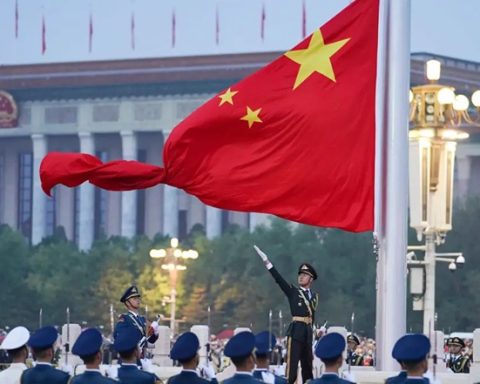
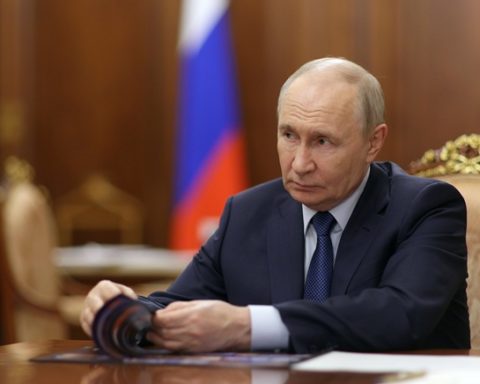
U.S. President Donald Trump rejected calls for a slowdown on Sunday. In China, meanwhile, the Global Times tabloid described the push for slower AI development as a “Cold War playbook” targeting Beijing. The contrasting positions underline the difficulty of establishing shared principles at a time when the United States and China remain major forces in the development of frontier AI.
For King Charles, the meeting represents an extension of a role he has played for years, both as monarch and previously as Prince of Wales, in bringing influential figures together to address major global issues. His convening efforts have most notably focused on environmental concerns.
Buckingham Palace said the gathering would consider how AI could be harnessed in ways that benefit society and contribute “to the flourishing of both people and the planet”. The emphasis reflects an attempt to place technological development within a wider discussion about its consequences for people and the environment.
Britain occupies a significant position in that debate. It is the European leader in AI funding and startups and has favoured a light-touch approach to AI regulation, bringing its position closer to that of the United States than the European Union.
The country has nevertheless established a mechanism for examining the risks posed by increasingly advanced systems. Britain’s AI Security Institute, created following the AI Safety Summit in 2023, receives pre-deployment access to AI models under voluntary agreements with major AI companies.
That arrangement allows the institute to assess the capabilities and risks of models before they are deployed, while also providing it with a window into the development of frontier AI. As governments and technology companies grapple with the pace of progress, the discussions hosted by Charles will test whether concerns about AI’s potential consequences can be translated into principles broad enough to command international support.