China has launched a 500-tonne production line designed to recover rubidium and caesium from waste generated during lithium extraction, opening a new route to two strategic metals that are difficult to obtain through conventional mining.
The demonstration facility in Jiangxi province is described as the world’s first continuous tower extraction and separation line with an annual capacity of 500 tonnes for low-grade rubidium and caesium. The Institute of Process Engineering under the Chinese Academy of Sciences said the facility has achieved stable production, marking a step towards industrial-scale recovery of the two elements from lithium waste.
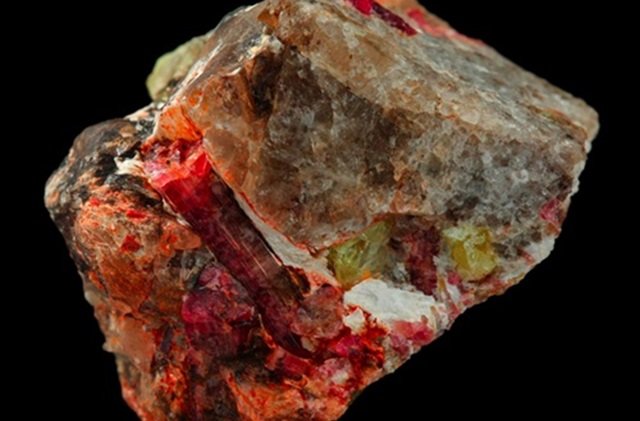
Rubidium and caesium are used in aerospace, quantum computing, biomedicine, new energy and other frontier fields. Yet neither occurs in large quantities as an independent mineral in the Earth’s crust. Instead, the elements are generally found alongside lithium ores and salt-lake brines in concentrations low enough to make conventional extraction technically difficult and economically challenging.
The new process seeks to turn that difficulty into an industrial opportunity by recovering the metals from waste left behind after lithium extraction. In doing so, China is extending the production chain of its new energy industry while creating an additional domestic source of rubidium and caesium.
China possesses substantial rubidium resources. A 2024 paper estimated domestic reserves at about 1.16 million tonnes of rubidium oxide and 140,000 tonnes of caesium oxide. However, much of the country’s known rubidium is associated with speciality lithium ores and salt-lake brines, where low grades and complex chemical forms have historically made recovery and recycling difficult.
Lepidolite in Jiangxi, for example, contains nearly 40 per cent of China’s rubidium reserves. Traditional high-temperature sulphate roasting can require temperatures of 800 to 1,000 degrees Celsius, leaving much of the rubidium and caesium locked in aluminosilicate waste that is ultimately discarded with lithium slag.
Caesium presents an additional supply challenge. Pollucite is the principal industrial source of the metal, but China has no commercially viable pollucite mines and therefore relies mainly on imports from Canada, Australia and Zimbabwe. Much of China’s caesium is also found alongside lepidolite and in salt-lake brines, creating similar extraction difficulties.
The Jiangxi breakthrough is based on a high-efficiency tower extraction system developed by the Institute of Process Engineering under the Chinese Academy of Sciences. The technology uses differential counter-current extraction and is designed to reduce the amount of equipment and extractant required while improving containment.
According to the Chinese Academy of Sciences, a single extraction tower can be up to 15 times as efficient as a traditional extraction tank. The system reduces extractant consumption by 40 per cent and cuts equipment footprint by more than 50 per cent.
Working with Jiangxi Ganfeng Lithium and other partners, the research team developed an industrial unit comprising 17 extraction towers. The facility started successfully on its first attempt and has operated continuously and steadily since then, according to the institute.
The demonstration line can recover more than 98 per cent of the caesium and more than 95 per cent of the rubidium. The resulting caesium carbonate and rubidium carbonate are each more than 99.9 per cent pure and have already been sold in commercial batches. The combined annual output of the two carbonates is 500 tonnes, although the precise ratio of rubidium to caesium in production has not been disclosed.
The significance of the project extends beyond its immediate output. The demonstration line indicates that low-grade rubidium and caesium associated with lithium resources can be separated on an industrial basis, providing a potential model for wider commercialisation while reducing the loss of valuable elements in lithium-processing waste.
China already has a strong position in the global rubidium industry. As of December 2025, the country had established five core rubidium production lines with a combined annual capacity of about 3,000 tonnes in rubidium salt equivalent. Meanwhile, Sinomine Resource Group controls the world’s largest pollucite mine, giving China an extensive combination of resources, processing technology and production capacity.
With emerging technologies such as perovskite solar cells, solid-state batteries and quantum computing potentially expanding demand for rubidium salts, the metal could assume a more prominent role in the competition for strategic materials. The latest breakthrough suggests that China is seeking not merely to extract more resources, but to recover materials previously treated as waste and integrate them into an increasingly comprehensive industrial supply chain.