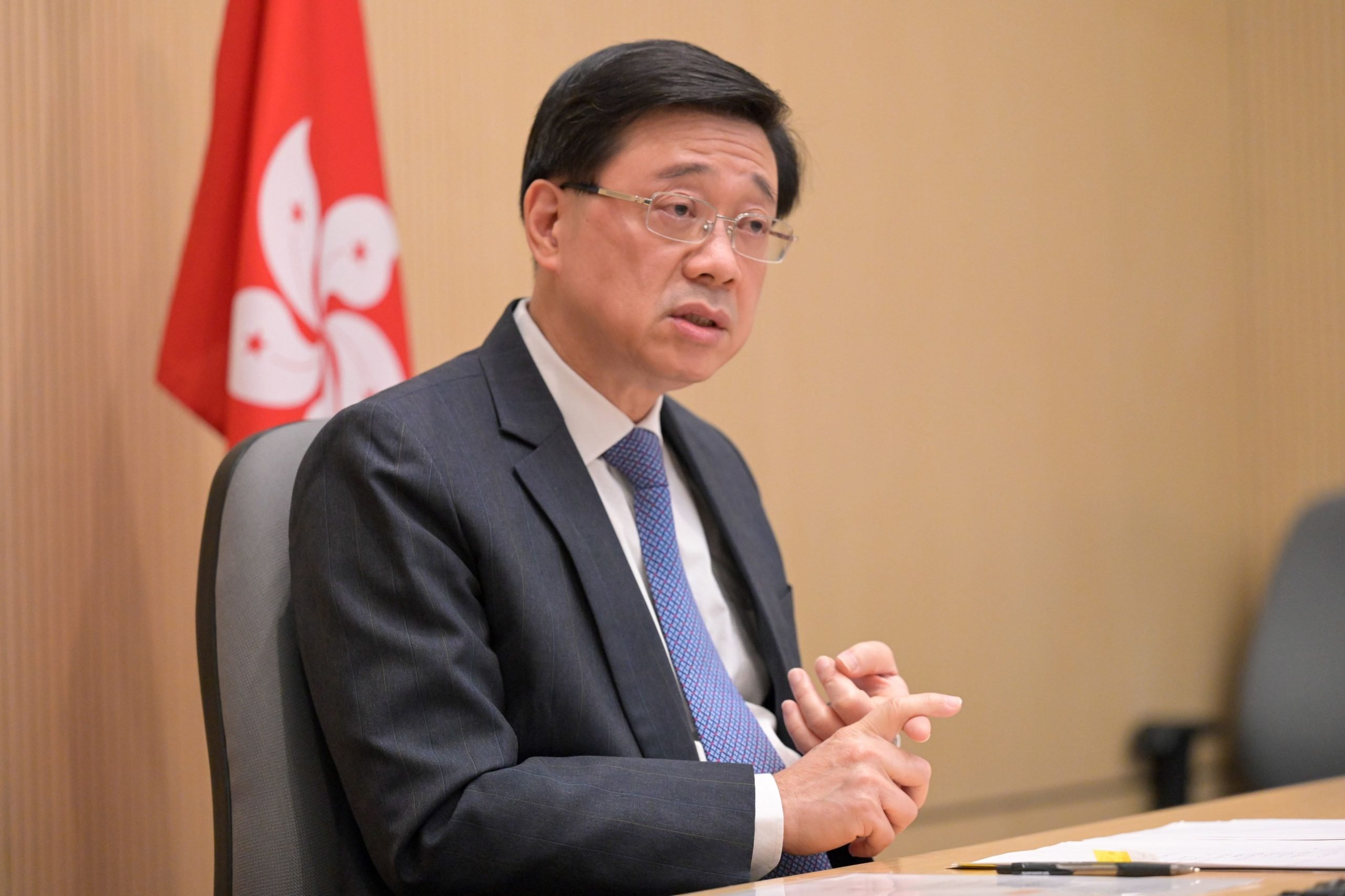
Hong Kong Chief Executive John Lee said the city’s first Five-Year Plan for Economic and Social Development, covering 2026-2030, and the 2026 Policy Address will be released on September 16, presenting the two documents as closely connected elements of the government’s long-term development strategy.
Lee said the Five-Year Plan would establish the overall direction for Hong Kong’s economic and social development over the next five years, while the Policy Address would function as an annual report on its implementation. The annual document would also respond to changing circumstances, including the international environment, economic projections and developments affecting the implementation of the longer-term blueprint.
“Hong Kong’s First Five-Year Plan sets out the blueprint for the city’s economic and social development over the next five years, and is a forward-looking, strategic and directional guiding document,” Lee said. “The Policy Address serves as an annual report on the Chief Executive’s implementation of Hong Kong’s First Five-Year Plan and sets out the key policy priorities for the year in response to the prevailing circumstances. The two are inextricably related.”
The government intends to establish various indicators as annual milestones through successive Policy Addresses. Lee said policy initiatives, key priorities and major projects would then be formulated each year according to prevailing conditions, while maintaining the strategic direction established by the Five-Year Plan.
The plan will contain both binding and aspirational targets, although Lee stressed that it would not represent a move towards a planned economy. Some indicators, he said, would be binding on the government, while others would depend on broader participation and coordination beyond the administration.
“There will be indicators which are binding and indicators which are anticipatory … There are things we must do and they are binding on the government particularly,” Lee told the media ahead of the Executive Council meeting. “And there are things we want to do very much, but we need everybody to facilitate.”
Lee said the government would lead, coordinate resources and establish appropriate policies, while wider participation would be required to achieve the desired results. He did not, however, specify whether individual indicators would be established for major initiatives such as the Northern Metropolis megaproject.
Rejecting any suggestion that the Five-Year Plan would change Hong Kong’s economic system, Lee said its purpose was to identify strategic directions and priority areas rather than centrally determine economic activity.
“I want to make it very clear: the five-year plan is not a planned economy. It is a plan which tells us where the strategic directions are, where we are heading and which are the priority areas,” he said. “It is a blueprint for us to implement in five years’ time.”
The plan will address Hong Kong’s broader development, including the city’s vision for the metropolis, innovation and technology, and the finance, shipping and trading sectors. Authorities have also said it is intended to align Hong Kong’s development more closely with the national blueprint for 2026-2030.
The Five-Year Plan will be announced by Lee at a Legislative Council meeting on September 16, immediately followed by the release of the Policy Address. Lee is expected to spend two to three hours outlining the key points of the two documents, which together contain more than 100,000 words. He will also hold a press conference that afternoon and attend a television forum that evening.
Lee described his fifth and final Policy Address of his current term as centred on “A Strategic Vision for a Bright New Era; Driving Reform and Boosting Development; Unleashing Opportunities and Enhancing Livelihood”. The document will retain its green cover, symbolising policy continuity, vibrancy and hope, while the new Five-Year Plan will carry a blue cover representing “blue skies”, openness, progress and steadiness.
The government has also prepared a summary explaining the relationship between the two documents. Their preparation followed months of public consultation, including two town hall meetings attended by more than 200 residents and district representatives. Authorities received more than 17,000 submissions on the Five-Year Plan and 11,000 on the Policy Address.
Lee said the first five-year blueprint would provide a long-term perspective for Hong Kong’s development, while annual policies would determine how that direction is pursued in changing circumstances. “It means that we adopt a long-term perspective through the five-year plan to map out Hong Kong’s overall development, advance reforms, promote growth and create opportunities,” he said. “And that we embrace the future.”