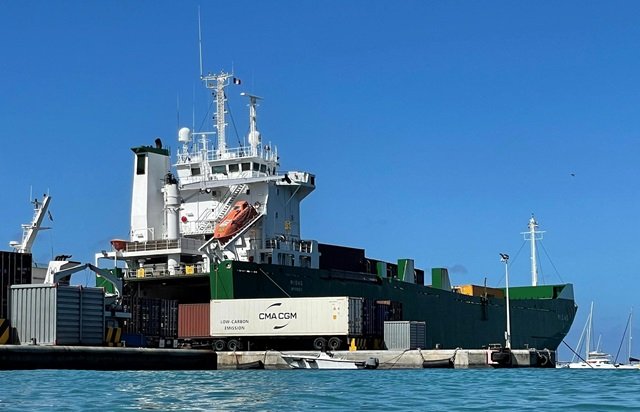
European Union naval forces have boarded a tanker suspected of operating as part of Russia’s shadow fleet in the Mediterranean, intensifying efforts to disrupt the maritime networks used by Moscow to export oil while circumventing Western sanctions. The operation, conducted by the EU’s naval mission Irini, is the third interception of a suspected Russian shadow fleet vessel in recent months and comes ahead of a new round of European sanctions targeting shipping companies, individuals and businesses accused of supporting Russia’s war effort against Ukraine.
Kaja Kallas, the EU’s High Representative for Foreign Affairs and Security Policy, announced the operation on Sunday, saying that European forces had boarded the MV Midas on Friday after establishing that it was sailing under a false flag. “The EU will continue to disrupt the operations of Russia’s shadow fleet at sea and through diplomatic means,” Kallas said in a statement published on social media.
The boarding was conducted under Article 110 of the United Nations Convention on the Law of the Sea, which permits a warship to inspect a vessel on the high seas when there are reasonable grounds to suspect that it does not possess a valid nationality. The MV Midas had previously sailed under the Panamanian flag and was subsequently registered under Zimbabwe. According to Kallas, the European mission established that the vessel was using a false flag, providing the grounds for the inspection.
Maritime tracking records from VesselFinder indicate that the tanker has changed its name four times in recent years. However, Brussels has not disclosed where the boarding took place, who owns the vessel or what cargo it was carrying. The interception therefore adds another vessel to the growing number of suspected shadow fleet ships being targeted by European maritime operations, although the specific findings concerning the MV Midas have yet to be made public in detail.
The operation follows two earlier interceptions by Irini. In August, the mission intercepted the MV Sun, while the MV Toa Payoh was stopped in early November. Established in March 2020, Irini was originally tasked with monitoring compliance with the United Nations arms embargo on Libya. Its responsibilities have since expanded as the EU has sought to address the use of maritime networks to circumvent sanctions imposed on Russia following its full-scale invasion of Ukraine.
On 9 October, the European Union extended Irini’s mandate until 2029, adding responsibility for monitoring and containing Russia’s shadow fleet in the Mediterranean. The expanded mandate reflects growing European attention to vessels suspected of transporting Russian hydrocarbons through arrangements designed to avoid Western restrictions. The latest interception demonstrates how the EU is increasingly using an existing naval mission to pursue objectives beyond its original focus on Libya.
Brussels is also preparing a substantial expansion of its sanctions regime. According to European sources, the measures expected to receive approval on Monday will add more than 100 individuals and companies to the EU’s blacklist. The proposed additions include 50 vessels operating for Russia and several companies accused of supporting the shadow fleet through which Moscow transports its oil and other hydrocarbons. A further group of approximately 30 individuals and entities linked to Russia’s alleged hybrid threats against the European Union is also expected to be targeted.
Those placed on the sanctions list will be prohibited from entering EU territory and will have their assets within the bloc frozen. The measures form part of preparations for the EU’s 22nd sanctions package against Russia, extending restrictions beyond the direct financial and commercial networks associated with the Russian state to include organisations and individuals connected to activities considered threats to European security.
The sanctions discussions will take place at a meeting of EU foreign ministers on Monday, where Ukraine and Russia’s continuing war will dominate the agenda. Ukrainian Foreign Minister Andrii Sybiha is expected to brief his European counterparts on the situation facing his country. Ministers will also consider assistance to help Ukraine withstand what is anticipated to be its most difficult winter since Russian President Vladimir Putin launched the full-scale invasion in February 2022.
Beyond immediate military and economic assistance, the meeting will address renewed diplomatic efforts to negotiate an end to the war. US-organised peace discussions appear to have regained momentum, with meetings held in Abu Dhabi during the week and representatives of US President Donald Trump travelling to Moscow and Dublin. In Dublin, the American envoys met Ukrainian President Volodymyr Zelensky, who was attending a European summit.
The prospect of renewed negotiations has also revived disagreements within the European Union over how the bloc should be represented in any eventual peace process. European governments have spent weeks debating who should speak for the EU and what role its institutions should play at the negotiating table. Leaders have now agreed on a proposed negotiating team comprising representatives of the European Council and European Commission, alongside national security advisers from Germany, France, Italy, Poland and the United Kingdom.
The arrangement is intended to give European institutions and major national governments a place in discussions organised by Washington. Whether the proposed representation will secure Europe a meaningful role in the negotiations remains dependent on the development of the diplomatic process. Meanwhile, the interception of the MV Midas and the impending sanctions decisions demonstrate that the EU’s diplomatic engagement is proceeding alongside continued efforts to restrict Russia’s maritime oil trade and address activities it associates with wider hybrid threats.