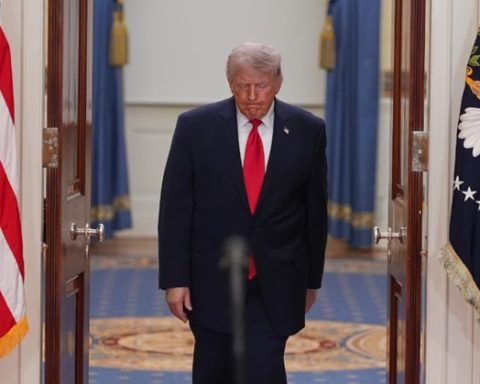
US President Donald Trump has dismissed calls for stronger safeguards on artificial intelligence, arguing that the United States already has mechanisms to regulate and prosecute companies and declaring that the technology’s principal guardrail is a “STRONG AND SMART (High IQ!) PRESIDENT”.
Trump’s comments on Monday, Sep 14, came as concerns over the potential dangers of rapidly advancing artificial intelligence intensified following calls from leaders of major technology companies for a slower approach to development. The debate has placed the Trump administration at odds with some of the industry executives whose companies are at the forefront of the global AI race.
Trump said the US already had guardrails in place to deal with AI companies and suggested that additional regulation could weaken America’s position relative to China. He described the industry’s calls for regulation as a “hoax”, while warning that doubts about AI development could benefit China.
The remarks followed growing public concern about the potential consequences of increasingly powerful AI systems. On Sep 9, Anthropic researcher Jacob Coxon said he had resigned partly because “the people building AI earnestly believe that it could kill us all by the end of the decade.” AI-related stocks subsequently fell worldwide on Monday after executives from some of the industry’s largest companies called for the pace of development to be slowed.
Trump is scheduled to meet Chinese President Xi Jinping on Sep 24 in Washington. The United States and China had also been planning a separate meeting in mid-September between lower-level government officials to discuss AI risks, according to an earlier report.
US House Speaker Mike Johnson said on Monday that he expected Trump to meet AI executives this week or “early next week”. The discussions would focus on the responsibilities of companies to maintain safety and the question of what role, if any, the government should play.
US Vice-President JD Vance, however, expressed scepticism towards technology executives seeking government regulation. “I feel a little bit weird about the fact that you have so many frontier AI tech companies kind of coming to the government and begging the government to regulate them,” Vance told reporters.
The push for stronger safeguards has been led in part by Anthropic chief executive Dario Amodei. In an essay published on Saturday, Amodei called on the US government to establish regulations requiring independent audits of the most advanced AI systems, known as “frontier” models.
Amodei proposed a three-step framework intended to slow the pace of AI development and provide more time to manage associated risks. His proposal quickly received support from other prominent technology executives, including Elon Musk, who runs xAI, and OpenAI chief executive Sam Altman.
The debate is also reaching Congress. Reuters reported on Monday that three US senators are working on legislation that would require AI companies to demonstrate that they are taking reasonable precautions to prevent their systems from causing harm, although the details remain under discussion.
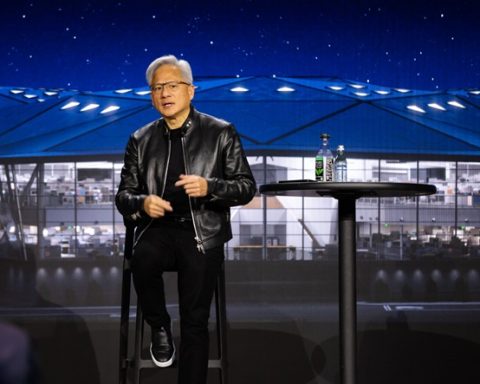
Nvidia chief executive Jensen Huang addressed the issue at the All-In Summit in Los Angeles on Monday, saying companies could voluntarily pause or slow development if they believed their operations were becoming difficult to control. His comments reflected the growing debate within the industry over whether voluntary restraint can adequately address the risks associated with increasingly capable systems.
Trump, meanwhile, has largely embraced technology companies during his second term and has resisted calls for greater restrictions on AI. He also said his administration had already used measures intended to prevent AI-related “bad, or potentially bad” activities, citing Anthropic chief executive Dario Amodei in particular.
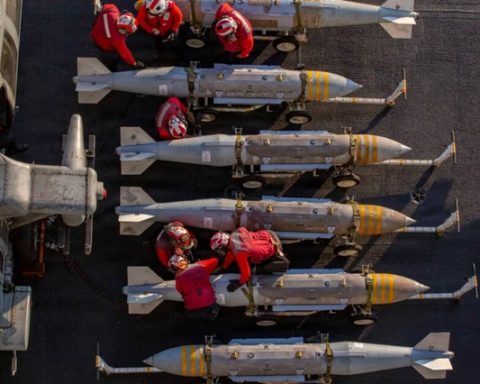
The disagreement has become particularly sharp between the administration and Anthropic over the use of AI in military and surveillance applications. US Defence Secretary Pete Hegseth blocked Anthropic from certain military contracts after the company refused to allow the US to use its Claude AI models for domestic surveillance or autonomous weapons.
Anthropic subsequently sued in a California court, and a US judge sided with the company in one lawsuit on Aug 27. The dispute has added a direct institutional dimension to the wider argument over who should determine the limits of advanced AI: technology companies, government regulators or political leaders.
As the United States and China compete over technological leadership, the disagreement is becoming increasingly consequential. Trump’s position emphasises national strength and technological competition, while a growing group of AI executives is calling for greater restraint and independent oversight. The emerging divide highlights a central question facing the industry: whether the rapid development of increasingly powerful AI systems can be reconciled with voluntary safeguards, or whether governments will ultimately be required to impose enforceable limits.