I received an invitation from former Artillery officer Major General Manjula Karunaratne to attend a function at the “Home of Veterans” at Akuregoda on Friday, 4 September 2026. The Home of Veterans is a beautiful new building of the Ex-Servicemen’s Association, located close to the Ministry of Defence and the Three Forces Headquarters at Akuregoda. The function was organised to welcome three retired senior Gunners—Major General Sumith Balasooriya, aged 71, Major General Sumith Premalal, aged 60, and Colonel Pradeep Perera—who had completed an extraordinary cycling expedition from Colombo to Kankesanthurai (KKS), crossed by ferry to Nagapattinam in India, cycled from Nagapattinam to Chennai and then returned to Sri Lanka along the same route. In total, they covered 1,454 kilometres by bicycle. Appropriately, this epic journey by the three former Gunners was named “Ride of Pride Across the Oceans”.
The purpose of the ride was to promote friendship and strengthen people-to-people contacts between Sri Lanka and India, while also carrying two important messages: “Cycling for Health” and “Say No to Drugs”. Throughout their journey in India, from Nagapattinam to Chennai and back, they were guided by Indian cyclist Ganesh Kannan, whose support and companionship helped make the expedition possible.
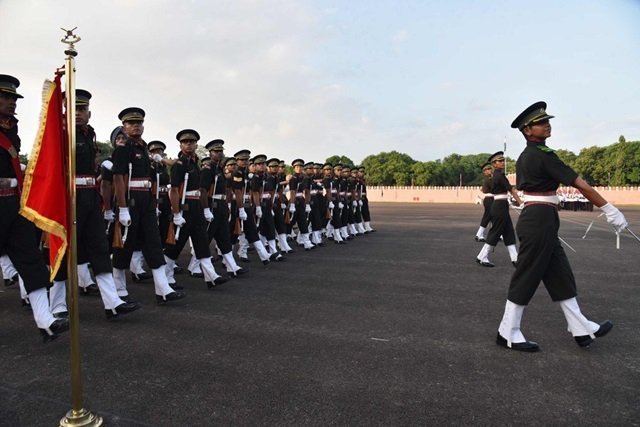
During the final 20 kilometres of their journey into Chennai, the three cyclists were joined by around 20 local cyclists. Together, they rode past Besant Nagar Beach, Marina Beach and along Anna Salai, turning the final stretch of the expedition into a memorable demonstration of friendship between the people of India and Sri Lanka. The Indian Army also took great pride in hosting our three cyclists at the Officers Training Academy (OTA) in Chennai. This institution has a special connection with the Sri Lankan military, as Sri Lanka Army cadet officers were trained there in the early 1980s in two batches of the Short Service Commission—SSC 1 and SSC 2. One of my dear friends from the Artillery, the late Brigadier Bhatia Jayathilake, who made the Supreme Sacrifice for the nation at Elephant Pass in 2000, served with me in Mannar in 1985 and was a member of SSC 1.
The Officers Training Academy in Chennai, established in 1963 under Brigadier Ram Singh, has an impressive record of producing officers who have served in the Indian Army with courage and valour. According to the figures presented for the academy, officers trained at OTA Chennai have been awarded one Param Vir Chakra, the highest Indian gallantry award; eight Ashoka Chakras, the highest gallantry award for acts of exceptional courage in peacetime; ten Maha Vir Chakras; 22 Kirti Chakras; 63 Vir Chakras; 119 Shaurya Chakras; and 587 Sena Medals. These decorations reflect the distinguished record of officers associated with the academy.
One of those distinguished officers was the late Major Ramaswamy Parameswaran of the 8th Battalion, Mahar Regiment. He was the only officer trained at OTA Chennai to make the Supreme Sacrifice in Sri Lanka during the Indian Peace Keeping Force (IPKF) operation, Operation Pawan. On 25 November 1987, at the age of 41, Major Parameswaran was killed in action in Jaffna while fighting against LTTE forces. He was posthumously awarded the Param Vir Chakra (PVC) for exceptional courage and bravery. We in the Sri Lankan military salute you, Sir, with the utmost respect.
The name of this gallant Indian Army officer is “engraved on granite” at the IPKF War Memorial in Battaramulla, next to our Parliament—the seat of Sri Lanka’s democracy. We will never forget our Indian military brothers who made the Supreme Sacrifice on Sri Lankan soil. A total of 1,171 Indian soldiers lost their lives during the IPKF deployment in Sri Lanka while serving in an operation intended to protect the sovereignty and territorial integrity of our country. Their sacrifice remains an important part of the shared military history between India and Sri Lanka.
When our three cyclists reached the Officers Training Academy in Chennai, they were received by the Commandant, Lieutenant General Michael A. J. Fernandez, PVSM, AVSM, VSM, together with other senior officers of the Indian Army. The warm reception reflected the enduring bonds between the armed forces of the two countries and the friendships that continue to exist among former military officers on both sides.
All these arrangements were made possible through the coordination and friendship of General Mahesh Senanayake, RWP, RSP, VSV, USP, the former Commander of the Sri Lanka Army. Thank you, Mahesh. Of course, General Mahesh was not the only person who contributed to making Major General Sumith Balasooriya’s dream a reality. Many others also played important roles in supporting the expedition. During his speech at the ceremony, Major General Balasooriya expressed his gratitude to everyone who had supported him and his team throughout their remarkable journey.
The grand welcome ceremony was attended by senior retired Gunners, the families of the three cyclists and other officers. The most senior Gunner present was General Srilal Weerasooriya, RWP, RSP, VSV, USP, former Commander of the Sri Lanka Army from 1998 to 2000 and former High Commissioner to Pakistan. He later served as Ambassador to Tajikistan and Kyrgyzstan.
I was invited to the ceremony because of my long-standing association with Artillery units dating back to 1985, when I was the Officer-in-Charge of the Naval Detachment at Talimannar. Traditionally, the general area of Mannar was controlled by Artillery units, particularly the 4th Battalion of the Artillery Regiment and the 5th Battalion (Volunteer) of the Artillery Regiment, whose headquarters was at Talladi Army Camp, Mannar. I had a number of close friends serving in these units, and they all respected me as the only Naval officer operating in that area.
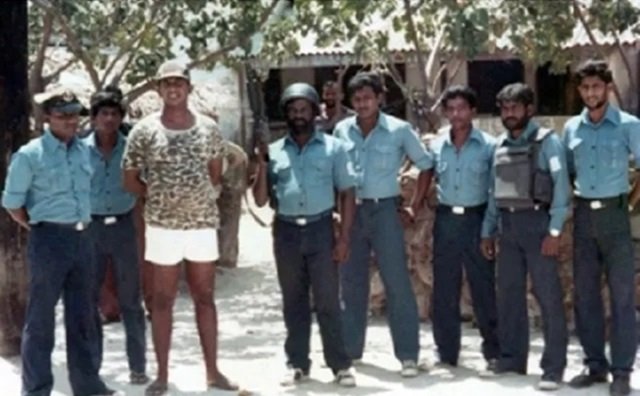
I operated from the isolated Naval Detachment at Talimannar, where the closest Army camp was at Mannar Sunny Village, approximately 25 kilometres away. I was provided with speedboats by the Army, and Naval personnel and highly experienced boat operators from the Army served under my command. Many of these boat operators were from the 5th (Volunteer) Battalion of the Artillery Regiment and the 3rd (Volunteer) Battalion of the Gemunu Watch, including personnel who had previously served with the Task Force Against Illicit Immigration (TAFII). In those days, in 1985, our main task was to apprehend smugglers operating between India—particularly Rameshwaram and Dhanushkodi—and Sri Lanka, mainly between Talimannar and Pesalai.
During the ceremony honouring the three great cyclists, I noticed a retired senior Artillery officer sitting quietly and watching the proceedings. I immediately recognised him. He was Major General Athula Jayawardena, RSP, USP, ndc (Retired), who had studied at Royal College and had been senior to me in the College Cadet Platoon in 1978. He had also joined the military before me. Athula had served in the Mannar sector, at Murunkan, during the same period in which I was serving at Talimannar in 1985.
Seeing Athula brought back memories of a particular day that I have never forgotten. The fatal day was 25 October 1985.
I will narrate the story. In those days, the instructions given to me by my Commanding Officer at SLNS Elara were that I should travel to Karinagar by patrol craft and then proceed on leave to Colombo via Palaly Air Base on a routine flight. My mother base at the time was SLNS Elara, under Captain (then) Daya Sadagiri, who would later rise to the rank of Admiral and serve as Commander of the Navy and Chief of Defence Staff. We were young and relatively carefree Sub Lieutenants in 1985. I wondered why I should go all the way to Karinagar and then Palaly simply to travel to Colombo on leave. I thought I could easily take one of my speedboats to Mannar, proceed to the Talladi Army Brigade Headquarters and then join the convoy travelling to Anuradhapura along the Mannar–Anuradhapura Road.
My relief officer, S/Lt Siri Sudasinghe, a brilliant Service Entry officer, arrived from Karinagar that afternoon to take over command of the Talimannar Naval Detachment until my return. He had completed the basic Commando Course with the Sri Lanka Army at the age of 35 and had qualified as a Commando. I handed over command to him and proceeded to Mannar by speedboat. I convinced him that it would be safe for me to travel with the Army convoy from Mannar to Anuradhapura the following day. I also mischievously asked him not to tell my Commanding Officer, Captain Sadagiri, about my decision to travel by road instead of following the instructions I had been given.
I had a good time that evening with my Army friends at the Mannar, or Talladi, Officers’ Mess. They were all very fond of me. Our Brigade Commander at the time was the colourful senior officer Colonel Daya Wijesekera of the Gemunu Watch. He appreciated the work I was doing at Talimannar, an isolated Naval deployment close to the maritime border between India and Sri Lanka. The brilliant Gunners who later rose to the rank of Major General—Thibotumunuwa, V. R. Silva and Nissanka Wijesinghe—were also pleased with the work I was doing. Major Mahesh Samaraweera, the Staff Officer 3 at Brigade Headquarters at the time, was another brilliant officer, from the Corps of Engineers, who later rose to Major General. All of them appreciated my work as the sole Navy officer operating in their Mannar sector.
The following morning, the convoy was ready to proceed to Anuradhapura. I was prepared to travel in the second vehicle, immediately behind the convoy commander, my dear friend Lieutenant Chandana Wimalasiri of the Sri Lanka Light Infantry (SLLI), a proud product of Trinity College, Kandy. Major V. R. Silva, then the Staff Officer 2, handed me the Brigade’s camera, an SLR, and asked me to take photographs of the Parayankulam Rest House, which had been destroyed by LTTE forces. The convoy was a very long one, consisting of more than 24 vehicles, including escort vehicles, empty trucks travelling to collect stores, buses carrying Army personnel proceeding on leave and several vehicles being taken to Anuradhapura for repairs.
The convoy proceeded from Mannar towards Murunkan along the Mannar–Anuradhapura Road without incident. At Murunkan Army Camp, the convoy was taken over by then-Captain Athula Jayawardena. It was the first time I had met him in a while. Lieutenant Chandana Wimalasiri stopped at Murunkan, while the convoy continued its journey. We reached Parayankulam safely, and I took several photographs of the Rest House destroyed by the LTTE. I still had a number of exposures remaining on the camera reel. I wanted to finish the reel, have the photographs printed in Colombo and then return the camera to Brigade Headquarters. I therefore took several photographs of the convoy, particularly the leading vehicle—a jeep in which Convoy Commander Athula was travelling.
We reached Chettikulam Army Camp safely. The Officer-in-Charge of the camp was Lieutenant Viraj Silva of the Gemunu Watch, another brilliant athlete from Royal College, Colombo 7. We left Chettikulam after saying goodbye to Viraj. Little did we know that it would be our final goodbye to him.
We had travelled only about two kilometres from Chettikulam when I suddenly saw three huge explosions in front of my vehicle. Two explosions occurred in front of and behind Athula’s vehicle, which was immediately ahead of mine. Our vehicle almost fell into a crater approximately four feet deep in the road as a result of the third landmine explosion. Four Army soldiers and I immediately got down from our vehicle. The entire area was covered in smoke and dust.
When I ran forward, I saw Athula sitting on the road. Blood was coming from his ear. He tried to pick up his weapon from the ground and fire, but the weapon had been damaged by the explosion. He then sat on the ground, holding his head. Athula’s vehicle was nowhere to be seen. We later discovered that it had been thrown into the jungle by the force of the explosions. There were two huge craters, each approximately six feet deep, on the road.
Two Army soldiers and I found wires that had been connected to a battery pack used to initiate the electric detonators of the landmines. It appeared that only a small number of LTTE cadres had been required to carry out the entire operation before withdrawing into the jungle. Athula and his driver were extremely fortunate to have survived, although both had suffered critical injuries. Athula was bleeding from his ears, and I was extremely worried that he might have suffered serious internal head injuries.
The other five soldiers travelling in the convoy were not so fortunate. They were killed in the explosions, and their remains had to be collected in body bags. The gallant soldier who had been travelling in Athula’s vehicle, sitting on the spare wheel, was particularly unfortunate. I had clearly seen him through the photographs I had taken earlier. After the explosion, we recovered only one of his feet, which had been thrown onto a high-tension power line beside the road. That was all we could find of his body. He had been blown into pieces. You can only imagine the enormous power of that blast.
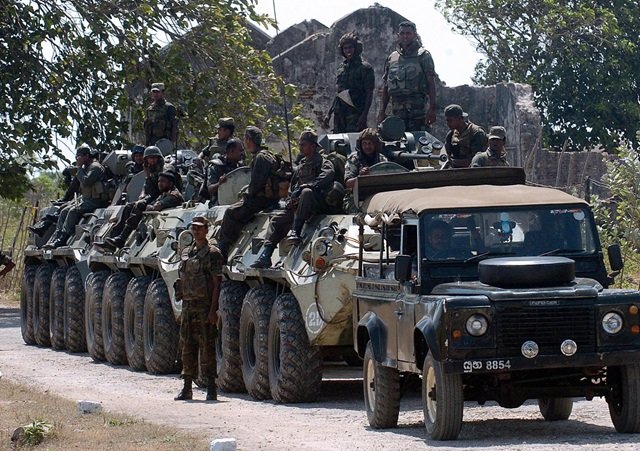
Athula and his Army driver, both critically injured, were airlifted to Anuradhapura. The helicopter arrived at the incident location within a short time, and that rapid evacuation helped save the lives of Athula and his driver. Major V. R. Silva then asked me whether I was confident enough to take command of the convoy and continue to Anuradhapura. I told Colonel Daya Wijesekera and Major V. R. Silva that I would assume command of the convoy and take it safely to Anuradhapura.
When I finally reached home in Colombo, my mother was waiting for me. She told me that my Commanding Officer, Captain Sadagiri, had called several times. Those were the days before mobile phones. My ears were still “ringing” from the explosions, and I could not hear properly. I called my Commanding Officer and received a “thunderbolt blast” from him for ignoring his instructions and travelling by road from Mannar to Anuradhapura. That “verbal blast” from Captain Sadagiri finally cleared my ears! I knew, however, that behind his anger was deep concern for my safety. His fatherly advice to me was simple: “Come back to base after your ten days’ leave—travel by air to Palaly!” We were fortunate to serve under officers of that calibre, who treated young Sub Lieutenants almost as if we were their own children.
All this happened more than 40 years ago.
Athula was extremely lucky to survive that day. He went on to have a brilliant military career and retired after reaching the rank of Major General, almost ten years ago. His last appointment was as Security Forces Commander, Mullaitivu.
Those were the days. Memories of those years remain vivid, and meeting Athula again at the Home of Veterans after more than four decades brought back not only the events of that tragic day, but also the friendships, camaraderie and extraordinary experiences that shaped our lives as young officers serving during a difficult period of our country’s history.