Once upon a time, children’s publishing depended on writers, illustrators and editors to create characters and stories that could travel beyond the page and enter the shared imagination of generations. Now, an expanding industry is offering something very different: books in which the child holding the book is also its protagonist, generated almost entirely through artificial intelligence.
The business is already substantial, although its precise share of the market is difficult to establish because these books are generally sold directly through publishers’ websites rather than major commercial platforms. Imagitime says it has “more than 300,000 satisfied customers”. Book by Anyone says it has printed more than half a million books, while Wonderbly, an early pioneer in the field, says it has shipped nine million copies since launching in 2013. For comparison, the children’s series El Pollo Pepe has sold nearly three million copies worldwide.
The commercial appeal is straightforward. Upload a photograph, enter a child’s name and choose from a range of narrative templates, illustration styles and values. The resulting story can transform the child into the central character of an adventure, whether involving ice princesses in a predominantly white world or a story with an aesthetic and premise close to Frozen. The books typically cost between 30 and 60 euros, while some companies offer annual subscriptions providing one book each month.
What these books gain in personalisation, however, they can lose in cultural reach. They sell, but they generate fewer widely recognised characters and stories. Their protagonists are not likely to become shared cultural references because the defining feature of the story is precisely that it belongs to an individual child.
Dahozhi Xu, a researcher at Macquarie University in Sydney and an expert in children’s literature, has studied this emerging form of publishing. She says generative AI can produce both text and illustrations “much faster and cheaper than traditional publishing”. The children’s book market remains large even as fewer adults read, she notes, making children’s publishing an obvious target for companies using the technology.
The same principle is also being applied, on a smaller scale, to books for adults. The subject can range from an erotic novel to a zombie apocalypse or a medieval fantasy filled with dragons and dungeons. The constant is the protagonist: the reader. Artificial intelligence can offer a window onto the world, but the personalised-book model turns it increasingly into a mirror.
The limitations become more apparent, according to Xu’s research, after more than a page. These books can contain spelling mistakes, incoherent narratives and discrepancies between the images and the accompanying text. Such flaws make it difficult to provide the qualities that would allow the books to function effectively both as educational works and as entertainment.
Some critics go further, describing the output as “AI slop”: machine-generated material bound together and presented as a finished book. Yet Xu does not dismiss the technology altogether. Personalisation, she argues, can have genuine value when it is carefully designed.
A child seeing themselves represented in a book may feel recognised and valued. This could be particularly significant for racialised, ill or neurodivergent children, whose experiences and perspectives are rarely reflected in conventional children’s literature. Carefully created personalised stories, Xu suggests, could therefore have educational or therapeutic uses.
The question is whether that potential can coexist with the larger cultural consequences of making personalisation the organising principle of children’s stories.
In an essay in The New Yorker, writer Jay Caspian has raised concerns about what he describes as digital narcissism and the possibility that such technologies could gradually fragment shared culture. If children grow up reading stories in which they are consistently the central character, future generations might have fewer common cultural reference points. The provocative possibility is that ChatGPT could eventually “kill” El Pollo Pepe: not because the character disappears, but because children no longer encounter the same stories as one another.
Xu does not entirely accept that conclusion. She does not believe personalised books will become the dominant model of children’s literature. More importantly, she argues that the balance could be beneficial if children experience both forms of reading. “Children need both types of reading: stories that reflect their own experiences and stories that take them beyond them,” she says.
That distinction reaches beyond publishing. For centuries, literature, cinema and theatre have offered a means of leaving our own perspective temporarily behind and inhabiting someone else’s. Stories introduced readers and audiences to unfamiliar lives, places, conflicts and ways of seeing the world. Personalised AI reverses part of that process. It offers stories centred on ourselves, conversational companions designed around us and recommendations calibrated to our preferences.
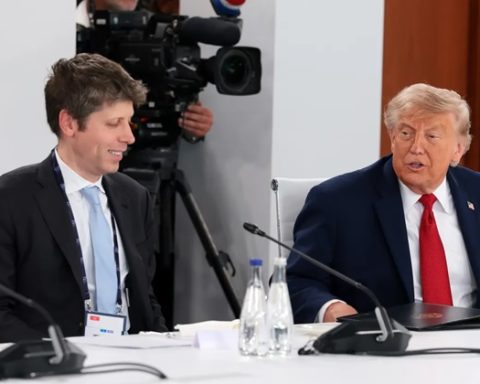
The technology is also moving beyond books. A month ago, Sam Altman, president of OpenAI, described another potential use for ChatGPT: connecting family calendars and describing children’s interests so that the system could generate a personalised podcast during the journey to school, discussing one child’s football match, another’s forthcoming birthday and selected news.
The suggestion prompted debate online. Among the responses was a question from director Alex Hirsch: “What if you just talked to your kids?” His response received almost 20 times more likes than Altman’s original suggestion.
The exchange points towards a question that the personalised-book industry cannot answer through technology alone. If machines become increasingly capable of generating stories, entertainment and conversation tailored to individual children, the issue is not simply whether those products are cheaper or more convenient than traditional alternatives. It is whether a culture built around infinite personalisation can preserve the shared stories through which people recognise experiences beyond themselves.
For the children holding these books, the attraction is immediate: they can see themselves become the hero. The longer-term cultural question is what happens when everyone gets their own story.