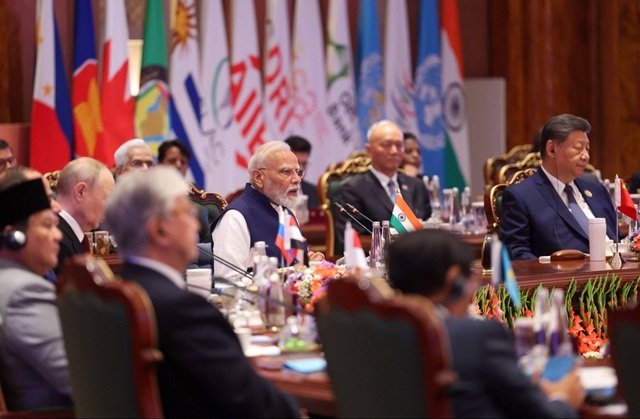
BRICS has emerged as one of the most significant platforms through which the Global South seeks a greater voice in international affairs. With eleven member states, the grouping has moved beyond its original economic character to address questions of global governance, international security and the distribution of political and economic power. India, one of its principal members, hosted the 18th BRICS Summit on 12 and 13 September, where all member states unanimously adopted the New Delhi Declaration. Its message was broader than a routine summit statement: reform of the international order was placed firmly on the BRICS agenda.
The declaration addresses global governance, de-dollarisation, peace and security, the rule of law and international cooperation. It also reflects a long-standing concern among countries of the Global South that the existing structures of global governance do not adequately represent their interests. For BRICS, the problem is not simply the absence of representation, but the persistence of institutions shaped by historical power structures and a colonial legacy. The declaration therefore presents multilateralism as a central principle of international governance and places it above unilateral approaches.
The position carries particular significance because BRICS is increasingly presenting itself as a collective voice for countries that have traditionally had limited influence over the institutions governing international affairs. The Indian Prime Minister, who chaired the summit, emphasised that international rule of law should not move beyond multilateralism, describing multilateralism as a fundamental pillar of global governance. The declaration reinforces that position by linking international legitimacy with broader participation and representation.
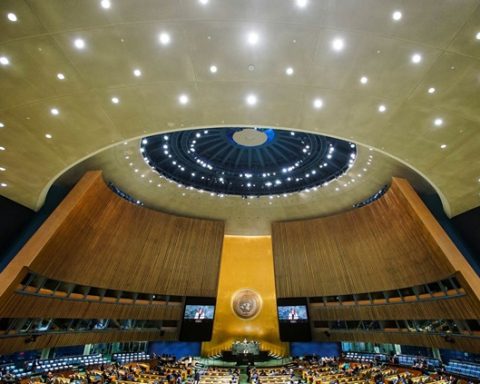
Reform of the United Nations Security Council sits at the heart of this argument. The Council remains one of the clearest examples of the unequal distribution of political authority within the international system. Its permanent membership and veto structure reflect the balance of power established after the Second World War, while much of the Global South remains without permanent representation. Kofi Annan has previously argued that Security Council reform is necessary for better global governance, and BRICS has continued to amplify that demand.
The issue extends beyond the Security Council. The New Delhi Declaration also calls for reform of international financial institutions and international rule-making processes. These demands reflect the wider BRICS argument that global governance cannot remain credible if the institutions responsible for making and enforcing international rules continue to operate within structures established under very different political and economic conditions.
Economic governance is particularly important. BRICS has increasingly challenged the dominance of the US dollar and the wider influence of the Bretton Woods institutions. From the perspective advanced by the grouping, developing economies require greater economic space and stronger institutional representation within the international financial system. The creation of the BRICS development bank forms part of that effort, providing an alternative mechanism for financing infrastructure and development.
The challenge to dollar dominance is also connected to a broader criticism of economic inequality between the Global North and Global South. The original text of the declaration places this debate within a wider argument over unilateral economic measures and the rules governing international trade. The reference to unilateral tariffs imposed by the United States under President Trump illustrates the concern that powerful states can exercise disproportionate influence over international economic relations. The resulting debate has strengthened the BRICS argument for a more balanced system of economic governance.
Peace and security form another important part of the declaration. BRICS has highlighted terrorism and international conflict while placing greater emphasis on diplomacy as a means of addressing disputes. For emerging economies, the consequences of major conflicts extend well beyond the battlefield, producing economic pressures that can undermine development. The declaration therefore connects peace, security and sustainable development rather than treating them as separate questions.
The significance of the New Delhi Declaration lies in the breadth of the challenge it presents. BRICS is not simply asking for a larger place within existing institutions; it is questioning whether those institutions adequately reflect the political and economic realities of the contemporary world. Its calls for Security Council reform, changes to international financial institutions, stronger multilateralism and greater democratic representation all point towards the same question: who gets to shape the rules of the international system?
That question has particular weight for the Global South. For decades, many of its states have participated in an international order whose principal institutions were designed when the distribution of global power was markedly different. The New Delhi Declaration gives BRICS a platform to challenge that imbalance and to press for reforms based on broader representation, sovereignty and institutional equality.
The real test, however, lies beyond the language of the declaration. Demands for reform are easier to articulate than to achieve, particularly when they concern institutions protected by established political and economic interests. BRICS has nevertheless placed the issue firmly on the international agenda. The New Delhi Declaration shows that the group intends to make the reform of global governance a central part of its role — and that the Global South is increasingly unwilling to remain merely a participant in rules it had little role in creating.