The European Union has so far failed to secure agreement on extending its sanctions against Russia, with a dispute over two Russian billionaires preventing the 27 member states from completing the required unanimous approval. The measures covering around 3,000 individuals, entities and companies are due to expire in the night to Wednesday unless the EU reaches an agreement.
EU ambassadors had been expected to confirm a political agreement that would extend the sanctions while removing Alisher Usmanov and Mikhail Fridman from the EU sanctions list. However, EU diplomats said the necessary unanimity was not achieved in the written decision-making procedure.
The political agreement reached earlier would have needed to be confirmed in writing by the EU countries by Monday evening. The failure to secure that confirmation has left the bloc under significant time pressure, with ambassadors expected to continue discussions before the sanctions deadline.
The Irish EU Council presidency, which is responsible for the procedure, initially did not identify the member state responsible for the renewed blockage. According to AFP, diplomats said Latvia had opposed the agreement. EU sanctions decisions require the unanimous approval of all 27 member states.
The dispute centres on demands from France and Slovakia for the removal of Usmanov, the Russian-Uzbek billionaire, from the sanctions list. France has cited national security matters but has not publicly disclosed further details. According to diplomatic sources, Luxembourg had also sought the removal of Russian-Israeli billionaire Mikhail Fridman if the EU agreed to remove Usmanov.
Both billionaires have been on the EU sanctions list since 2022. The EU’s sanctions decision describes Usmanov as a Kremlin-friendly oligarch with particularly close ties to Russian President Vladimir Putin and as one of the oligarchs particularly favoured by Putin. Forbes most recently estimated his wealth at around $14.1 billion.
Fridman, whose fortune was most recently estimated by Forbes at $16.6 billion, was also described in EU documents as one of Russia’s most important financiers and supporters of Putin’s inner circle.
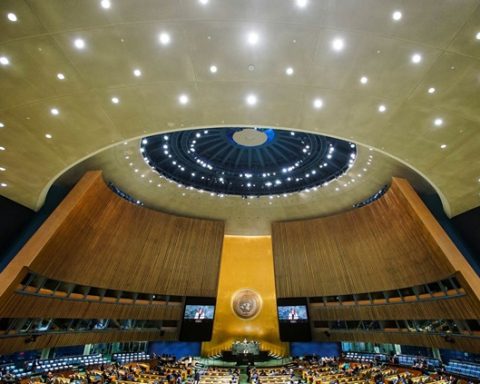
The dispute has prompted calls for the EU to maintain its sanctions policy. EU foreign policy chief Kaja Kallas urged member states to preserve the measures, saying: “We need this stability, that the sanctions remain in place for a longer period.” She made the remarks after an EU foreign ministers’ meeting on the sidelines of the UN General Assembly in New York.
The sanctions were introduced following Russia’s invasion of Ukraine more than four and a half years ago and have so far required unanimous renewal every six months. The EU postponed the deadline for their extension last week to Wednesday, increasing the pressure on member states to resolve the dispute before the measures expire.