Humans indulge themselves in a rat-race life, long driven by greed and ambitions, even as inevitable death eventually nullifies all lifetime events and achievements.
Such human behaviour appears to be nearly similar all over the world in given circumstances, and historical human behaviour over the last several centuries clearly proves this.
From childhood days, humans set certain goals for themselves based on their own likes and dislikes and their own assessment of their capabilities, which are largely based on wishful thinking. Such ambitious aims are inevitably accompanied by thought processes, sometimes with greed and jealousy and sometimes with love and passion. Such consequent thought processes due to wishful thinking blur the life process itself and make it confused and sometimes even make it a chaotic one.
Some people achieve success in one way or the other in their aims, and some others meet failures in the eyes of others. In any case, whatever is achieved or not achieved or done or undone, the ultimate death event clearly proves that such preoccupation with activities amounts to nothing finally. Does it not show that humans are unwise and more inclined to refuse to appreciate the real fact and ground realities that the life process is essentially a time-passing exercise, where there is no permanence about it?
It is particularly strange to see situations where people even reserve land for their burial and memorial after their life process ends, particularly in a scenario where they would not know the destination after their passing away. What does it matter to the deceased persons whether they would be remembered or unremembered after they leave the scene?
Several saints and deep thinkers view such thought processes and ways of life of humans as reflecting their lack of consciousness about the uncertainties of the inevitable death event, which could be due to natural or unnatural causes and which may happen at any time. Adi Sankara, who is revered as one of the greatest Hindu saints in India, in his classic Bhajagovindam has called humans living with greed to possess power and wealth and indulging in seeking excessive pleasure and resorting to violence to settle scores as “mudha” (a Sanskrit word meaning fool).
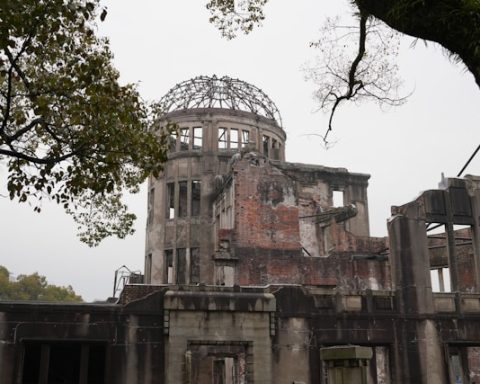
Several historical occurrences have happened and events are happening between individuals, groups, religions and countries, which have shown us how greed for power and territory and attributes of vengeance have only resulted in several innocent people losing their lives through no fault of theirs, soldiers getting killed, property and infrastructure getting destroyed and, ultimately, no one decisively gaining anything in the process. However, such conditions continue to exist from historical times until today, obviously indicating the fact that humans continue to remain unwise, with greed or passion clouding their vision. It also indicates that, by and large, humans have learnt nothing and forgotten nothing over centuries.
Take the present case of the wars going on between Russia and Ukraine, Iran and Israel, Iran and the USA, and the Houthis and Saudi Arabia, which have been caused only by the players involved having greed, prejudice and hateful feelings, and, in the process, no one gaining, with the likely results being only destruction all round. Are the people who have caused the conflicts wise and mature? They foolishly think that, in spite of such destruction caused by their decisions, they would remain all along and ultimately have their way. But they also die at one time or the other, just like several thousands of people who have lost their lives due to the greed and prejudices of those who have caused the conflicts.
Hitler had the ambition to dominate the world, and Churchill had the ambition to overpower Hitler. Both these men were preoccupied with fighting each other and finally both ended in death, one reported to have died by suicide and the other one due to natural causes, with their destination after death being unknown and incomprehensible. Have these two men really gained anything for themselves? They may have gained historical attention, with praise or hate by successive generations of people. It is strange to see people putting up statues, building monuments, celebrating the birth anniversaries of people and even honouring persons with posthumous awards for those who have passed away. Do such honours after their passing away really matter to the persons?
Such events conclusively prove that individual humans remain unwise from historical times until today, and it appears that there is no indication or prospect of future generations becoming any more mature or wise than what they are today.
Over centuries, the world has seen several religions springing up, several saints advocating peace and harmony and pointing out that the ultimate objective of humans should be to attain the feet of God, wherever He is and whatever He is. Several humans follow such religious teachings and the advocacy of saints, but their behaviour and attitude to life do not become any wiser over the years. Even those who believe in God do not become wise in their day-to-day living and continue to remain with negative attributes such as greed, jealousy and ego.
While a large number of people believe in God and the methodology advocated by saints to realise God, humans wonder as to what to do with this human body as they live on. They certainly need activities and need to keep themselves occupied in some pursuits or other. Saints and religions do not ask humans to remain inactive in their lifetime but urge them to pursue their activities without ego, greed and jealousy, while ensuring truth and fairness in all pursuits.
It is seen that all such advice of the deep thinkers and saints has really fallen on deaf ears, even as most humans are followers of religions and saints. Obviously, this implies that humans remain unwise lifelong.