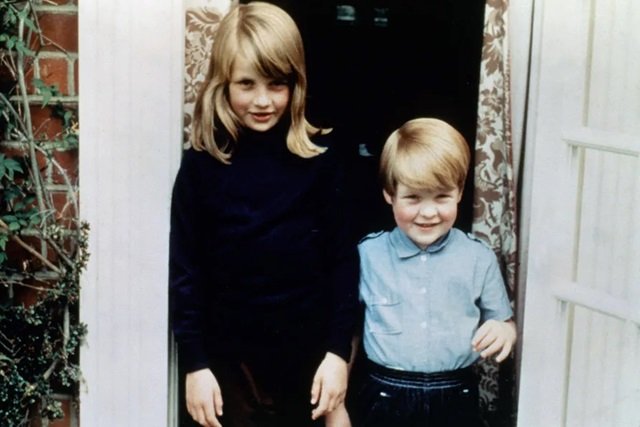
Nearly three decades after Diana, Princess of Wales, died in a Paris car crash while being pursued by paparazzi, her brother Charles Spencer has reopened some of the most contentious arguments surrounding her life, marriage and death. In its coverage of his new memoir, Swan Song – Diana, meine Schwester, German newspaper Die Zeit focuses on the contradictions at the heart of Spencer’s account: a denunciation of intrusive media alongside an extensive commercial campaign built around revelations about his family, and an attack on King Charles that places the former royal marriage once again at the centre of the story.
Diana died in 1997, and her funeral procession to Westminster Abbey became one of the most widely watched royal events in television history, with an estimated 2.5 billion people watching the service on 6 September that year. Spencer, Diana’s only brother, walked behind her coffin alongside her sons, Harry, then 12, and William, 15. A card bearing the handwritten word “Mummy” lay on the coffin. It was during the service that Spencer delivered the speech that established his most enduring public association with his sister. He criticised the tabloid press while portraying Diana as both a figure of extraordinary public engagement and a deeply insecure woman.
“Despite all the status, the glamour, the applause,” Spencer said, Diana had remained “a deeply insecure person at heart”, with her eating disorders representing symptoms of feelings of worthlessness. He also described the paradox of her relationship with the press in language that has continued to be quoted in Britain: “A girl who was given the name of the ancient goddess of the hunt became in the end the most hunted person of the modern age.”
Swan Song, according to Die Zeit’s account, is structured around that moment. Much of Diana’s life is presented through flashbacks leading towards the funeral speech, while Spencer’s own family history receives substantial attention. He writes that his ancestors from the Spencer family had been highly successful sheep farmers in the Middle Ages and leased fields at Althorp for their herds “before Columbus had even set foot on American soil”. The family inheritance also made Spencer the holder of Althorp and the title of ninth Earl Spencer.
The memoir nevertheless goes considerably further than a conventional family recollection. Spencer discusses private details of Diana’s life, including her relationships, conflicts with friends and her mother, her emotional instability and the possibility that she had ADHD. He also writes about the riding officer, the heart surgeon and Dodi Al-Fayed, described as her final lover, as well as Diana’s tactical dealings with the tabloid press that Spencer has elsewhere blamed for the circumstances surrounding her death. Die Zeit notes that material which was once the subject of intense public speculation is now presented in intimate detail by Diana’s brother himself.
The most contentious material concerns King Charles, Diana’s former husband. Spencer recalls two telephone conversations with the then Prince Charles around the time of Diana’s death. He describes the first call, shortly after the news, as sounding to him unusually relaxed: “like a lottery winner”. In the second conversation, Spencer objected to the expectation that the young William and Harry should walk for more than 30 minutes behind their mother’s coffin to Westminster Abbey. He says Charles accused him and Diana of failing in their duty.
Spencer also claims that Charles told him, “Rest assured, we’ll forget her soon enough.” The alleged remark has become the subject of continuing dispute in Britain. Spencer says the words stayed with him throughout the funeral and led him to conclude that Diana’s former husband should not have been present at her funeral. At another point in the book, he refers to his former brother-in-law as “the raging fool at the other end of the line”.
Charles Spencer has rejected the suggestion that his hostility is driven by continuing personal animosity. Asked by Stern whether he and King Charles would ever be friends, he replied: “I have no bad feelings towards him. He plays no role for me when I get up in the morning.” Die Zeit describes the response as an extreme form of aristocratic understatement.
The memoir’s publication has also revived a wider argument about the Royal Family’s relationship with the media. Spencer has accused the press of pursuing Diana while the book itself has been launched through television appearances, magazine coverage and advance extracts. A critic in the Daily Telegraph argues that the book is “not about Diana” but “a monument to his ego”. The commercial presentation of private family material sits uneasily alongside long-standing complaints about media intrusion.
The Palace has responded to Spencer’s accusations by questioning his recollection. A statement issued on behalf of King Charles said that “the pain of sibling grief” could, even many years after a loss, “cloud the mind, impair judgement and colour memories in ways others cannot understand”. The dispute leaves Spencer’s recollections as contested testimony rather than an independently established account of what was said or felt during those final days.
As the 30th anniversary of Diana’s death approaches in 2027, the memoir has therefore added another layer to the continuing struggle over how her life, marriage and relationship with the Royal Family are remembered. For Die Zeit, the central tension lies in the fact that the same family that has repeatedly complained about media intrusion continues to supply the media with intimate material of its own.