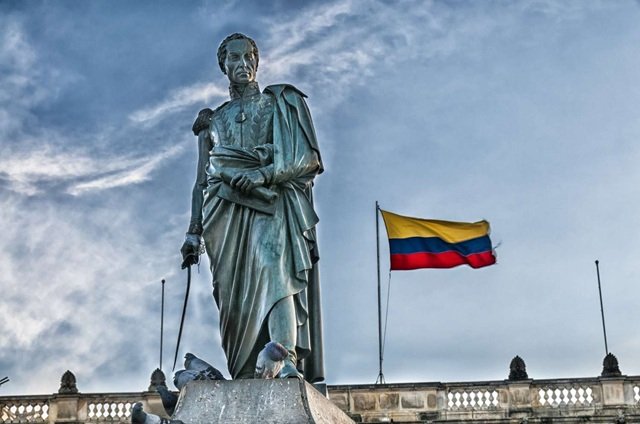
Colombia has broken diplomatic relations with Iran, citing alleged links between the Islamic Republic’s government and international terrorist groups, human rights violations and concerns over Tehran’s nuclear programme. The decision was formally implemented on September 19 and announced by Colombia’s Foreign Ministry on Thursday.
The government of President Abelardo de la Espriella said it had considered “the alleged links of the government” of the Islamic Republic with “international terrorist groups” in reaching the decision. The announcement came three hours after Vice-President José Manuel Restrepo addressed the United Nations General Assembly in New York, although he did not refer to the diplomatic rupture during his speech.
Colombia’s Foreign Ministry said the government had also taken into account what it described as “established violations of human rights” committed by Iranian authorities inside Iran, Iranian attacks in other Middle Eastern countries and the closure of the Strait of Hormuz. According to the ministry, these developments had “deteriorated Colombia’s trust in the government of the Islamic Republic”.
Another factor cited by Bogotá was what it described as obstruction by Iranian authorities of the work of the International Atomic Energy Agency, which has been unable to verify the progress of Iran’s nuclear programme.
In a subsequent statement, Colombia also declared Iran’s Islamic Revolutionary Guard Corps a terrorist organisation. The government described the force as a parallel army supporting the Iranian regime and said it “represses the Iranian population and carries out covert operations beyond Iran’s borders”. Colombia said it would strengthen immigration controls to prevent people linked to the organisation from entering the country.
The decision comes after De la Espriella’s government, which has been in power for almost 50 days, adopted a foreign policy closely aligned with the United States and Israel, both major opponents of Iran. Relations between Iran and those countries have deteriorated sharply following a US attack on Tehran that killed then-Ayatollah Ali Khamenei.
Iran responded with closures of the Strait of Hormuz and attacks on countries in the region, including Jordan, Saudi Arabia, Oman and the United Arab Emirates. The strait is described in the source as a route through which one-fifth of the world’s oil passes.
Iranian President Masoud Pezeshkian used his address to the UN General Assembly on Wednesday to accuse the United States and Israel of violating international law through their attacks. “Yes, they hit us, but we did not bend our knees, we did not bow our heads,” Pezeshkian said. A day earlier, US President Donald Trump had threatened to “annihilate” Iran if a peace agreement could not be reached. Despite the public tensions, representatives of the two countries were meeting in New York to continue peace negotiations.
Colombia’s move follows a similar decision by Peru, whose government under conservative President Keiko Fujimori also broke diplomatic relations with Iran, citing what it called the deterioration of democracy, including the persecution of political opponents and the press and discrimination against women and girls.
Israel’s ambassador to Colombia, who had recently arrived following the restoration of diplomatic relations previously severed by former president Gustavo Petro, welcomed Bogotá’s decision. “Iran is a country whose activities and links with terrorist organisations and drug trafficking have generated serious security concerns in Colombia and in the international community,” she said on X.
Colombia’s Foreign Ministry stressed that the diplomatic rupture would not mean an end to consular relations. It did not specify what would happen to Iran’s ambassador, Ahmed Reza Kheirmand, or the rest of the Iranian diplomatic delegation, saying its Protocol Directorate would inform Iranian authorities of the required procedure.