Russia’s fleet of ships sailing under its national flag has grown by more than a third since January 2025, as Moscow seeks to keep oil and gas exports moving despite growing Western enforcement of sanctions.
Analysis published on Friday by the Centre for Research on Energy and Clean Air (CREA) found that the number of vessels registered under the Russian flag rose 36% from the beginning of January 2025 to 382 by the end of June 2026. More than 80% of the vessels added to the registry during that period were already under sanctions, with many being oil tankers or other ocean-going export vessels.
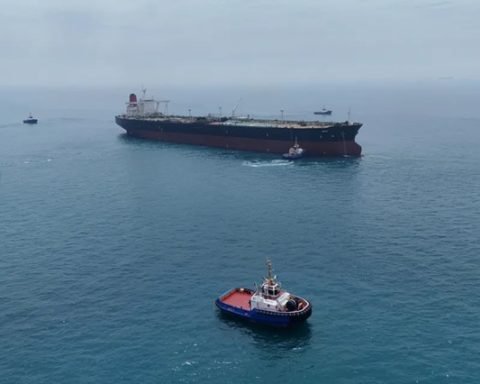
The expansion comes as the US and European countries have increased pressure on so-called shadow fleet vessels, particularly ships operating without recognised national registration. Maritime intelligence company Windward AI said at least 23 such vessels had been detained since December 2024 after sailing under so-called false flags.
The number of vessels using false flags fell sharply, from 101 in October 2025 to 45 by the end of June 2026. Luke Wickenden, an energy analyst at CREA, described the movement towards the Russian registry as highly one-sided. “The Russian flag registry has become a one-way refuge for sanctioned vessels: for every ship that leaves, roughly nine enter,” he said.
Every ship is required to fly a national flag and is consequently subject to the maritime rules and regulations of the country concerned. Flag registries can be operated by governments or by private organisations certified by states. The Marshall Islands registry, one of the world’s largest, is based in Virginia and operated by International Registries Inc, which previously operated Liberia’s registry.
Shadow fleet tankers are typically characterised by opaque ownership structures and a refusal to use Western services, including insurance. The lack of transparency makes it more difficult to identify the individuals benefiting from their operations. Some sanctioned vessels use the flags of countries that do not have registries, including Syria and Myanmar, while others rapidly change flags to avoid scrutiny.
Pressure from US and EU sanctions authorities has also prompted some flag states to remove vessels from their registries. Those ships can become stateless and consequently vulnerable to detention. Cameroon, for example, removed more than 30 vessels from its registry, enabling Britain to board the sanctioned tanker Smyrtos in June.
As enforcement against stateless vessels intensified, Moscow encouraged sanctioned oil tankers to enter its domestic registry. A presidential decree issued in June made it easier for vessels to register under the Russian flag, bringing them under Russian protection. In January, US officials reported that a Russian submarine had been in the vicinity when the US seized the Russian-flagged oil tanker Marinera. Moscow condemned the detention as a violation of international maritime law.
The pace of vessels joining the Russian registry has nevertheless slowed in recent months. More than 50 new vessels have instead registered under Equatorial Guinea, which reopened its flag registry this year, according to a July letter to the International Maritime Organization. All of those vessels have been certified as seaworthy by the Russian Maritime Register of Shipping, suggesting they may carry cargoes from Russia, according to Michelle Wiese Bockmann, a senior maritime intelligence analyst at Windward.
After the sanctioned tanker Caroline Bezengi exploded off Oman in June while insured by a Russian insurer, Bockmann said Russia may have recognised the advantages of maintaining greater distance from the vessels. “When you are one step removed you have plausible deniability about how that vessel was owned and operated,” she said.