by Durga
The most revealing sentence in Lindy Li’s Unburdened may be the one that sounds least like political analysis: “Why did I do it? You want the unvarnished truth…? It was power” (Prologue). That confession changes the terms on which the entire book ought to be read. Li is not writing from the moral high ground of an outsider who wandered innocently into Washington and discovered corruption. She was part of the machinery she now denounces. She raised money, cultivated donors, moved among senior Democratic figures and participated in the very political culture she subsequently describes as rotten. Unburdened is therefore not simply a memoir of political disillusionment. It is an insider’s indictment of a system in which she admits that proximity itself was a form of currency. That makes the book considerably more interesting than its relentless rhetoric might suggest. It also makes its central problem unavoidable: how much of this is whistleblowing, and how much is the reconstruction of a political identity after the author has changed sides?
Li is at her strongest when describing the transactional logic of American political fundraising. “The ability to raise half a million dollars for a candidate with a single phone call from my sofa,” she writes, gave her “proximity, influence that whispered rather than shouted, and a seat at tables where history is quietly shaped over Veuve Clicquot and caviar” (Prologue). This is a striking description because it punctures the civic vocabulary surrounding campaign finance. Li refuses the sentimental language of “engagement”, “participation” and “democratic investment” and calls elite bundling what she believes it really is: “the prostitution of relationships” (Prologue). Whether one accepts that metaphor or not, it identifies an important structural tension. Political fundraising is formally about supporting candidates; socially, it can also purchase access, attention and status. Li’s insider position gives this argument unusual narrative force. Yet it also exposes a contradiction she never fully resolves: she condemns the system while acknowledging that she became extraordinarily effective at operating within it.
That contradiction should not be treated as a minor autobiographical inconsistency. It is the intellectual centre of Unburdened. Li writes that “Every November, voters think they decide the fate of the nation, but it’s all theater” (Prologue), and that politicians are “vessels, not captains” (Prologue). Such language is deliberately explosive. It transforms conventional criticism of political elites into a theory of democratic capture. But the book’s evidentiary burden rises with the scale of the claim. The difference between saying that wealthy donors exercise disproportionate influence and saying that elections are essentially theatre is enormous. The former is a proposition capable of empirical investigation; the latter is a sweeping interpretation of democratic government. Li frequently moves between these two levels without sufficiently distinguishing them.
Her account of Joe Biden is where that problem becomes most acute. “None of us dared to utter the truth,” she writes, “namely that Biden belonged in a nursing home” (Chapter Two). Elsewhere she declares that “Biden didn’t run our country for the past four years” and that senior staffers did instead (Chapter Seven). These are not modest allegations about presentation, age or political management. They are claims about presidential capacity and the effective exercise of executive power. Li’s narrative is constructed to make concealment appear systematic: teleprompters, restricted access, carefully controlled meetings and what she calls an “unspoken accommodation for Biden’s hearing challenges” (Chapter Two). The cumulative picture is deliberately damning.
But precisely because the charge is so serious, the distinction between observation, inference and medical diagnosis matters. Li cites a physician who, she says, believed Biden suffered from Alzheimer’s and Parkinson’s, adding that her father, a doctor, shared the view (Chapter Six). That is testimony, not a clinical diagnosis established within the book. The phrase “a diagnosis echoed by my father” (Chapter Six) is rhetorically potent but epistemologically weak unless accompanied by medical evidence. The same problem arises when Li asks whether Biden’s team knew of his later-announced prostate cancer when it had maintained that he could serve until eighty-six (Chapter Six). The question is legitimate as a question. It is not, by itself, evidence of prior knowledge. Unburdened sometimes understands this distinction; at other moments its rhetoric deliberately overwhelms it.
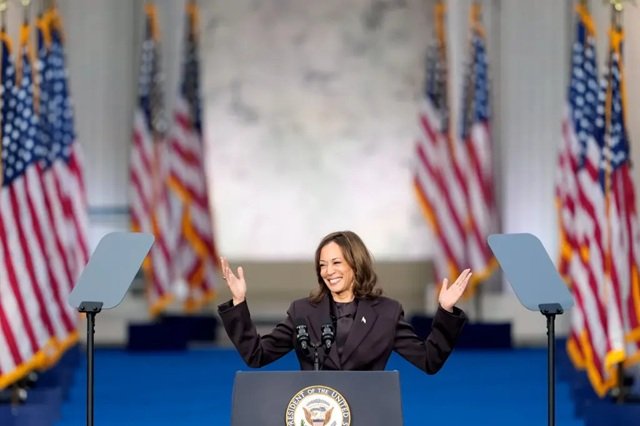
The book’s treatment of Kamala Harris is even more revealing because contempt becomes part of the narrative method. Li writes that Harris “dazzled at selfies and ceremonies but offered little beyond serviceable teleprompter-reading skills” (Chapter One), describes her speeches as “puddles of pishposh” (Chapter Seven), and concludes that she lacked “the raw intellectual horsepower of a true heavyweight” (Chapter Eleven). Such formulations are journalistically vivid, but they are not analysis. They are verdicts. The more serious passages are those in which Li turns from insult to organisational evidence: the alleged 92 per cent staff turnover, the disappearance of senior aides and the claim that only four members of Harris’s original staff remained by April 2024 (Chapter Seven). Those assertions, if documented, raise questions about management and institutional stability. They deserve scrutiny precisely because they do not require the reader to accept Li’s more extravagant characterisations.
The same distinction separates Li’s criticism of the Democratic Party’s identity politics from the book’s more useful observations about political coalition-building. Her complaint that the DNC “imprisoned me in a racial silo against my will” (Chapter Three) is a powerful account of her subjective experience. Her broader conclusion that the party had become “a festival of competitive grievance” (Chapter Eight), however, is an interpretation presented with the confidence of fact. Likewise, her argument that replacing meritocratic principles with racial preferences is “perniciously destructive” (Chapter Seven) is a political position, not an empirical conclusion that follows automatically from her experience. The book would be intellectually stronger if it occasionally subjected its own ideological premises to the same scepticism it applies to those of its former allies.
This is particularly important because Li’s prose increasingly shifts from memoir into political polemic. Barack Obama becomes “the Messiah” who “gutted” the Democratic Party (Prologue); the DNC becomes a “hollowed-out carcass” (Prologue); consultants “feasted while the house burned” (Chapter Eighteen). The metaphors are memorable, sometimes deliciously so, but their cumulative effect is to reduce political institutions to a cast of villains and victims. That is excellent political theatre. It is less convincing political history. The danger is that the book reproduces the binary culture it claims to reject: its former party becomes not merely mistaken but morally diseased, while dissent becomes evidence of liberation.
Li’s discussion of celebrity politics provides one of the book’s most consequential case studies. She alleges that the Harris campaign spent $45 million on celebrity-related spectacles, describing them as “useless and even counterproductive” (Chapter Fourteen), and argues that celebrity endorsements transformed campaigning into a form of financial spectacle. Her phrase “It was truly a bonfire of the vanities, fueled by Other People’s Money” (Chapter Four) captures the argument perfectly. Yet again, the critical question is not whether the expenditure sounds extravagant. It is whether the spending produced measurable political effects and whether the contracts were improper, wasteful, strategically defensible or merely unsuccessful. Li often supplies the moral conclusion before establishing the empirical chain that would justify it.
Her critique of the media is similarly strongest when it describes incentives rather than ideology. “When the party line changed, so did the script” (Chapter Four), she writes, accusing major broadcasters of abandoning previous assessments once Democratic political circumstances changed. She also describes political journalism as dependent upon “symbiotic relationships with insiders” (Chapter Four). This is a familiar structural problem in Washington: access journalism can reward proximity and discourage confrontation. But Li’s description of major networks as “leftist propaganda factories” (Chapter Four) transforms an institutional criticism into a partisan declaration. The former invites investigation; the latter largely ends it.
Perhaps the book’s most uncomfortable contribution is its insistence that political identity can itself become an instrument of discipline. Li describes being assigned to an ethnic council and pushed towards an AAPI caucus despite feeling that these categories reduced her to ancestry (Chapter Three). Her line that she grew up “blasting Britney Spears and Backstreet Boys, not undulating lions” (Chapter Three) is intentionally comic, but underneath the provocation lies a serious question: when institutions organise people according to demographic categories, do they sometimes reproduce the very essentialism they claim to oppose? That question deserves an argument considerably more sophisticated than Li occasionally gives it. Her personal rejection of one form of identity politics does not, by itself, establish the failure of diversity programmes as a whole.
The book becomes most compelling, finally, when Li turns the accusation upon herself. “Turning friends into ATMs has always eaten away at my soul,” she writes (Prologue). That sentence is more valuable than many of her attacks on Democratic leaders because it acknowledges complicity. So too does the extraordinary confession that she became a “Sylvia Plath of the Instagram Age” (Chapter Eighteen), followed by her description of being buried beneath scandal after breaking with the party. The personal betrayal at the end, including the claim that her partner of eight years told her he had never loved her, broadens the memoir into a story about rupture itself. Political defection and private heartbreak become parallel experiences of discovering that an identity once believed permanent can disappear almost overnight.
Unburdened is therefore a difficult book to classify because its virtues and weaknesses are inseparable. It possesses the immediacy of testimony, the fury of a political conversion narrative and the commercial instincts of the media ecosystem it attacks. Its author knows precisely how to manufacture a sentence that will travel: “The Democratic Party died on June 27” (Chapter Four); “A functioning democracy demands a credible opposition to the GOP. You are not it” (Chapter Seventeen). But memorable sentences are not necessarily demonstrated propositions. The book asks to be read as revelation, yet its most important revelations require independent scrutiny rather than automatic belief.
The serious reader should consequently resist two equally convenient reactions: dismissing Li as a partisan defector whose bitterness explains everything, or treating her insider status as proof that every allegation is true. The book deserves neither reflexive rejection nor unquestioning acceptance. Its real value lies in the questions it forces into view: how much power do donors actually exercise; how transparent are political organisations about their own internal weaknesses; when does access journalism become institutional dependency; how does identity become political currency; and what happens when a participant in a political machine decides that the machine itself must be exposed?
Li calls the book Unburdened, but its most interesting burden remains firmly attached to her: she was not merely a witness to the political culture she condemns. She helped sustain it. That does not invalidate her testimony. It makes it more complicated, and potentially more important. The ultimate test of the book will not be whether its readers share Li’s political conversion. It will be whether the allegations survive scrutiny once the rhetoric is stripped away. If they do, Unburdened will become something more consequential than an angry memoir of defection. If they do not, it will remain an exceptionally revealing document of another phenomenon: the transformation of political disappointment into political certainty.