The U.S.-Iran war has entered a phase in which Washington can intensify military and economic pressure but has no clear route to a decisive political settlement, according to an analysis by The Soufan Center. Oil flows through the Strait of Hormuz have recovered to near pre-war levels, sanctions and a naval blockade are imposing severe pressure on Iran, and Washington has several escalation options. Yet each carries significant costs and uncertain consequences, while an attempt to destroy Iran’s political system could generate new security threats rather than eliminate the existing ones.
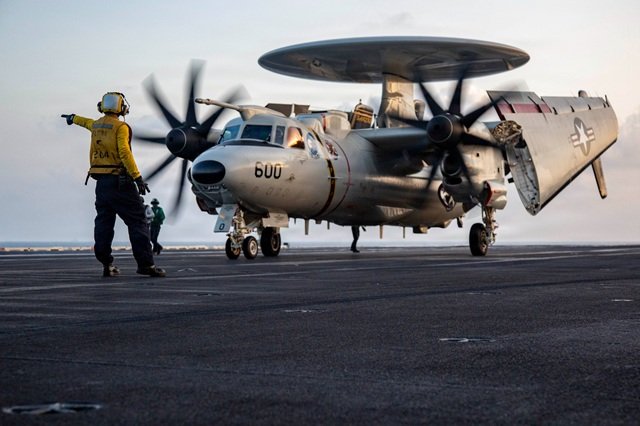
The immediate strategic problem is the Strait of Hormuz. Crude oil is now being shipped through the strait at about 80 per cent of its pre-war volume. When oil transported through pipelines is included, total flows are reportedly at 98 per cent of pre-war levels. Shipments of refined products remain substantially lower because of damage to infrastructure, while fertiliser shipments and other vital goods also remain below their previous volumes. Maintaining this flow would require continuing naval escorts and protection for merchant vessels and oil terminals, placing much of the burden on the United States. European governments have shown reluctance to send warships to the Gulf, particularly because the war began without prior consultation with Washington’s allies.
Washington is also maintaining a naval blockade of Iranian ports as part of a wider sanctions campaign. The analysis says the combined measures have severely restricted trade and devastated the Iranian economy, but warns that Iran’s capacity to absorb economic hardship is difficult to measure. Naval blockades are expensive and slow, while political leaders are generally insulated from the worst effects of economic collapse. The United States has also expanded sanctions through “Operation Economic Outcast”, announced by Treasury Secretary Scott Bessent in August 2026, including secondary sanctions. The pressure is therefore likely to continue even as Washington considers military alternatives.
Those alternatives range from targeted killings to wider bombing campaigns. The United States has previously killed senior al-Qaeda and Islamic State figures, as well as Qasem Soleimani, commander of Iran’s Quds Force. Such operations degraded militant command structures but did not eliminate the organisations. The Soufan Center analysis says it is unclear whether killing another layer of Iranian leaders would significantly alter the conflict unless such operations were sustained. It also notes arguments that the killing of Iran’s top leaders at the beginning of the war may have contributed to the emergence of a less compromising leadership.
Washington has rejected a Saudi request for substantial US military assistance against the Houthi rebels in Yemen, despite Saudi Arabia’s military involvement in the conflict since 2015. The analysis says the Houthis have continued to strengthen and that US intervention in Yemen would neither resolve the wider Iranian conflict nor reopen the Strait of Hormuz. It also notes reports that American supplies of some critical munitions are low, while the UK has offered limited air-refuelling assistance to the Saudi campaign.
A broader US bombing campaign against Iran remains another possibility, but would probably have to be largely unilateral. A much larger operation involving American air and ground forces, Kurdish units and other forces would take months to assemble and require extensive logistics and foreign bases. Iran would have time to respond through military attacks, sabotage and terrorist operations against countries hosting American supply facilities. The analysis notes that Washington did not establish a broad coalition before beginning hostilities and that most European governments are unlikely to join a subsequent campaign.
Supporting Iranian opposition forces presents another option, including backing Kurdish forces in northern Iran. The proposed purpose would not formally be Kurdish separatism but the establishment of a sanctuary for fleeing Iranians and the development of an Iranian rebel force capable of advancing with US air support. Yet previous American experience offers conflicting precedents. Kurdish forces were successfully supported against ISIS in 2014, while earlier US-backed efforts to create a secular rebel force capable of overthrowing Bashar al-Assad failed. The analysis also recalls the 1991 Kurdish and Shia uprisings in Iraq, when the United States did not intervene as Saddam Hussein suppressed them, and the later abandonment of Kurdish allies following the defeat of ISIS’s territorial caliphate.
The risks of escalation extend beyond Iran. If Tehran’s leadership faces an existential threat, the analysis warns that Iranian forces could attack Gulf desalination plants and oil and gas infrastructure. The United Arab Emirates operates nuclear power plants, while elements within the Islamic Revolutionary Guard Corps may already be preparing extreme scenarios.
President Donald Trump has presented the conflict in stark terms, telling the United Nations General Assembly that Iran faces a choice between a deal and annihilation. Yet the message has been accompanied by signals pointing towards negotiation. Hours after his UN speech, Trump described a three-hour meeting between US and Iranian officials as “very good”. In September, the State Department also shifted $52 million in foreign military assistance from the Middle East to Latin America, suggesting competing strategic priorities.
The near-term outcome identified by The Soufan Center is not decisive victory but a prolonged low-intensity conflict punctuated by controlled escalations and negotiations. Iran has also signalled openness to diplomacy: President Masoud Pezeshkian said Iran would not “bow its head” but remained open to negotiations, and Tehran subsequently proposed a ceasefire aimed at reopening the Strait of Hormuz and renewing talks. Trump rejected that proposal while saying he remained open to a deal.
The analysis identifies another possibility: a short, intense US military campaign designed to accelerate stalled negotiations. It cites the 11-day US bombing of Hanoi and Haiphong in December 1972 as a historical precedent, although the effect of that campaign on North Vietnam’s negotiating position remains disputed. The broader lesson, it argues, is that negotiations and warfare can operate simultaneously.
The Soufan Center also warns that the collapse of political authority in Iran could create dangers beyond the current conflict. Its Executive Director, Colin Clarke, argued in April that a failed state can produce an insurgency lasting for years. The analysis says the destruction of Iran’s existing political authority could increase the autonomy of actors within the IRGC rather than simply transferring power to a new government. As Washington seeks to eliminate the threat posed by the Iranian state, the resulting disorder could therefore create threats that are less subject to central control.