In Bangladesh today, one of the most pressing questions is whether the fundamental rights of people who have become politically vulnerable remain protected. These include the right to peaceful assembly, protection from arbitrary detention, and the right to life and dignity in custody. Such rights are not privileges reserved for those who support the government of the day; they are basic rights.
International human rights law protects freedom of expression, peaceful assembly, and association. Yet reports following Bangladesh’s political transition have raised concerns about restrictions on political activities, public gatherings, campaigns, and online expression. Human Rights Watch has also reported restrictions on activities associated with the Bangladesh Awami League, one of the country’s popular political parties. Amnesty International has said that the broad ban on Awami League activities and the suspension of its registration raise serious concerns about freedom of association and expression.
The key issue is not whether a political party or its members should be held accountable for crimes. They should be, when credible evidence establishes individual responsibility. The issue is whether peaceful political activity should be restricted solely because of political affiliation. It should not.
People should be able to attend peaceful meetings, express political opinions, and associate with others without fear of arrest, intimidation, or violence. Political rights belong not only to those in government, but also to opposition supporters, political minorities, and even people with unpopular views.
This matters especially when peaceful political activity is treated as equivalent to criminal conduct.
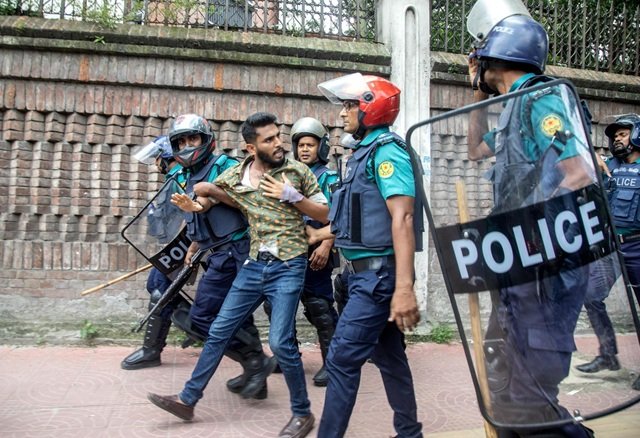
The second concern is detention. The number of arrests reported since the political transition is striking. Human Rights Support Society monitoring recorded more than 55,000 arrests between September 2024 and January 2026. Over the same period, HRSS documented concerns about mass arrests, political violence, and deaths in custody.
Human Rights Watch has separately reported that thousands of activity-banned Awami League leaders, members, and supporters were detained as criminal suspects, with many facing prolonged pre-trial detention and recurring bail concerns.
Detention may sometimes be necessary during a criminal investigation, but it must have a legal basis and be reviewed by an independent judicial authority. Being accused of a crime does not mean a person has been convicted.
That distinction is particularly important in criminal cases involving large numbers of named and unnamed accused. These cases raise due process concerns and the risk of guilt by association. International human rights standards require criminal responsibility to rest on individual conduct and evidence, not party membership, family ties, or assumed political identity.
The third, and perhaps most disturbing, concern is what happens after someone is detained. Bangladesh’s prison system is under enormous pressure: Department of Prisons data reported in September 2026 put the prison population at 104,617, compared with an official capacity of 45,186. The World Prison Brief reported a population of 102,180 and an occupancy rate of 226.1 per cent; 66.9 per cent of prisoners were in pre-trial or remand detention. These figures reveal more than overcrowding: they show a system in which most prisoners are held before their cases are finally decided.
The conditions are equally concerning. Bangladesh’s 68 prisons reportedly had just 23 ambulances. Of the 151 sanctioned doctor positions, only 10 were filled. Ain o Salish Kendra recorded 97 deaths in jail custody between January and August 2026. HRSS recorded 73 deaths over the same period, while Department of Prisons figures reportedly put the total at approximately 300.
These differences make independent verification essential. But they should not distract from the central question: why are people dying in state custody, and are those deaths being investigated?
Records show 60 alleged extrajudicial killings or deaths in custody from September 2024 to January 2026, including 22 cases reportedly involving torture. The records also document 127 deaths in prisons and detention facilities during that period. From January to June 2026, HRSS reported another 58 prison deaths and 11 deaths linked to law-enforcement custody, alleged torture, shootings, or suspected gunfights.
A death in custody is not an ordinary death: the person was in the state’s care. The family therefore has the right to know what happened. This requires an independent investigation, access to medical and post-mortem records, a forensic examination, and accountability if wrongdoing is established.
The country has every reason to investigate serious crimes and prosecute those responsible. But the process must distinguish between those who committed crimes and people who merely share a political identity with the accused.
The same principle should apply to detention. No one should remain in prison simply for belonging to an opposition political group. Those detained solely for peacefully exercising fundamental rights should be released, while criminal allegations should be addressed through fair and independent legal processes.
Bangladesh’s challenge is not to choose between accountability and human rights, but to pursue accountability in a way that upholds human rights.
Justice must establish individual responsibility, not collective guilt. Political disagreement must not justify detention, and deaths in state custody must not leave unanswered questions.