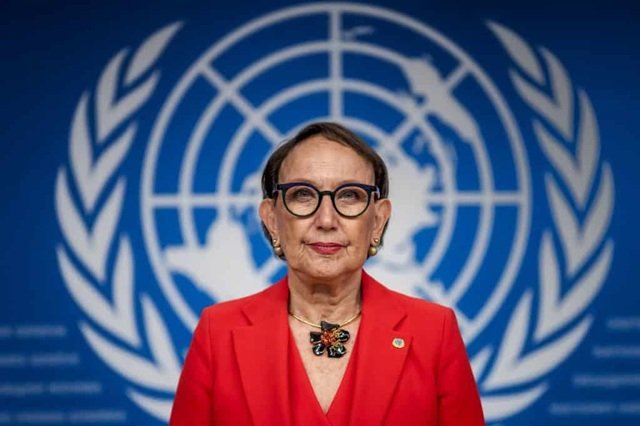
How can an organisation created to prevent the strong from crushing the weak survive when its strongest members repeatedly decide that its rules apply to everybody except themselves? That is the question hanging over the United Nations as Rebeca Grynspan emerges from the latest stage of the contest to become its next Secretary-General. She currently leads the fourth informal Security Council straw poll, with 10 members encouraging her candidacy, three discouraging it and two expressing no opinion. The result is neither an election nor a guarantee of victory. A candidate must secure at least nine votes in a formal Security Council decision and cannot be blocked by a veto from any of the five permanent members. If chosen, Grynspan would become the first woman to lead the United Nations in its more than eight-decade history.
There is something almost painfully appropriate about the family history of the woman now seeking to lead an institution founded from the wreckage of the Second World War. Grynspan has described how her parents fled Poland separately as the Nazi threat intensified. They went to Russia because, in her account, it was accepting Jewish refugees escaping from Poland. When the war ended, neither could simply return to the homes and communities they had left behind. Her mother, Sara Mayufis Schapiro, found herself in a Red Cross camp while trying to reach Palestine. The journey became entangled with British restrictions on Jewish immigration, and refugees attempting to reach Palestine were detained in Cyprus. It was there that her parents first met, fell in love and married. They eventually reached Costa Rica.
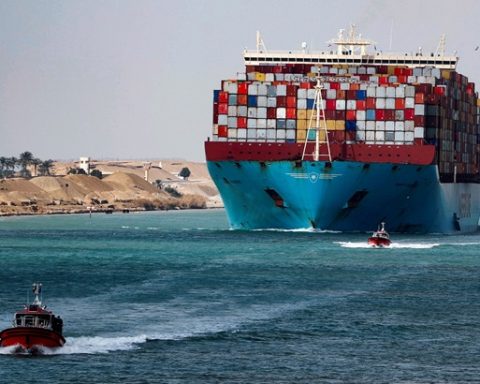
Decades later, Grynspan joined the UN, rising through UNDP. She is, therefore, a product of the system. She has been Costa Rica’s Vice-President, held senior government positions, served as a senior UNDP official, became Secretary-General of the Ibero-American Conference and, in 2021, became the first woman and first Central American to head UNCTAD. At UNCTAD she became deeply involved in the Black Sea Grain Initiative involving the United Nations, Türkiye, Russia and Ukraine. UNCTAD says the initiative facilitated the export of more than 32 million tonnes of grain. She also led the UN Global Crisis Response Group on food, energy and finance.
In her essay on what she called her “superwoman syndrome”, Grynspan recalled that in 1986 she was offered Costa Rica’s Deputy Finance Ministry while raising two young children, including a newborn she was breastfeeding. She initially refused, but later accepted the post, working on the budget and IMF negotiations while sometimes bringing her children to the ministry. She eventually resigned after the arrangement became unsustainable, particularly after her trusted nanny left and her son was injured while she was caught up in an IMF negotiation. Journalists assumed she had fallen out with the Finance Minister, but she said she resigned for her family and later acknowledged that her belief that women could simply “do everything” had been wrong.
Now she is seeking to lead an institution whose own oversight and internal justice systems contain a long record of complaints and findings involving discrimination, favouritism, recruitment problems and weaknesses in accountability. A 2024 Fifth Committee discussion called for managers to be held responsible for implementing oversight recommendations, including those concerning staff recruitment. It also referred to risk assessments covering fraud and corruption risks within the Secretariat. This does not establish that corruption is “systematic”, but it demonstrates that accountability and management remain recurring institutional concerns.
The organisation is also under severe financial pressure. As of 21 September 2026, only 141 of the 193 Member States had paid their regular-budget assessments in full, leaving 52 that had not. Earlier in the year, the UN reported approximately US$2.8 billion in unpaid regular-budget assessments as of 30 April, alongside roughly US$3.5 billion in outstanding peacekeeping assessments. The Secretary-General’s financial report warned that the organisation had been forced to slow operations and reduce spending because of uncertainty over available cash. An organisation responsible for peace and security, humanitarian coordination, development and human rights cannot operate normally when assessed contributions are not paid on time.
The contradiction is clearest in the Security Council, where the five permanent members can veto action supported by the other 14. The United States used that power to block Gaza ceasefire resolutions in November 2024, June 2025 and September 2025. In the June and September votes, the other 14 Council members supported the drafts, but the US vetoes prevented their adoption.
The 2025 Israel-Iran war exposed another limit of the system. Israel launched strikes against Iran on 13 June, and the United States struck Iranian nuclear facilities on 22 June. Washington notified the Security Council that it regarded its action as an exercise of collective self-defence under Article 51. Iran rejected that justification and described the action as unlawful. The legality remains contested. Iraq exposed a different weakness in 2003, when the United States and Britain launched military action without a new Security Council authorisation. The structure leaves the Council with considerable authority over collective action, but also with a permanent-member veto that can prevent it from acting and no equivalent power to stop a major power from using force outside Council authorisation.
That is the real crisis facing whoever takes the Secretary-General’s office. It is a crisis of institutional credibility and authority. The UN rests on sovereign equality, yet five states possess permanent vetoes. It is charged with collective security, yet military action can take place without prior Council authorisation. Its programmes depend on funding that is often delayed or restricted, while its oversight mechanisms continue to identify problems involving recruitment, management and accountability.
Grynspan’s candidacy carries a direct historical irony. The daughter of refugees who survived the destruction of European Jewry could become the first woman to lead the organisation created after that catastrophe, at a time when its original architecture is under sustained strain. Her experience with the “superwoman syndrome” also offers an institutional analogy. Structural problems cannot be solved simply by demanding more personal effort from one individual. A Secretary-General can negotiate, mediate and manage, but cannot repair chronic underfunding, recruitment problems, weak accountability or the veto structure without Member States agreeing to change the system.
If she becomes Secretary-General, she would inherit an organisation whose founding promise remains enormous but whose machinery is visibly strained. The UN needs a Secretary-General willing to examine that machinery, including structures protected by the governments that created them and new technologies, particularly artificial intelligence, that are creating legal and regulatory questions faster than international institutions can resolve them. The UN has adopted important AI resolutions and the Global Digital Compact, but these do not amount to a single, comprehensive and legally binding UN convention establishing clear international responsibility for those who develop, own, deploy or use AI systems when they cause harm. The Compact calls for transparency, accountability and human oversight across the AI life cycle, but does not create such a liability regime.
The test for Grynspan, if she reaches the Secretary-General’s office, would therefore be larger than managing another five years of diplomatic emergencies. The institution would face questions about how money is collected, senior officials appointed, misconduct investigated and responsibility enforced. It would also face the unresolved question of whether the Security Council can remain credible when five governments possess privileges unavailable to the other 188, and how representation targets, merit-based selection and political patronage should interact. The basic question is whether the Charter can retain authority when the states with the greatest power to shape the organisation are also capable of limiting its ability to act.