The United States is preparing to deploy one of its key anti-ship missile systems to Yonaguni, Japan’s westernmost island, during joint military exercises this month, bringing the weapon to its closest position to Taiwan so far. The move comes as relations between Beijing and Tokyo remain strained over Taiwan and Japan’s expanding defence cooperation in the region.
The Navy-Marine Expeditionary Ship Interdiction System, or NMESIS, will be deployed during the Keen Sword exercise, which runs from October 19 to 29, according to the regional bureau of Japan’s defence ministry. It will be the first time the US system has been deployed on Yonaguni Island, which lies about 110km from Taiwan. The US military operated NMESIS elsewhere in Okinawa last year.
During the previous Resolute Dragon exercises in September, the system was stationed on Ishigaki Island, about 127km east of Yonaguni and roughly 240km from Taiwan. NMESIS will also return to Ishigaki during Keen Sword.
The deployment is intended to support training at the Yonaguni garrison. Japanese and US forces will establish a joint coordination centre, conduct tabletop exercises focused on island defence and practise coordinating equipment deployed at other Japanese and US garrisons. Japan’s Okinawa Defence Bureau said various types of equipment would be deployed to work with the centre, although specific training details could change.
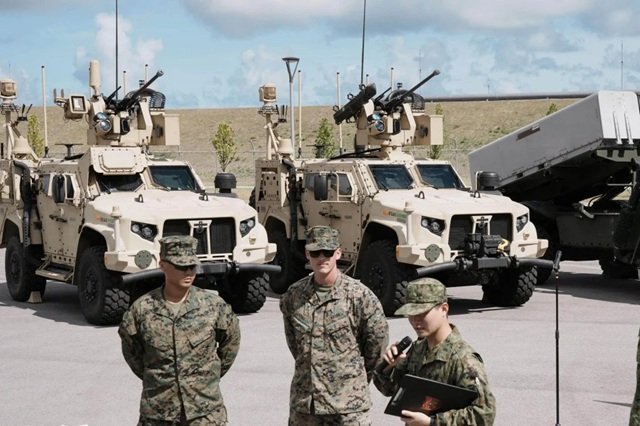
NMESIS is a highly mobile, rapidly deployable system designed for sea denial and littoral protection. Used by the US Marine Corps, it can target enemy warships from coastal or island positions and has a range of more than 185km. Its deployment to Yonaguni would place vessels operating east of Taiwan within its potential reach.
The move comes amid growing military and political tensions involving China, Japan and Taiwan. Beijing regards Taiwan as part of China and has said it could use force to achieve reunification. The United States and Japan do not recognise Taiwan as an independent state, while Washington opposes any attempt to take the island by force and remains committed to supplying it with weapons.
Relations between China and Japan have deteriorated further following Japanese Prime Minister Sanae Takaichi’s remarks in November that a Chinese military attack or naval blockade of Taiwan could constitute a “survival-threatening situation” for Japan and justify a Japanese military response. Chinese Foreign Minister Wang Yi subsequently told a Japanese business delegation that correcting what he described as the “erroneous words and deeds” of Japanese leaders on Taiwan was an urgent task.
Tokyo is also preparing to station air-defence missile units on Yonaguni. China’s foreign ministry has accused Japan of using defence and counterstrike capabilities to conceal the deployment of offensive weapons near China. In April, ministry spokesman Guo Jiakun described the policy as an attempt to build a “forward fortress of military confrontation”.
The United States has also deployed NMESIS during exercises with the Philippines. Earlier this year, the system was stationed in the Batanes Islands, about 142 to 190km south of Taiwan. The Pentagon said in its September 22 update on the 2026 National Defence Strategy that Washington was strengthening “deterrence by denial” along the First Island Chain.
Keen Sword will also mark the first US deployment of the Marine Air Defence Integrated System, or MADIS, to Yonaguni. The mobile short-range system is designed to detect and destroy drones, helicopters and low-flying aircraft. US Marines in Okinawa said the NMESIS and MADIS deployments represented “a significant step forward in the Marine Corps’ modernisation efforts”.