Elon Musk is accelerating the development of Starship, SpaceX’s giant next-generation rocket, after the spacecraft reached Earth orbit for the first time. The company has received authorisation from the US federal administration to conduct two additional launches in October, while Musk has said that a Starship could eventually launch every hour. The ambition is tied not only to space exploration but to the expansion of Starlink, SpaceX’s principal source of income, and the deployment of data centres for artificial intelligence in orbit. The strategy could also reshape the launch market by moving SpaceX away from the Falcon 9 system on which NASA and numerous commercial operators currently depend.
Musk has said that Starship could be operating at a frequency of one launch an hour within two or three years. The objective is to expand Starlink to as many as 100,000 satellites and support the construction of orbital AI data centres. The space industry expects the timetable to take longer, given SpaceX’s record of ambitious deadlines, but the company is already planning to retire its Falcon 9 rockets in 2028. Caleb Henry, director of research at the space consultancy Quilty Space, told CNN that the prospect of losing Falcon 9 is already causing “panic among satellite operators”, with concern that SpaceX’s transition to Starship could reduce rather than increase launch capacity for other customers during the changeover.
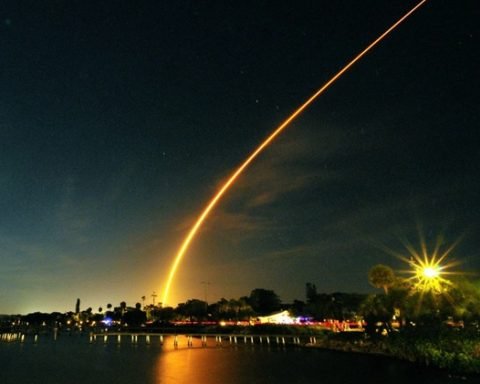
SpaceX already dominates global launches. Of the 325 orbital launches worldwide in 2025, the company conducted more than half, using Falcon 9 rockets and Falcon Heavy for heavier payloads. On 1 October, it demonstrated the scale of its current operation by conducting three launches within 13 hours. A Falcon 9 carried four astronauts from Cape Canaveral, Florida, towards the International Space Station; another Falcon 9 launched from California carrying Google’s first orbital AI data centre along with 129 smaller payloads for other companies; and a Falcon Heavy launched from Florida carrying a US government spy satellite.
Such a launch schedule would have been difficult to imagine a decade ago. SpaceX has made access to orbit relatively affordable for customers, while Musk is seeking further reductions in the still enormous cost of sending satellites, astronauts and scientific spacecraft into space. His proposed solution is Starship, a much larger rocket designed to be completely reusable, which he has called “the holy grail of rockets”. Falcon 9 currently recovers only its lower section, while its upper stage is destroyed during atmospheric re-entry after delivering its payload into orbit.
Starship has now entered its next phase, but it remains far from being a general-purpose launch vehicle. Following a testing programme that began in 2023, its first orbital flight deployed 26 Starlink satellites. For now, however, Starship is effectively a giant disposable dispenser designed specifically for Starlink. Versions suitable for other customers would still have to be designed and manufactured. Musk’s immediate priority is instead to make the entire system reusable, including recovering the spacecraft with a huge robotic arm after landing and subsequently flying both recovered sections again. SpaceX successfully recovered the Super Heavy booster in 2024, but the spacecraft itself still ends its flights in the ocean and then explodes.
The pace of testing remains a major obstacle. Flights currently occur roughly two months apart. Musk had previously blamed the Joe Biden administration for restrictions on launch authorisations, but under Donald Trump, Starship’s progress has stalled for almost two years, including accidents and explosions in early 2025. At the end of Biden’s presidency, only 37 days separated Starship’s successful fifth and sixth tests. Musk has promised that by early 2027 SpaceX will recover both sections on every flight and eventually send recovered vehicles back into space, ambitions that require a substantial increase in launch frequency.
The uncertainty is particularly significant for NASA’s Artemis programme. Artemis 3 was originally intended to take the first woman to the Moon in mid-2027. The date remains on the schedule, but the mission has been changed completely: it will no longer travel to the Moon and will instead remain in low Earth orbit. NASA made that decision in March because of Starship’s delays. For the mission to use Starship successfully, the spacecraft would have to remain docked with NASA’s Orion capsule for an entire day. In its latest test, Starship reached orbit but remained there for less than three hours rather than the planned 10 hours and six orbits. Mission controllers brought it down during its second orbit after one engine shut down prematurely.
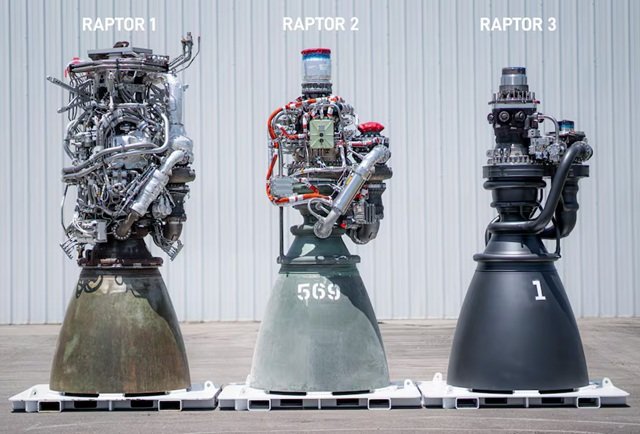
The reliability of SpaceX’s third-generation Raptor engines is another unresolved problem. Since their introduction in May, the engines have experienced failures on every flight. NASA is not prepared to accept engine reliability problems that could endanger astronauts. The agency has therefore brought Jeff Bezos’s Blue Origin into the Artemis 3 planning, alongside SpaceX. Under the current concept, Blue Origin’s Blue Moon would first wait in orbit for Orion and its four astronauts, after which Starship would launch and join them. NASA’s Jeremy Parsons described the mission as requiring “a very precise dance between multiple spacecraft and launches”.
A lunar Starship would face an even greater technical challenge: orbital refuelling. Between 15 and 20 Starships are expected to be required to transfer fuel to a lunar vehicle in Earth orbit, something never previously accomplished in spaceflight. SpaceX had promised a demonstration in 2025, postponed it to 2026, and now has no plan for a first attempt in 2027. The lunar version would also require a crew cabin and human-flight certification, neither of which currently exists. Artemis 4 is scheduled for 2028, but the source describes that date as highly improbable.
NASA also faces a potential transport problem at the International Space Station. SpaceX’s Dragon capsules are currently the agency’s only means of reaching the station, and they launch on Falcon 9. Jared Isaacman, NASA’s administrator, said: “I don’t think it’s any secret that SpaceX intends to progressively retire older platforms such as Falcon and Dragon, as it concentrates its efforts on its next-generation Starship system.” NASA has consequently revived work with Boeing on Starliner, which failed in 2024 and left two astronauts at the ISS for months. A new uncrewed test is expected in the coming months, with Isaacman hoping that, if successful, astronauts could fly aboard Starliner to the station in 2028 — the same year Musk aims to transform the launch industry with Starship.