The Trump administration is moving ahead with plans to restrict imports of new Chinese data centre equipment despite lobbying by some of America’s largest technology companies, including Amazon, Google and Meta, according to a Reuters report published on Tuesday. The proposed restrictions have faced greater opposition within the US technology industry than previously disclosed, but three people familiar with the matter told Reuters that the measure was continuing to advance, although it could still be shelved if the administration changes its position.
The proposed restrictions centre on optical transceivers, devices that transmit data through fibre-optic cables at extremely high speeds within data centres. The Federal Communications Commission (FCC) began pursuing a ban on imports of new models of Chinese-made transceivers over national security concerns, Reuters reported in August. US officials are concerned that equipment supplied by Chinese companies could potentially be exploited to steal data, install malicious software or disrupt operations at American data centres.
The proposal has encountered resistance from major US technology companies that depend on Chinese suppliers. Amazon, Google, Meta, CoreWeave and Cisco joined Microsoft in a meeting with White House officials earlier this year to raise concerns about the proposed restrictions, according to people familiar with the discussions. Executives warned that American companies could require up to 10 years to comply with such a mandate, Reuters reported.
The lobbying had raised uncertainty over whether the administration would proceed with the restrictions. However, three people familiar with the matter said the proposal was moving forward, while cautioning that its implementation was not yet guaranteed.
The developments also affected US optical technology manufacturers. Shares of Coherent rose 2.2%, while Lumentum gained 1.5% following the news, reflecting market interest in the potential restrictions on Chinese competitors.
China currently accounts for approximately two-thirds of the global optical transceiver market, according to Counterpoint Research. Chinese manufacturers Eoptolink and Zhongji Innolight have established dominant positions in global supply chains, with major American hyperscale data centre operators among their customers. Zhongji Innolight has also been added to the Pentagon’s list of Chinese military-backed companies.
American manufacturers Coherent and Lumentum produce competing optical technology but lack the production capacity to replace Chinese suppliers on the required scale, according to a report by the Foundation for American Innovation. One person familiar with the discussions told Reuters that US technology companies had also warned of possible Chinese retaliation, including restrictions on exports of indium phosphide, a critical mineral required by American manufacturers to produce their own optical transceivers.
The dispute comes as the Trump administration balances its approach towards Beijing against growing concerns over China’s control of materials and technologies essential to the global technology industry. Trump has adopted a more conciliatory approach towards China during his second term while confronting Chinese export controls on rare-earth minerals, which are widely used in technology manufacturing.
The FCC, however, has continued to impose restrictions on Chinese technology products. During the past year, it has successfully barred imports of new models of Chinese drones, robots, power inverters and routers.
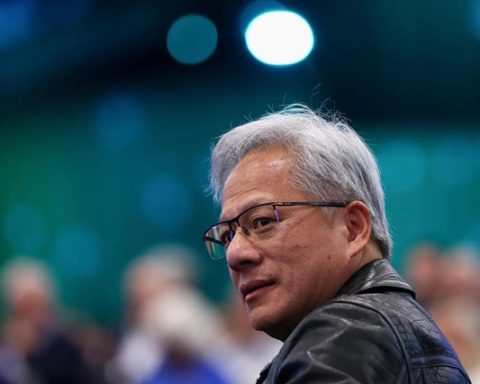
The latest push for restrictions has also gained momentum following revelations concerning Nvidia chief executive Jensen Huang’s alleged affair with a Chinese spy. The disclosures have intensified scrutiny in Washington over Chinese technology-related security risks and brought renewed attention to cases involving the smuggling of Nvidia artificial intelligence chips into China that had gone unaddressed by the Commerce Department.
The Chinese Embassy in Washington rejected the US approach, saying Beijing “firmly opposes the US overstretching the concept of national security” and urging the administration to stop targeting Chinese companies with accusations and threats of sanctions.
“China will continue to do what is necessary to firmly defend the legitimate and lawful rights and interests of Chinese companies,” the embassy said.
A White House official declined to comment on the lobbying or the proposal’s progress but said recent FCC restrictions on Chinese and other foreign equipment had generated billions of dollars in investment in US manufacturing and thousands of new American jobs.