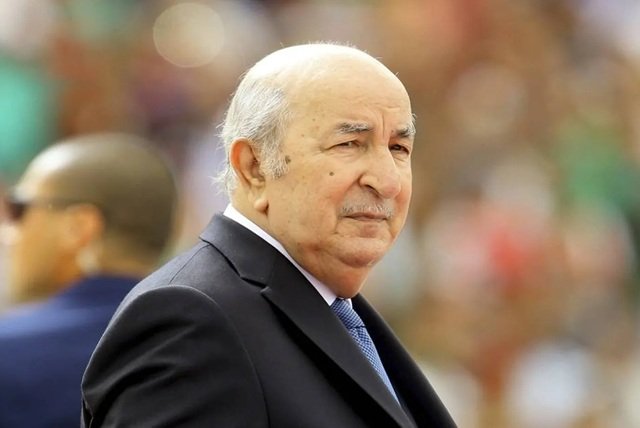
Algeria has threatened to extend its campaign against drug trafficking beyond its national borders, warning that its armed forces could target the places where narcotics entering the country are manufactured. The warning by President Abdelmadjid Tebboune comes amid worsening tensions across the Maghreb, particularly between Algeria and Morocco, and growing allegations that cross-border criminal networks are being used to destabilise the North African country.
Speaking on Sunday at the inauguration of the judicial year at Algeria’s Supreme Court, Tebboune described the influx of narcotics as a form of hybrid warfare and said the military could be forced to intervene at the source of production under the principle of legitimate self-defence. His remarks, reported by Algerian media on Monday, did not explicitly identify any neighbouring country or specify what form a military operation might take.
The warning nevertheless carries particular significance for Morocco, which has become the principal point of entry for drugs seized by Algerian authorities. The two countries severed diplomatic relations five years ago and have maintained a closed land border since 1994. Their longstanding rivalry is closely connected to the dispute over Western Sahara, which Morocco has controlled for more than half a century following Spain’s withdrawal from the territory. Algeria supports the Sahrawi independence movement and hosts thousands of Sahrawi refugees near Tindouf, in the country’s south-west, where the Polisario Front maintains its bases.
The drug problem has expanded considerably in Algeria over recent years. The country was previously identified primarily as a transit route for South American cocaine moving through the Sahel towards southern Europe. The United Nations has also documented the changing trafficking patterns. Algeria is now increasingly affected by domestic consumption, alongside the movement of narcotics across its borders.
Authorities seized approximately 35 tonnes of drugs in 2025, while more than 2,300 people were arrested in military operations against trafficking networks. Most of the seizures and arrests took place along the Moroccan border, despite the frontier remaining officially closed.
Algerian officials are also increasingly concerned about the illicit trade in pregabalin, a medication used as an analgesic and anticonvulsant. Its growing circulation has raised fears that it could overtake cannabis as a major substance of abuse among young people. The tablets have acquired the street name saruj, meaning rocket, because of the speed of their effects.
Tebboune compared the current influx of drugs with the terrorism that devastated Algeria three decades ago, during the decade-long conflict between the armed forces and Islamist militant groups. He said the military had succeeded in defeating that threat and suggested that the country could once again be facing a form of externally driven destabilisation requiring a forceful response.
The possibility of military action beyond Algeria’s borders represents a departure from the country’s previous approach, which had largely confined anti-narcotics operations to domestic territory. In July last year, the Algerian Parliament introduced the death penalty for the most serious drug-related offences. The first sentences have begun to be handed down, although Algeria has maintained a de facto moratorium on executions for 33 years.
Tebboune has also announced plans for a maximum-security prison intended for convicted drug traffickers considered major criminal figures. The facility is being established at Bordj Badji Mokhtar, near the southern border with Mali, in the Tanezrouft desert, where summer temperatures exceed 50 degrees Celsius.
Security operations against trafficking networks have continued across the country. On the 5th of the month, Algerian security forces arrested 45 people and seized 126 kilograms of cocaine alongside other narcotics. An official report cited by the Spanish news agency Efe said the authorities had dismantled a network allegedly directed by Moroccans operating from European countries and Morocco.
The accusations have increasingly extended beyond drug trafficking to alleged sabotage activities. In October, Algerian authorities detained 61 Moroccan nationals suspected of belonging to what they described as an international criminal network preparing acts of sabotage inside the country. According to an official statement, the group had infiltrated Algeria through the Tunisian border.
During the same month, Algerian authorities also announced that they had dismantled a smuggling network operating from Tetouan, in northern Morocco, which allegedly supplied psychotropic substances to destinations inside Algeria. In February, Algerian soldiers shot dead three Moroccan nationals accused of attempting to transport large quantities of drugs across the border into Bechar province in the south-west.
Some of the confrontations along the frontier have resulted in civilian deaths. In the summer of 2023, two French tourists of Moroccan origin were shot dead by an Algerian coastguard while travelling on personal watercraft near the coastal town of Saidia, close to the international maritime boundary between the two countries.
Algeria’s Defence Ministry said at the time that the watercraft had entered its territorial waters clandestinely, citing increasing activity by drug-trafficking gangs and organised criminal networks along the maritime border. However, a survivor told Moroccan media that the Algerian Navy had opened fire on the holidaymakers without warning.
Beyond the immediate security concerns, Algerian officials have raised the possibility that the increase in drug trafficking forms part of a wider operation to destabilise the country. Security sources cited by the French newspaper Le Monde have suggested that the trafficking surge could be directed from Rabat with support from the United Arab Emirates. These allegations have not been established as fact.
Relations between Algiers and Abu Dhabi have also deteriorated. In September, Algeria severed diplomatic relations with the United Arab Emirates, accusing its government of hostile actions and interference in Algerian domestic affairs and conflicts across North Africa. The UAE is regarded as an ally of Morocco and Israel.
Tebboune’s warning therefore comes at a time when Algeria’s security concerns are increasingly intertwined with its regional rivalries. Although he did not name Morocco as the source of the alleged drug campaign, the concentration of seizures along their shared border, the arrests of Moroccan nationals and the accusations of externally organised sabotage have placed the relationship between the two countries at the centre of the latest confrontation.