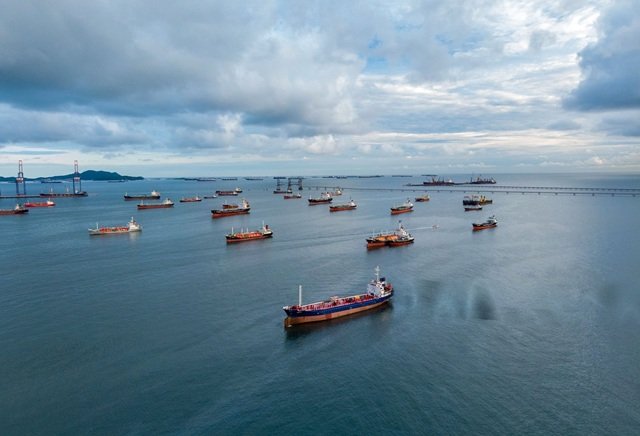
The United States and Iran remain locked in a diplomatic and military stalemate after nearly nine months of war, with both sides believing time is working in their favour despite growing risks of renewed fighting, according to a Reuters report published on Tuesday. Washington is relying on economic pressure and a naval blockade to force Tehran into concessions, while Iranian leaders are demanding that the United States make the first move towards ending the conflict.
US President Donald Trump has so far resisted both renewed large-scale military action and a negotiated settlement that would require significant concessions from Washington. US officials and sources familiar with the discussions told Reuters that the administration believes further bombing would be unlikely to change the outcome of the conflict and could provoke Iranian retaliation against energy infrastructure across the Gulf.
Instead, Trump is counting on restrictions imposed through a naval blockade and the resulting economic damage to compel Iran to accept concessions over its nuclear programme. A US official told Reuters that the economic pressure campaign was devastating Iran to such an extent that the president had no immediate need to conduct major combat operations, adding that he retained all options to prevent Tehran from acquiring a nuclear weapon.
Iran, however, has adopted a different assessment of the situation. Encouraged by electoral setbacks suffered by Trump’s Republican Party and Israeli Prime Minister Benjamin Netanyahu, Tehran has increased its demands, insisting that Washington must initiate steps towards a settlement. Although Iranian officials say they remain open to diplomacy, they accuse the United States of pursuing coercion and have rejected the prospect of yielding to pressure.
“There’s a dual reality. Trump doesn’t have good options, and the Iranians don’t have good options,” said Dennis Ross, a former US Middle East negotiator. He said the two governments were defining the conditions for ending the war in ways that were incompatible with each other. A senior European official told Reuters that Washington’s demands were too costly for Iran to accept, while Tehran’s demands carried excessive political costs for the US administration.
The nuclear issue has become particularly difficult. European and Western officials told Reuters that intelligence assessments indicated a significant portion of Iran’s highly enriched uranium stockpile was probably buried deep inside Pickaxe Mountain, a heavily fortified underground facility near the Natanz nuclear complex. A senior European official, briefed by his country’s intelligence agency, said the US military campaign had strengthened Iran’s hardline leadership and worsened rather than resolved the nuclear problem.
Iran maintains that its nuclear programme is intended exclusively for civilian purposes and denies seeking nuclear weapons. However, it has refused to allow nuclear inspectors back into the country while the war continues. A European official warned that Iran now had incentives to pursue a clandestine nuclear programme to deter future US military intervention.
Secretary of State Marco Rubio has presented sustained economic pressure as a third option between renewed war and what Washington considers an inadequate agreement. According to four diplomats who attended a G7 meeting in Paris last week, Rubio argued that continued pressure could demonstrate to Tehran that it did not control the situation and eventually encourage concessions. European officials believe Trump has provisionally adopted this approach, although they caution that he could return to military action at short notice. The current pause is widely regarded as an opportunity for diplomacy.
Gulf countries have urged Washington against renewed strikes, warning that Iran could retaliate against their infrastructure. Gulf Cooperation Council Secretary-General Jasem Al-Budaiwi said member states had been hit by more than 7,000 Iranian missiles and drones during the war. Three US aircraft carriers are currently in the region, while Trump retains the option of military escalation.
Indirect negotiations remain stalled over the order in which concessions should be made. According to sources who spoke to Reuters, Tehran wants the naval blockade lifted, frozen assets released and oil exports restored before substantive negotiations begin. It also seeks an end to hostilities across all fronts and an acknowledged role in managing passage through the Strait of Hormuz. In return, Iran would reopen the strategic waterway and agree to discuss its nuclear programme at a later stage.
Washington, however, wants reciprocal and simultaneous measures, including verifiable commitments on Iran’s nuclear activities from the beginning of negotiations. European officials have also insisted that the nuclear question must form part of the initial stage of any agreement.
The negotiations face additional obstacles within Iran, where analysts say hardline elements of the Revolutionary Guards have little interest in compromise. Alan Eyre, a former US diplomat involved in nuclear negotiations with Iran, said political figures were reluctant to appear conciliatory after parliament speaker Mohammad Baqer Qalibaf faced a political cost over his association with an earlier interim agreement.
“Everyone is scared of being the softest hardliner,” Eyre said, warning that the US blockade could force a decision before diplomacy succeeds. “Eventually, if the US doesn’t lift the blockade, Iran is going to escalate because they can’t last,” he told Reuters.