
Israel’s E1 settlement project is facing opposition from governments with markedly different forms of diplomatic and economic influence. Pakistan and seven Arab and Muslim partners have rejected the plan, while twelve Western and European countries have announced varying commitments to restrict trade in goods from Israeli settlements. Egypt, Jordan and the United Arab Emirates maintain diplomatic relations with Israel, while Western governments possess significant commercial and regulatory instruments.
These initiatives have emerged separately, but their convergence raises a consequential question: can regional diplomatic access and Western economic measures reinforce one another sufficiently to influence Israeli settlement policy?
The question has gained urgency as construction tenders advance in the occupied West Bank, potentially complicating the territorial foundations of a future Palestinian state.
Why E1 matters
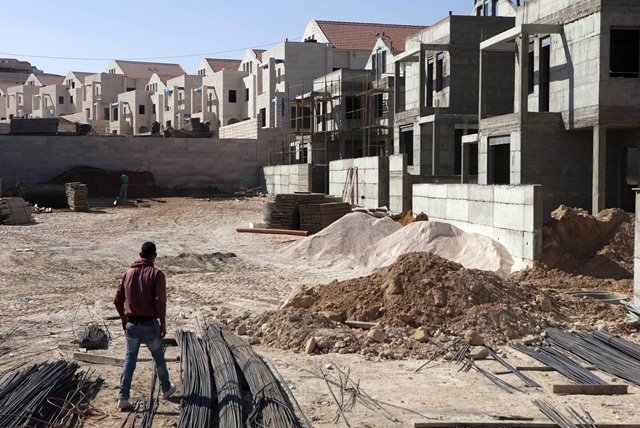
E1, short for East 1, is an approximately 12-square-kilometer area of the occupied West Bank between East Jerusalem and the Israeli settlement of Ma’ale Adumim. Israel has long planned residential development there to strengthen the connection between the settlement bloc and Jerusalem.
Its strategic location makes the project contentious. Construction could further separate East Jerusalem from surrounding Palestinian communities and restrict territorial connections between the northern and southern West Bank, undermining prospects for a contiguous Palestinian state.
The project involves approximately 3,401 housing units. Israel issued tenders for 1,234 units in August 2026, followed by another 2,167 in September. Reuters reported that the development intensified concerns about Palestinian territorial viability.
Israeli officials defend settlement construction on historical, housing and security grounds. Finance Minister Bezalel Smotrich has explicitly linked E1 to preventing the establishment of a Palestinian state.
Although alternative transportation routes could preserve movement between Palestinian communities, externally controlled corridors would not necessarily guarantee meaningful territorial sovereignty. E1 therefore concerns political geography, not simply residential construction.
Pakistan’s regional diplomatic leverage
Pakistan has consistently supported an independent, sovereign and contiguous Palestinian state based on pre-1967 borders, with Al-Quds Al-Sharif as its capital.
On August 21, 2026, Pakistan joined Egypt, Türkiye, Indonesia, Jordan, Qatar, Saudi Arabia and the UAE in a joint declaration rejecting E1 and demanding an immediate halt to related settlement activities.
The declaration also supported international accountability measures, including appropriate sanctions against individuals and entities involved in settlement expansion.
Its significance lies in the different diplomatic relationships of the signatories. Egypt and Jordan maintain peace treaties with Israel, while the UAE has formal diplomatic relations. Pakistan does not recognize Israel, and other participating countries possess varying forms of regional and multilateral influence.
These relationships provide distinct avenues for engagement. Governments maintaining ties with Israel can raise objections directly, while others can reinforce their positions through the Organisation of Islamic Cooperation, the United Nations and regional institutions.
Pakistan could contribute by sustaining a common position through multilateral diplomacy, complementing bilateral efforts by its partners. However, shared opposition does not guarantee coordinated action, particularly when governments face competing economic and security interests.
Western trade policy introduces economic pressure
A separate initiative emerged on September 8, when Canada, Denmark, Finland, France, Iceland, Ireland, Norway, Poland, Portugal, Spain, Sweden and the United Kingdom issued a joint statement addressing trade in goods from Israeli settlements.
The declaration did not establish twelve identical trade bans. Some governments committed to introducing national restrictions or supporting European measures, while others were considering action through domestic procedures. Several countries had already adopted relevant measures.
Britain, France and Canada also separately agreed to pursue coordinated action on settlement imports, demonstrating that some Western initiatives extend beyond expressions of concern.
One practical mechanism involves customs enforcement. Authorities can verify the origin of imported goods and distinguish settlement products from goods originating within Israel’s internationally recognized territory.
Origin verification can determine eligibility for preferential tariffs. Outright import prohibitions, however, require separate legal authority and enforcement mechanisms. Where implemented, restrictions could affect settlement-linked commerce without imposing a general trade embargo on Israel.
International law provides the broader framework. UN Security Council Resolution 2334 affirmed that Israeli settlements in occupied Palestinian territory have no legal validity.
In its July 2024 advisory opinion, the International Court of Justice concluded that Israel’s continued presence in the Occupied Palestinian Territory is unlawful. Although advisory opinions are not binding judgments in contentious cases, they provide authoritative interpretations of international law.
The challenge is converting these legal positions into enforceable policies.
Britain’s dispute exposes the diplomatic costs
Recent tensions between Britain and Israel illustrate how settlement-related trade measures can affect wider bilateral relations.
Following Britain’s September announcement of settlement-related trade measures, Israel ordered the closure of the British consulate in East Jerusalem. An October 8 diplomatic compromise allowed the mission to continue operating on a reduced scale under the designation “UK Mission, Jerusalem.”
According to Reuters, Britain maintained an operational diplomatic presence serving Palestinians while discussions with Israel continued.
The dispute demonstrates that economic measures can provoke retaliation beyond their immediate commercial impact. Governments pursuing such policies may face consequences affecting wider political relationships.
Nevertheless, diplomatic retaliation does not establish that trade restrictions have altered Israeli settlement decisions. Their effectiveness depends on implementation and the willingness of governments to sustain political costs.
Connecting diplomatic access with economic leverage
The emerging opportunity lies in combining complementary instruments without establishing a formal political alliance.
Regional governments maintaining relations with Israel could communicate objections through bilateral channels. Western governments could independently enforce settlement-related trade measures through their regulatory systems.
For example, diplomatic engagement urging Israel to suspend E1 development could coincide with stronger enforcement of settlement-origin requirements and legally authorized import prohibitions. Information sharing about construction tenders and commercial activity could support these separate initiatives, subject to national laws.
Such cooperation would not require identical positions on recognition, normalization or regional security.
Obstacles nevertheless remain. European governments disagree over the scope of economic restrictions, while Israel retains extensive commercial and security relationships with Western countries, particularly the United States.
Restrictions on settlement goods also do not automatically extend to construction financing, investment or public procurement. Additional measures would require separate legal authority and political decisions.
For Pakistan, a realistic contribution would involve sustaining regional and multilateral engagement, while governments with greater economic leverage pursue complementary policies within their respective legal frameworks.
The objective would be measurable diplomatic and economic action rather than another international institution.
The test of international influence
The E1 dispute also intersects with efforts to reconstruct Gaza and establish a durable political settlement. Palestinian statehood requires a coherent territorial framework encompassing Gaza and the West Bank, including East Jerusalem. Reconstruction alone cannot resolve questions of sovereignty, governance and territorial access.
Any negotiated agreement must also address Israeli security concerns, Palestinian political representation and civilian protection.
The British consulate dispute illustrates the diplomatic costs of settlement-related economic measures. Whether those costs can influence Israeli settlement decisions remains uncertain.
E1 now presents a practical test of international influence: regional governments possess diplomatic channels, while Western states have economic and regulatory instruments. Whether those forms of leverage can reinforce one another will determine if emerging opposition can move beyond declarations and influence developments on the ground.