Google has announced a new collection of artificial intelligence research developments spanning healthcare, disaster forecasting, scientific discovery and business analytics, including tools designed to help researchers predict flash floods, support clinical consultations and analyse complex scientific and operational data.
The announcements were made on 14 October at Google Research’s Research@ 2026 event in Mountain View, California, where the company presented 10 developments intended to extend the capabilities of doctors, scientists, developers, teachers and public health officials. Several initiatives are already available to users or research partners, while others remain experimental or are being prepared for wider release.
“This is the golden age of research and scientific discovery,” Google said in its announcement. “Today, more than ever, we can push the frontiers and ask the most audacious questions that can have transformative impact on products, science, and society.”
A major focus is Google Earth AI, a collection of geospatial capabilities designed to support public health planning, environmental analysis and crisis preparedness. Google is expanding early access to experimental features that allow users to conduct deeper geospatial analysis within Google Earth, assess risks and model possible scenarios through a planetary prediction engine, and incorporate geospatial reasoning into customised workflows through an experimental application programming interface for communication between AI agents.
The system integrates Google Dataset Search, which allows queries across more than 100 million public datasets, and TimesFM for planetary nowcasting and forecasting. Its capabilities draw on more than 70 geospatial tools, including the Remote Sensing Foundation Model and Population Dynamics Foundation Model. Google said the technologies had been evaluated through empirical benchmarks detailed in an Earth AI technical report.
The company also announced $10 million in funding through Google.org for organisations working on crisis resilience and public health. Of that amount, $2 million will go to the Milken Institute to address infrastructure bottlenecks affecting affordable housing, clean energy, broadband, safe water systems and other essential infrastructure.
In disaster forecasting, Google highlighted Groundsource, an AI-powered methodology that converts publicly available information about crises into structured historical datasets. Using Gemini to analyse flood-related news reports, researchers assembled a dataset containing more than 2.6 million flood events. Google said the dataset helped address the shortage of ground-truth information on flash floods and supported the training of a model capable of predicting the likelihood of flash flooding in urban areas up to 24 hours in advance.
The dataset has been incorporated into the Google Earth AI collection and made publicly available for further scientific research. The development builds on Google’s global hydrological model, published in Nature, which provides river forecasts up to seven days ahead for major and impactful riverine floods affecting more than two billion people across over 150 countries.
Healthcare research is another central element of the programme. Google said its MedGemma model, published in Nature Medicine the previous week, had been downloaded more than 10 million times by more than 65,000 unique innovators. The model provides an open foundation for developers building specialised healthcare applications, including tools for faster triage in overcrowded clinics and screening for eye disease and cervical cancer.
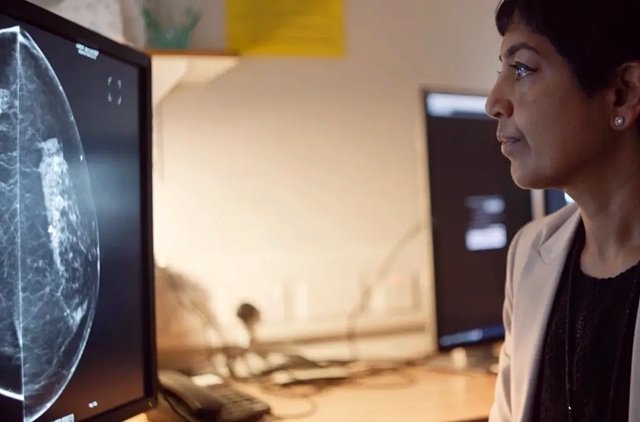
Researchers are extending MedGemma to use tools that connect it with available health records and other applications used by clinicians. They are also exploring additional medical data types, including mammography, ultrasound and electrocardiograms. Google reported early progress in answering clinical questions and interpreting radiology scans, skin images and pathology slides, while positioning the work as a foundation for further development rather than a finished clinical solution.
Its AMIE conversational AI research is examining how artificial intelligence could support clinical reasoning, patient communication and longer-term disease management. A study published in The Lancet examined its use before urgent care appointments at Beth Israel Deaconess Medical Center, where 98 patients safely consulted the system. Clinicians reported that the AI-generated summaries helped them prepare for consultations in 75 per cent of cases.
Google said research published in Nature had extended AMIE beyond initial diagnosis towards long-term disease management, while work published in Nature Medicine demonstrated its ability to reason across multimodal information, including medical images and laboratory results. The company is developing capabilities for real-time video consultations and has begun a nationwide randomised study of AI in real-world virtual care settings with Included Health. It cautioned that the research remains at an early stage.
Beyond healthcare and climate-related risks, Google is developing tools intended to accelerate scientific work and improve the reliability of technical documents. Its multi-agent orchestration system helps researchers reproduce existing methods and apply them to new problems. In fluid mechanics, researchers used the approach to investigate the inverse design of urinary catheters, identifying designs that performed better at preventing bacterial infections in simulations.
Deep Review, meanwhile, is designed to verify complex technical documents by checking logical consistency and factual grounding. Google said researchers and external authors had used an early version to review more than 16,000 research papers submitted to leading computer science conferences. The company is now expanding access to the system for reviewing documents such as legal agreements and financial reports.
Other announcements include the planned integration of TimesFM and TabFM into Gemini for business. The models analyse numerical time-series data and structured tables, generating predictions without additional training and serving existing Google Cloud BigQuery users. Google said the forthcoming integration would allow businesses to forecast trends such as product sales and hospital bed capacity from large operational datasets, with sensitive information remaining within an organisation’s perimeter.
The company also outlined a low-power Edge AI chip co-designed with Synaptics using Google’s open-source intellectual property, intended for devices including smart glasses, watches and connected cameras. In education, it introduced teacher-vetted interactive simulations for science and mathematics, while Play with Putty, a collaborative AI prototyping environment, opened its waitlist through Google Labs.
The initiatives reflect Google’s effort to make advanced AI capabilities available beyond its own research teams, although their availability varies from public access and early adoption to experimental testing and planned integration.