by Our Correspondent in Colombo
Former Sri Lankan president Ranil Wickremesinghe has warned that Sri Lanka risks losing its place in the emerging international order unless it accelerates technological modernisation, expands its economy and develops a more strategic approach to relations with major powers.
Speaking as the keynote speaker at the 50th webinar of the International Chamber of Commerce Sri Lanka, Wickremesinghe argued that the growing concentration of technological, financial and military capabilities among powerful countries was changing the conditions under which smaller states could protect their interests. He called for Sri Lanka to become a maritime logistics centre, strengthen economic cooperation with India and other Asian countries, pursue membership of BRICS and develop a technologically advanced navy.
“We need economic and social transformation based on technology-oriented modernisation,” he said, repeating the point for emphasis. Without such a transformation, he warned, Sri Lanka would struggle to compete in a world where technological capabilities increasingly determine economic and strategic influence.
“If you want to survive in this new global order, where technology plays this role and trade will certainly have an importance, either we have to go along this way or fade into insignificance like one of the small Pacific islands,” he said.
Wickremesinghe framed his assessment around remarks by Indian Prime Minister Narendra Modi at the NDTV World Summit, where Modi characterised the current period as a world between orders, with an existing system ending and another beginning. According to Wickremesinghe, the international system is undergoing a transition in which finance, trade, technology and shipping are increasingly being used as instruments of geopolitical power.
He argued that institutions established after the Second World War were struggling to respond because they had not adapted to the changing distribution of global power. Referring to Modi’s use of the ancient Indian strategist Chanakya’s concept of Matsya Nyaya, Wickremesinghe highlighted the danger of a system in which the strong dominate the weak.
The emerging order, he said, was increasingly characterised by competition between the United States and China, particularly in artificial intelligence, computing and other advanced technologies. Citing a Goldman Sachs report on the generative world order, he said American dominance was supported by the combination of artificial intelligence, data ownership and the dollar’s position in global financial markets. China, meanwhile, was seeking alternatives to dollar dependence in cooperation with other BRICS members.
“What we are witnessing today is a duopoly of AI and computing superpowers,” he said, referring to the United States and China. He also noted that India, Britain, France, Germany, Israel, Japan and South Korea were developing their own technological capabilities, making technological competition broader than the rivalry between Washington and Beijing.
For Sri Lanka, the implications extend beyond access to new technologies. “Sovereignty today implies technology,” Wickremesinghe said, arguing that a country’s ability to protect its interests increasingly depended on its technological and economic strength.
He also described a shift away from the geopolitics of Western-led alliances towards more transactional relationships among major powers. Referring to analysis associated with the Oxford Institute for New Thinking, he said global governance would increasingly depend on coalitions of pivotal powers operating within a polycentric system.
“We in Sri Lanka must adapt to these changes or we will be swallowed up by bigger fish,” he said.
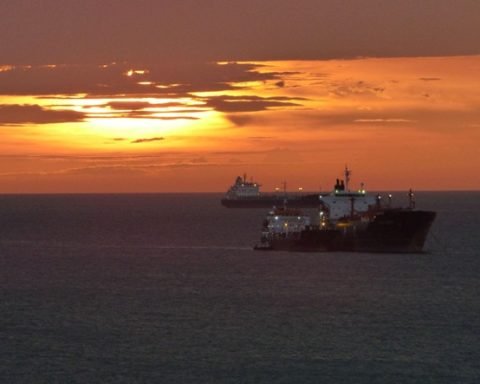
The Indian Ocean, he argued, would become one of the principal centres of the emerging global order because of its position between the growing economies of Asia and Africa, its importance as a shipping route connecting East and West, and its substantial undersea resources. However, he warned that the US-Iranian war was contributing to the decline of the Indian Ocean as a zone of peace, affecting freedom of navigation and reflecting changes in American power in West Asia.
Wickremesinghe identified several competing centres of influence in the wider region, including Iran, the grouping he described as the Mecca Pact, comprising Saudi Arabia, Pakistan, Egypt and Turkey, and Israel. He said Sri Lanka’s immediate interests included ensuring that the Suez Canal and Gulf routes remained fully operational.
“Secondly, do not ignore the potential of the Bay of Bengal as an economic region,” he said.
India’s economic and strategic position would be central to the region’s development, while Indonesia and Bangladesh were also likely to become increasingly important. Wickremesinghe said closer economic cooperation between China and Southeast Asian economies was extending the Chengdu-Chongqing corridor towards Myanmar and Bangladesh, potentially giving China a second route to the Indian Ocean through the Bay of Bengal.
He also identified a regional market of 600 million people, excluding India, as an opportunity for Sri Lanka to expand its commercial reach. But he warned that economic opportunities would be accompanied by growing maritime security challenges. Satellite systems, orbital maritime awareness, hypersonic technologies, unmanned underwater vehicles and drones would play increasingly important roles in monitoring and protecting the Indian Ocean.
“Similarly, we have to protect the undersea cables in our region. That is a priority,” he said.
In a subsequent question-and-answer session, Wickremesinghe addressed how Sri Lanka should position itself as India’s influence grows and relations among the major powers evolve. He said India could not be excluded from decisions shaping the international order, given its economic size, military capabilities and position in the Indian Ocean.
“It’s going to be the third largest GDP in the world. It’s a military power and it is the dominant power in the Indian Ocean,” he said of India.
He added that Sri Lanka should strengthen its own relationship with India while recognising the importance of how India and China manage their competing interests. China’s growing presence in the Bay of Bengal, he said, would make the relationships among India, China, Myanmar and Bangladesh increasingly significant.
“It’s not a question of India-China, it’s how India and China manage their relationships,” he said.
Wickremesinghe referred to the longstanding relationship between Sri Lanka and India and argued that closer cooperation should be accompanied by mutual respect for national security. He said the two countries should maintain the spirit of the exchange of letters between Rajiv Gandhi and J. R. Jayewardene, which he invoked in support of the principle that neither country should undertake actions harmful to the other’s security.
On trade, he called for progress on an agreement with India, which he said had been suspended, and advocated expanding economic arrangements with Singapore and Thailand before pursuing opportunities with Indonesia, Malaysia and Vietnam. Sri Lanka should continue its economic relationships with China and Japan while broadening its engagement across Asia.
“Europe is very important for us. And our trade with Europe is important and with the US. But we are a hundred billion dollar GDP,” he said, arguing that Sri Lanka needed to find additional markets rather than rely excessively on its traditional trading partners.
“You have to find it elsewhere. We are so small,” he said. Referring to the scale of major American corporations and Indian companies such as Tata, Adani and Reliance, he added: “So, we have to realise that and we must grow big. If you don’t grow big, you’re gone.”
His proposed strategy included strengthening relationships with the United States, China, Russia and Japan; engaging in transactional geopolitics; reviewing the effectiveness of the Indian Ocean Rim Association and BIMSTEC; accelerating the work of the Colombo Security Conclave; and developing a technologically advanced navy equipped with small and medium-sized vessels. He also said Sri Lanka should pursue regional integration with countries around the Bay of Bengal and across Southeast Asia.
Wickremesinghe said the future of artificial intelligence would have consequences for both economic power and employment. He anticipated the emergence of companies valued in the trillions of dollars, potentially concentrating economic influence among a small number of corporate leaders. The effects on employment in India and Sri Lanka, he said, would require particular attention.
He also warned that the distribution of the gains from artificial intelligence could create wider social tensions. Referring to developments in Britain, France and Germany, he said existing tensions illustrated the need to consider the political and economic consequences of technological change.
“AI, otherwise, can be used. And we must know how to harness AI,” he said.