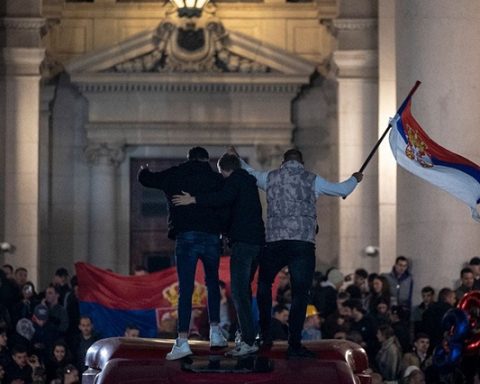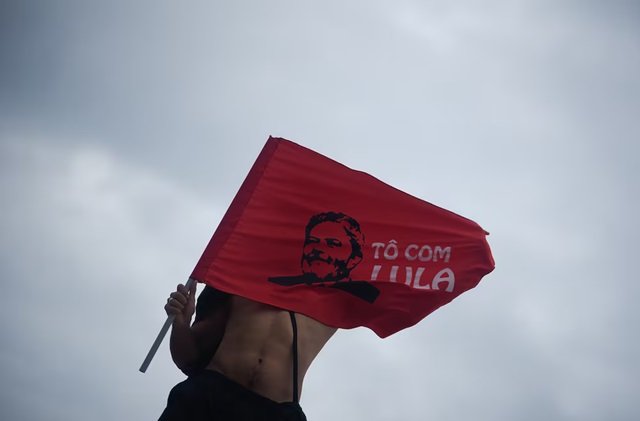
A shirtless, masked young man standing above a São Paulo metro station, waving Brazilian president Luiz Inácio Lula da Silva’s flag alongside a Palestinian flag, became one of the defining images of Brazil’s 2026 election campaign. Photographed during a pro-democracy demonstration on Avenida Paulista in October, the man, Israel Augusto, was quickly identified online and nicknamed “o gostoso da Paulista”, roughly translated as the hunk of Paulista. His Instagram following grew to almost 400,000, while his appearance helped propel a wider online movement that combined physical attraction with political support for Lula.
The image inspired the hashtag #GostososcomLula, under which young men shared photographs of their muscular physiques, often posing shirtless or using their bodies to communicate political allegiance. Some flexed their biceps into the letter L associated with Lula. The movement’s Instagram profile, Gostosos com Lula, adopted the slogan “Aesthetics as a political manifesto”, turning images designed to attract attention into a form of election-related activism.
The phenomenon was documented by the Spanish newspaper El País, which examined how the movement combined sexual appeal, humour and political identity to circulate through social media beyond the audiences usually reached by conventional campaign messages. Its emergence coincided with Lula’s reported re-election for a fourth term, with 51.7% of the vote, as his campaign placed greater emphasis on digital communication and the mobilisation of younger supporters.
The movement drew on a Brazilian social media practice known as “biscoitagem”, in which users post photographs of their bodies to solicit compliments, often accompanying them with deliberately modest captions. In the political version, physical display became an additional means of expressing support for Lula. The result was a form of activism in which the image could travel independently of a detailed political argument, reaching users who might encounter it through entertainment, fitness or popular culture rather than political discussion.
Marcos Dosantos, a political scientist and writer, argued that the muscular young men did not determine the election result but helped give Lula’s campaign additional visibility. “Those handsome men raising the red flag add electoral libido to the candidate who has lifted millions of Brazilians out of poverty and is the only leader capable of stopping the Bolsonaro dynasty,” he told ICON, the magazine published by El País.
Dosantos linked the movement to a wider struggle over the emotional appeal of political communication. He pointed to social media content in which fitness enthusiasts expressed left-wing sympathies and pop-culture fandoms used artificial intelligence to make Lula sing like Lady Gaga or dance like Britney Spears. Such material, he argued, offered an alternative to the anger and misinformation that can spread through online platforms.
“We already know that the algorithm favours hatred, rage and fake news, fertile ground for the far right, but Brazil demonstrates that the digital left can regain the attention of undecided voters through other hooks, such as beauty, tenderness and enthusiasm,” Dosantos said. “Just as love can stop hatred, desire can engage people more than fake news. An image is worth a thousand words, and a good reel can mobilise more voters than a thousand speeches.”
The movement developed alongside a broader effort to strengthen Lula’s digital campaign. Ana Elisa Santos Silva, a Workers’ Party (PT) deputy from Minas Gerais, warned on 5 October that social media had become central to electoral success. “Do you know what the ten most-voted deputies in Brazil have in common? Social media. Those people are not analogue,” she said, arguing that she could have achieved more had she not spent time persuading people within her own political camp that social platforms could determine who won seats.
Communication and strategic marketing consultant Paula Pissaco described a related effort to take political mobilisation beyond digital platforms. Some young left-wing supporters, she said, took to the streets amid suspicions that algorithms favoured right-wing voters, an issue that had reached the Federal Public Prosecutor’s Office. “While the right takes advantage of its presence on digital platforms, Brazil’s progressive camp is seeking to contest the election in the streets,” she said. “Many social organisations and activists are trying to mobilise people beyond Instagram. And then our muscular comrade appears: he goes out to demonstrate and ends up mobilising people.”
Pissaco also cautioned against reducing individuals to their appearance. “Objectification is not exclusive to women, although we have historically and structurally faced it,” she said. “Desire is not the problem. Erasing the person behind the body is.” The role of artificial intelligence in political imagery was illustrated by a young woman who went viral after appearing alongside Flávio Bolsonaro, only for the image to be identified as an AI-generated creation.
Political scientist Lu Quispe attributed Lula’s electoral performance to changes in the campaign’s digital strategy rather than to any single viral trend. She said the campaign decentralised communication under the slogan “Every person is an influencer”, expanding communities on WhatsApp and Telegram and involving men and women under 25 in advising the campaign during its final phase.
Lula also complained about the influence of digital platforms after his victory. “We defeated foreign interference, from digital platforms,” he said, referring to allegations that Instagram and WhatsApp had favoured Bolsonaro. Quispe argued that digital changes, combined with public policies and street campaigning, helped Lula recover support, although she considered the adjustments to online communication particularly significant.
The use of attractive, shirtless men in political demonstrations was not entirely new. In her 2026 book Golpes de vista, published by Paidós, author Olivia Muñoz-Rojas discusses photographs of a bare-chested demonstrator raising Egypt’s flag during the Arab Spring in Cairo’s Tahrir Square and a masked, muscular man displaying the Mexican flag during protests against deportations in Los Angeles. She said such images first attract attention through appearance and humour before communicating their political message. Their circulation often extends into non-political networks, where people share them for pleasure rather than out of ideological commitment.
“I don’t think these muscular, youthful-looking bodies have a specific ideology,” Muñoz-Rojas said. “Youth, strength and physical fitness cut across political sensibilities. What changes is the meaning.” Flags and accessories provide the political context, she explained, allowing the body itself to become a slogan.