Artificial intelligence is emerging as a major force in the United States’ 2026 midterm elections, raising concerns about the spread of political disinformation, voter manipulation and the growing influence of technology companies over the democratic process.
AI-generated political advertisements are appearing across digital platforms, often presenting fabricated images, misleading scenarios and politically charged messages without clearly disclosing the use of artificial intelligence. Researchers warn that the scale and sophistication of this content are making it increasingly difficult for voters to distinguish authentic political information from manufactured narratives.
The Wesleyan Media Project, which monitors political advertising and campaign communications, reported in October that it had identified 220 AI-generated political advertisements worth more than 137 million U.S. dollars. The figure represents a dramatic increase from approximately 50,000 dollars recorded during the 2024 election cycle. Researchers cautioned that the actual spending could be considerably higher because identifying AI-generated material remains difficult.
Some advertisements have used manipulated images of political figures to create misleading associations. One advertisement portrayed a Republican gubernatorial candidate embracing former U.S. Secretary of State Hillary Clinton beneath the slogan “Clinton Lover. Trump Hater.” Other advertisements depicted Democratic Senate candidate Abdul El-Sayed laughing alongside messages referencing terrorism and the September 11 attacks. A separate political advertisement showed Florida Republican gubernatorial primary candidate James Fishback attending an imaginary gathering with Iranian leaders in a scene involving attacks on the Star of David.
These advertisements demonstrate how AI tools can manufacture political images and situations that never occurred. Their purpose is not necessarily to persuade voters through policy arguments but to generate controversy, damage reputations and reinforce existing political divisions.
Frances Haugen, a former Facebook data engineer and technology accountability advocate, warned that artificial intelligence has dramatically reduced the cost of producing sophisticated disinformation campaigns. Content that previously required significant financial resources and technical expertise can now be created and distributed cheaply.
Haugen also highlighted the difficulty of moderating AI-generated material. Campaign operators can make small changes to advertisements and repeatedly publish variations, increasing the possibility that some content will bypass platform moderation systems.
The growing use of AI as an information source is adding another challenge. A survey by the American Association of Political Consultants Foundation found that only 1 percent of respondents considered AI their most credible source of election information. However, approximately one in five voters said they planned to use AI to research candidates and election issues. Twice that proportion had already received election information through AI-generated search summaries.
Political organizations are increasingly trying to influence how artificial intelligence systems describe candidates, political issues and campaign positions. The left-wing advocacy organization Run for Something has introduced CampSight, a platform designed to monitor how large language models respond to political questions and recommend ways to influence their narratives. On the conservative side, the Center for Campaign Innovation has examined how AI systems present candidates and which information sources they rely on.
The growing competition reflects a new campaign environment in which political influence extends beyond television advertisements, social media posts and traditional news coverage. Candidates and advocacy groups are also seeking visibility within AI-generated answers, which could become an increasingly important source of information for voters.
At the same time, the financial and political influence of the technology industry is raising questions about whether the companies developing AI systems are seeking to shape the regulations governing their own businesses.
According to reporting by The Wall Street Journal, Silicon Valley interests directed more than 100 million dollars toward political action committees and advocacy organizations to oppose restrictive AI regulations and defend the industry’s policy priorities ahead of the midterm elections.
One prominent initiative is Leading the Future, a super political action committee backed by OpenAI President Greg Brockman and venture capital firm Andreessen Horowitz. The group reportedly spent 8 million dollars in an effort to defeat Democratic New York State Assemblymember Alex Bores in a congressional primary. Bores had sponsored the RAISE Act, an AI safety measure signed into law in December 2025.
The spending highlights the growing involvement of technology executives and investors in electoral politics as governments debate how much control should be placed on the development and deployment of artificial intelligence.
The regulatory dispute has also reached Washington. In 2025, Republican senators proposed a temporary moratorium on state-level AI regulations as part of budget reconciliation legislation. The proposal was rejected by the Senate, but efforts to limit state regulatory authority continued.
In December 2025, U.S. President Donald Trump issued an executive order establishing an AI litigation task force to challenge state laws considered excessively restrictive. The order also directed the Commerce Department to examine whether federal broadband funding should be withheld from states with regulations classified as onerous.
The policy debate places state governments, federal authorities and technology companies in a growing dispute over who should determine the rules for an industry developing faster than existing regulatory systems can adapt.
For voters, the immediate concern is the reliability of election information. Undisclosed AI-generated advertisements can create false political events, fabricate statements and present manipulated images as evidence. When such material spreads rapidly through social media, corrections may struggle to reach the same audiences.
Susan Hyde, a political science professor at the University of California, Berkeley, warned that the central democratic concern is whether citizens can make informed electoral decisions when the information available to them becomes increasingly unreliable. She also raised concerns about politicians using propaganda-style communication to mislead their own supporters.
The Brennan Center for Justice has similarly warned that insufficient transparency and human oversight could allow AI-generated deepfakes to become powerful tools for electoral manipulation. Its research found that chatbots, including ChatGPT, Gemini and Grok, did not consistently refuse requests to generate images based on familiar election conspiracy theories, including fabricated scenes of election workers stuffing ballot boxes and large numbers of non-U.S. citizens voting.
Such findings raise questions about the safeguards used by AI companies to prevent their systems from producing material that could reinforce false claims about election procedures.
The challenge extends beyond individual advertisements. AI-generated misinformation can undermine confidence in election administration, influence perceptions of candidates and create uncertainty about whether political images, statements and reports are genuine. Even when fabricated content is exposed, repeated circulation can leave lasting doubts among voters.
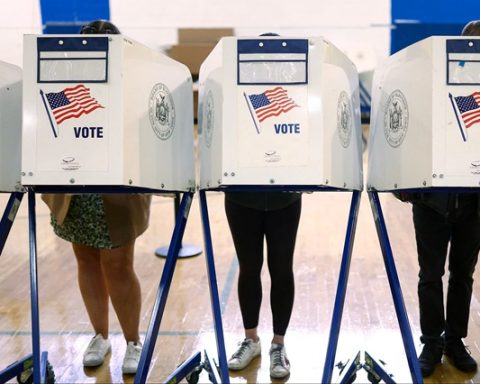
As the United States approaches its November 3 midterm elections, the growing use of artificial intelligence is testing the ability of election authorities, technology companies and political institutions to protect the integrity of public information.
The central issue is no longer simply whether AI can influence political campaigns. It is whether voters can identify reliable information in an election environment where fabricated content can be produced at scale, distributed rapidly and used by political actors with significant financial resources.
Without stronger transparency requirements, effective content moderation and independent oversight, artificial intelligence could make political disinformation cheaper to produce and harder to contain, placing additional pressure on public trust in democratic institutions.