The continued closure of the Kartarpur Sahib Corridor has raised concerns around religious freedoms in relation to crossing borders. The Punjab Legislative Assembly passed a resolution on the 27th October 2026 requesting the Indian Central Government to re-open the corridor. This shows how important it is to ensure that regular pilgrims are not prevented from visiting such a holy site due to the political issues between India and Pakistan.
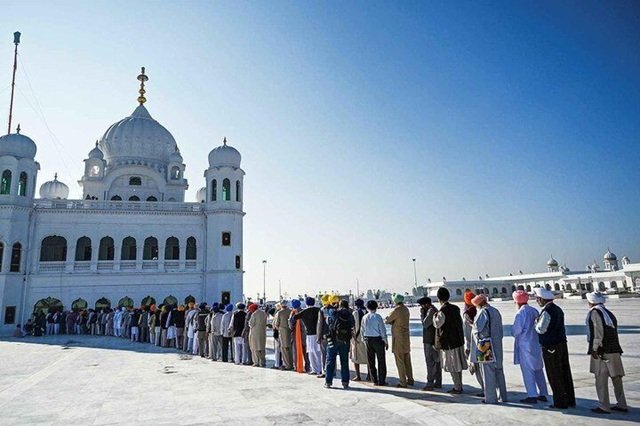
The Kartarpur Corridor is an extremely holy place for Sikhs worldwide. It connects Dera Baba Nanak in Punjab (India) to Gurdwara Darbar Sahib in Kartarpur (Pakistan). This is where Guru Nanak Dev Ji, the founder of Sikhism lived his last days. The corridor opened in November 2019 allowing Indian Sikh pilgrims access to the shrine without having to obtain a regular Pakistani visa. Many saw this as an incredible achievement showing how much the religion had in common and allowed the pilgrims to connect more with the Guru.
Unfortunately, the corridor was halted on 7th May 2025 after the Pahalgam Terrorist Attack, and the military operations that followed called Operation Sindoor. The current reasoning for the corridor not being open is due to the current security situation. Whilst it is valid for any government to ensure national security, the fact it has been closed for so long has put a strain on those with no political or military issues with visiting the pilgrim.
The resolution passed by the Punjab Assembly shows how those within the Indian state closest to the corridor are concerned. On 27th October 2026 the resolution was passed unanimously by the assembly to urge the Union Government to re-open the corridor, streamline the pilgrimage process and work with Pakistan to allow pilgrims to visit Gurdwara Darbar Sahib safely. Many including the Chief Minister Bhagwant Mann and those supporting the resolution highlighted the importance of not letting religion suffer during political situations. This shows how important it is for everyday people to have their religious needs considered when making decisions at a national level.
This shows how politics aren’t always at a local level. Whilst the elected officials in Punjab can express how they feel and pass resolutions, decisions around anything to do with international borders, national security and Pakistan will be made at a union level. This means that the corridor cannot be reopened by the Punjab Assembly. However, the resolution puts pressure on New Delhi.
Those who are critical of the Modi Government may feel that security isn’t being balanced correctly with religious freedoms. The resolution passed by the Punjab Assembly shows how even those within the country want the corridor to be opened. However, just because it is closed doesn’t mean the government are being discriminatory towards religions. It is important to consider their reasons for closing the corridor, what evidence there is and how feasible it is to re-open it with proper security measures.
Whilst this issue does have some humanitarian and religious implications, political issues between neighbouring states often affect those who have no real say in the decision making. In this situation, Sikh pilgrims aren’t able to travel along the corridor that was specifically created to allow them to visit a sacred site. The longer it stays closed, the more important it is that we understand why it can’t be opened and what conditions it needs to meet in order to be.
Closing the corridor takes away from the overall opportunity to increase religious connections in South Asia. The region has a lot of common history, with many sacred sites, culture and communities who identify with more than one nation. If we can create ways to allow peaceful pilgrimages then this can help to keep these connections alive, help improve understanding and show that religion doesn’t always need to be affected by political issues. But if it stays closed for too long then this can cause frustration amongst the public.
To move forwards, India and Pakistan should engage with each other again to create proper security measures and procedures for pilgrims. The two countries could look into ways to verify those travelling, coordinate between borders, share important security information and overcome any new threats. Having clear communication with those wanting to know why the corridor can’t be opened will help religious organisations and pilgrims understand. Whilst this won’t resolve any bigger issues between the two nations, it can create a small humanitarian effort to allow religious pilgrims to visit.
Overall, the resolution passed by the Punjab Assembly has brought the issue of the Kartarpur Corridor back into the political sphere. It shows how Sikh pilgrims want to stay connected to the sacred site and urges the central government to rethink their decision to keep it closed since May. Whilst we must take the national security into consideration, it is important to try to balance this with proper measures. Opening the corridor with agreed security measures can create an opportunity to put religion first. To those millions who consider Kartarpur an essential part of their religious heritage, this is not just a political issue but an issue to keep their access to a place of huge religious significance.