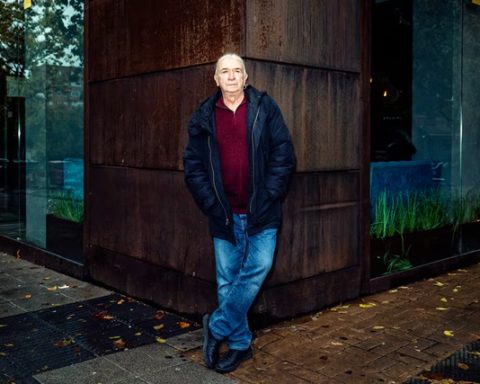
For six decades, Konrad Müller pursued a murderer who had escaped justice long before he became a police officer. He interviewed witnesses, studied surviving documents, reconstructed the suspected murder weapon and filled twelve files with his findings. Eventually, he arrived at a conclusion about one of Germany’s most notorious unsolved crimes. But he has refused to reveal the name publicly. Instead, he typed his answer on nine pages, placed them in an envelope and deposited it in an archive. The case, he says, can no longer be solved — not even by him.
The murders took place on the night of 31 March to 1 April 1922 at Hinterkaifeck, an isolated farm near Ingolstadt in Bavaria. On 4 April, neighbours discovered the bodies of six people: farmer Andreas Gruber, his wife Cäzilia, their widowed daughter Viktoria Gabriel, her seven-year-old daughter Cäzilia, her two-year-old son Josef and the newly arrived domestic worker Maria Baumgartner. All had been brutally killed with a heavy agricultural implement.
The crime became a fixture of German criminal history. It inspired the bestselling novel Tannöd, several film adaptations and decades of speculation about the identity and motives of the killer. Yet repeated investigations failed to produce sufficient evidence to identify or convict anyone.
Müller, now 91 and retired from the police force, first encountered the case as a teenager. At 16, he read an eight-part newspaper serial about the murders in the Donaukurier, a regional newspaper. The story horrified him partly because the farm was only about 60 kilometres from his home. In the surrounding villages, the Hinterkaifeck murderer became a figure used by parents to frighten disobedient children.
His professional involvement began in 1968, when he had returned to his home region after serving with the Federal Border Guard and working as a bodyguard for former West German chancellor Konrad Adenauer. A superior at the Ingolstadt criminal police asked him to examine the case discreetly, without creating the impression that the investigation was being formally reopened.
By then, there was little conventional detective work left to undertake. Under the legislation then in force, murder became time-barred after 20 years. The presumed killer was likely dead, and much of the original evidence had disappeared. In February 1944, British bombing raids on Augsburg destroyed files relating to the case in the city’s archives. The suspected murder weapon, a heavy implement known as a Reuthaue, was also lost in the fire.
Müller nevertheless began piecing together what remained. He obtained the surviving documents from Munich and Augsburg, although he was allowed to consult them for only eight days before returning them. He cross-checked names against regional telephone directories, contacted people who might remember the events and eventually interviewed around 50 witnesses. To read handwritten police records from the period, he even attended evening classes to learn Sütterlin, the old German script.
His colleagues were sceptical. Some mocked the amount of time he devoted to a case that could no longer lead to a prosecution. Villagers, meanwhile, resented the renewed attention and feared that their families were being unfairly implicated. Müller continued after working hours and at weekends, insisting that his objective was not simply to name a killer but to understand how such a crime had become possible.
His retirement in 1995 gave him even more time. He collected newspaper reports, correspondence and every fragment of information he could find, eventually becoming known in the media as the “Hinterkaifeck detective”. He lectured at schools, local history associations and police training institutions. His wife, Traudl, accompanied him on journeys to investigate leads, including one that took them to Moscow.
The mystery was sustained by a series of disturbing details surrounding the killings. Andreas Gruber had reportedly discovered footprints in the snow leading towards the farm but no tracks showing anyone leaving. He had also told a neighbour about noises in the attic. A newspaper not normally distributed in the area was found in nearby woodland. Baumgartner had arrived only hours before the murders to begin her employment, while the farm’s animals were apparently still being fed after the residents were already dead.
Müller never found definitive explanations for these details. He was particularly troubled by the question of who had looked after the livestock, what had happened to the family’s front-door key and who had left the footprints. The unanswered questions became almost personal. He sometimes imagined the victims before falling asleep, referring to them by their first names and speaking with particular sorrow about the two-year-old Josef.
His reconstruction of the household was shaped by police documents, testimony and his own knowledge of rural life. He believed Andreas Gruber had been a violent and domineering man, and that the family had lived under severe tension. He also came to suspect that the murders were connected to relationships within the household rather than a straightforward robbery.
The original investigation, led by Munich criminal inspector Georg Reingruber, had quickly settled on robbery as the likely motive, partly because Andreas Gruber was believed to be wealthy. Müller was deeply critical of the work carried out at the scene. He compiled an eight-point list of what he considered investigative failures: fingerprints had not been taken despite the availability of fingerprinting methods; neighbours and other people in the victims’ immediate surroundings had not been questioned thoroughly; important clues, including the missing key, had not received adequate attention; and too much responsibility had been left to local police officers.
He also questioned the decision to postpone a full examination of the crime scene until the morning after the bodies were discovered, because of darkness and cold. In his view, the investigators had failed to understand the social and agricultural environment in which the crime occurred. He believed that a detective unfamiliar with village life could easily overlook the significance of local relationships and the reluctance of rural residents to speak openly to outsiders.
Müller approached the witnesses differently. He returned repeatedly to the nearby village of Gröbern, spoke to relatives of people who had lived through the events and even consulted the successor to the local priest. In 1984, he located a woman who had attended school with the murdered seven-year-old Cäzilia. Before giving her account, she asked him to say the Lord’s Prayer with her.
The question of the young boy Josef’s paternity became central to Müller’s theory. Viktoria’s husband, Karl Gabriel, was believed to have died during the First World War in 1914, five years before Josef was born. One long-standing theory suggested that the child was the product of an incestuous relationship between Viktoria and her father, Andreas. Müller believed the killer had been closely connected to the household and driven by powerful personal emotions. He rejected robbery as an adequate explanation, arguing that someone motivated primarily by money would have had little reason to kill a two-year-old child.
To understand the violence involved, he reconstructed the missing Reuthaue using the measurements and descriptions in the surviving police documents. The heavy tool weighed approximately ten kilograms, with a sharp cutting edge on one side and a broader striking surface on the other. Handling it, he said, helped him appreciate the physical force required to kill six people. His emerging theory centred on a long-standing personal grievance involving love, disappointment and disputed paternity.
But a theory, however persuasive to its author, is not proof. Müller acknowledges that he never obtained the evidence necessary to establish his conclusion beyond doubt. When a descendant of the man he suspected contacted him angrily, accusing him of unfairly implicating the family, Müller promised not to identify the individual publicly. He has kept that promise, saying he does not want innocent relatives to suffer because of an allegation that cannot be conclusively demonstrated.
The account of Müller’s extraordinary pursuit is told in ZEIT Verbrechen, the crime magazine published by the German weekly Die Zeit. Its portrait of the retired detective is as much about the psychological weight of an unresolved case as it is about the murders themselves. Müller has expressed his attachment through paintings of the imagined farm, a ballad about the victims and an extensive personal archive. He grew up on a farm himself, and recognises in the conditions of rural life at Hinterkaifeck something of his own childhood. He has admitted that he sees a connection between his own past and the people whose lives he has spent so long reconstructing.
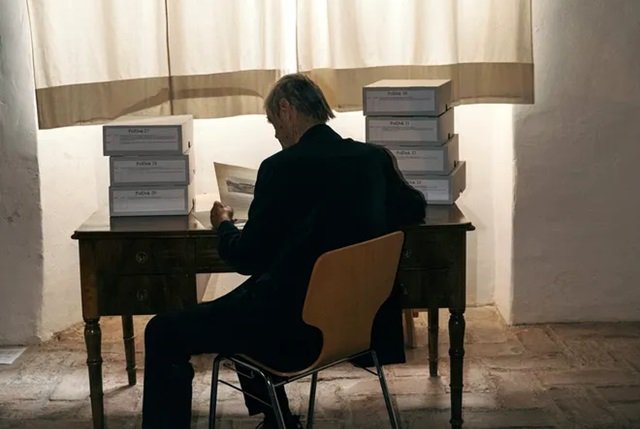
In 2018, he handed twelve folders of investigative material to the Police Museum in Ingolstadt. The nine-page document containing his final conclusion was placed in box 38 of the museum archive. Yet his relationship with the case has not entirely ended. Even after deciding that he would no longer return to the site, he recently added another item to a folder marked “Hinterkaifeck” in his home office.
On the 104th anniversary of the murders, Müller returned to the field where the farm once stood. The buildings had been demolished in 1923, and the land has long since returned to agricultural use. He pointed out where the house, stable, barn and orchard had been. A tree at a nearby junction, which he remembers from the time of the murders, had become a silent companion during his visits. Its branches, he observed, hung down as though in mourning.
At the memorial to the six victims, he read the inscription and then quietly said: “I still feel sorry for them.” He turned towards his car, intending it to be his final visit.
For Müller, the envelope is meant to close a chapter that has occupied nearly his entire adult life. But the distinction between knowing who he believes committed the murders and proving it remains fundamental. Hinterkaifeck may never yield a legally established answer. The detective who spent 60 years pursuing one has chosen to leave his final accusation sealed — a private conclusion in a case that continues to resist certainty.