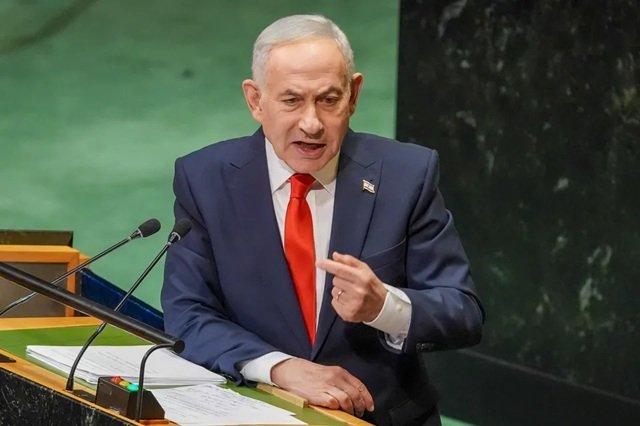
Israeli Prime Minister Benjamin Netanyahu is reportedly seeking to persuade U.S. President Donald Trump to authorise another military strike against Iran following the November 3 midterm elections in the United States. According to a report by Axios, citing American and Israeli sources, Netanyahu is concerned that Washington may prioritise renewed negotiations with Tehran rather than immediately resuming military operations.
The reported discussions highlight differences between Washington and West Jerusalem over how to address Iran’s nuclear programme and the broader security situation in the Middle East. While Israel is pressing for a tougher military response, Trump has indicated that he wants to give diplomatic negotiations another opportunity before considering further attacks.
Axios reported that Trump and Netanyahu discussed the possibility of renewed military action during a telephone conversation on Saturday, November 1. The call followed an earlier report by The Wall Street Journal about renewed contacts between the two leaders. An Israeli source described the conversation as tough, while an American source characterised it as direct.
According to the report, Trump told Netanyahu that the United States should first explore negotiations with Iran rather than immediately launch another bombing campaign. The Israeli prime minister reportedly expressed concern about this approach, reflecting differences over the risks of allowing Tehran additional time to pursue its nuclear activities.
The discussions come at a politically sensitive moment for Netanyahu. His right-wing political bloc failed to secure a parliamentary majority in Israel’s election last month, leaving him engaged in difficult coalition negotiations. The domestic political uncertainty adds another dimension to his government’s security calculations as tensions with Iran remain high.
Meanwhile, American journalist Tucker Carlson claimed in a November 2 post on X that the United States could be only days away from launching a nuclear strike against Iran under pressure from Netanyahu. Carlson alleged that the Israeli prime minister was repeatedly contacting Trump to push for military action.
Carlson also identified Pickaxe Mountain in central Iran as a potential target. Israeli intelligence reportedly believes that Iran has resumed nuclear enrichment activities at the site. However, the claim about an imminent American nuclear strike has not been independently established, and there has been no official confirmation from Washington that such an operation is being planned.
Trump has continued to issue warnings about Iran’s nuclear infrastructure while publicly expressing confidence in the diplomatic process. Speaking to journalists on Saturday, the president said negotiations with Tehran were progressing well. However, he also maintained that the United States still needed to eliminate certain Iranian nuclear facilities.
Trump specifically referred to Pickaxe Mountain, saying that Washington had military plans to deal with the site and could carry out an attack rapidly. His remarks suggested that military options remain under consideration even as American officials pursue diplomatic contacts.
The president has repeatedly threatened further strikes if Tehran fails to accept Washington’s conditions for a settlement. These warnings have raised concerns about the possibility of another military confrontation, particularly given the damage and resource pressures associated with the previous conflict.
The Pentagon is also facing questions about its ability to sustain another major military operation in the region. A September report by the Pentagon inspector-general warned that extensive weapons expenditure during the Middle East conflict had created strategic inventory shortages and exposed weaknesses in the American defence industry’s ability to replenish ammunition supplies.
The report highlighted pressure on key military inventories and production capacity at a time when Washington continues to face security commitments in multiple regions. A renewed conflict with Iran could increase demand for precision-guided weapons, air defence interceptors and other expensive military equipment.
Financial costs are also becoming a significant concern. The Wall Street Journal has reported that Iranian missile and drone attacks caused as much as 15 billion dollars in damage to American military bases across the region. Such losses demonstrate the potential economic and military consequences of another escalation, particularly if Iranian forces expand attacks against U.S. installations and regional partners.
Despite the military rhetoric, diplomatic contacts between Washington and Tehran have continued. Last week, U.S. Vice President J.D. Vance reportedly sent a letter to Iranian national security official Mohsen Rezaei proposing a restart of negotiations that had remained stalled for several months.
The latest diplomatic exchanges took place through Qatari mediation. Iranian negotiators left Doha on Sunday after three days of indirect communication with American representatives. The discussions reportedly focused on a seven-step proposal previously presented by Tehran in September, with the possibility of accelerating its implementation if an agreement could be reached.
Iranian Foreign Ministry spokesman Esmaeil Baghaei said the discussions addressed Tehran’s proposed framework for ending the confrontation. He maintained that Iran’s conditions were reasonable and argued that no final agreement could be reached, and the Strait of Hormuz could not be reopened or secured, unless Washington ended its naval blockade and addressed Iran’s demands.
The position reflects Tehran’s insistence that sanctions, military restrictions and maritime security arrangements must be addressed as part of any broader settlement. The Strait of Hormuz remains strategically important because a substantial share of global oil shipments passes through the waterway. Any prolonged disruption could affect international energy markets, shipping costs and economic stability.
Iran has also issued direct warnings about the consequences of another military attack. Supreme Leader Mojtaba Khamenei reportedly ordered the country’s armed forces to prepare for an immediate response without geographical restrictions if the Islamic Republic comes under renewed attack.
The statement, released by his office on Saturday, signals that Tehran intends to maintain its military readiness and could respond beyond the immediate area of any potential strike. Such a position increases the risk that another confrontation could involve American military installations, regional allies and strategically important infrastructure across the Middle East.
The possibility of wider escalation has also attracted diplomatic attention from Moscow. Russian President Vladimir Putin reportedly discussed the situation with Trump’s special envoy Steve Witkoff during a meeting in St. Petersburg last month.
According to Russian presidential aide Yury Ushakov, Putin reaffirmed Moscow’s willingness to help facilitate a settlement between Washington and Tehran. The Russian president reportedly argued that diplomatic opportunities remained available and that reaching an agreement with Iran was both possible and necessary.
Moscow’s position reflects its broader strategic relationship with Tehran and its interest in preventing another major military confrontation in the Middle East. Russia has maintained diplomatic and strategic ties with Iran and has presented itself as a potential intermediary in efforts to reduce regional tensions.
The latest developments place Washington between competing pressures. Israel is reportedly seeking a more aggressive approach toward Iran, while the Trump administration is weighing negotiations against the possibility of further military action. Tehran, meanwhile, has maintained its conditions for a settlement while preparing for another confrontation.
The outcome could have consequences far beyond the immediate relationship between the United States, Israel and Iran. A renewed conflict would threaten regional security, place additional pressure on American military resources and potentially disrupt international energy supplies through the Strait of Hormuz.
For now, diplomatic contacts remain active, but the continued exchange of military threats leaves the situation uncertain. The central question is whether Washington and Tehran can reach an agreement before political pressure, military calculations or a new security incident pushes the region into another round of conflict.