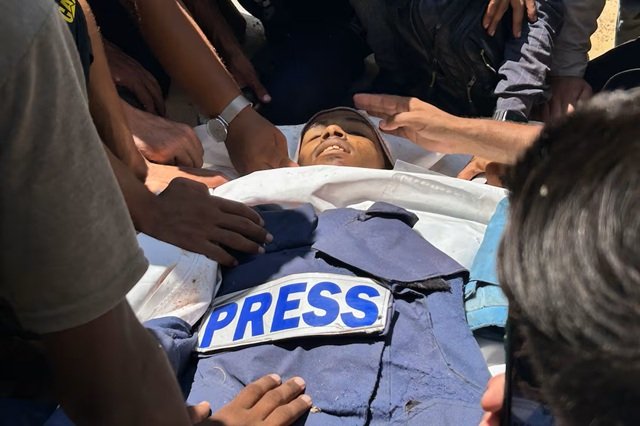
The global toll of journalists killed has reached its highest level in more than a decade, with 189 media professionals losing their lives between January 2024 and December 2025, according to a new report by the United Nations Educational, Scientific and Cultural Organization (UNESCO). The figure represents a 20% increase compared with the previous two-year period, highlighting the increasingly dangerous environment in which journalists operate, particularly in areas affected by armed conflict.
Released on November 2, 2026, UNESCO’s latest assessment on the safety of journalists and impunity for crimes against them identifies the escalating violence in conflict zones, especially the Israeli-occupied Palestinian territories, as the principal driver of the increase. The findings raise serious concerns about the protection of independent reporting, the safety of local media workers and the international community’s ability to hold perpetrators accountable.
The figures reveal a sustained deterioration in the security of journalists since 2023. A total of 92 journalists were killed in 2024, followed by another 97 in 2025. Approximately 67% of these deaths occurred in countries experiencing armed conflict, reinforcing the connection between warfare and the growing risks faced by media professionals. UNESCO’s findings also point to the increasing use of drones in attacks, which were responsible for more than a quarter of all journalist deaths during the reporting period.
According to the report, 50 journalists were killed in drone attacks across six conflict zones during 2024 and 2025. Another 77 died in other attacks in conflict-affected areas, while 62 were killed outside active conflict zones. The growing number of journalists killed in groups is another particularly troubling development. UNESCO warns that such incidents may indicate that media workers were deliberately selected as targets rather than caught in indiscriminate violence.
Mariya Gabriel, UNESCO’s Deputy Director-General for Communication and Information, stressed the seriousness of these incidents during the presentation of the report, describing the deliberate targeting of journalists as a war crime. The warning underscores the importance of international humanitarian law, which provides protections for civilians, including journalists, during armed conflict.
The occupied Palestinian territories accounted for the largest concentration of journalist deaths. According to UNESCO, 30 journalists were killed there in 2024, followed by another 32 in 2025. Combined, the 62 deaths represent approximately one-third of all journalists killed worldwide during the two-year period. The figures place Palestine at the centre of the international debate over journalist safety, particularly as access restrictions and the dangers of reporting in active conflict zones complicate independent coverage.
The Arab States region recorded 97 journalist killings, the highest regional total. Latin America and the Caribbean followed with 37 deaths, including 14 in 2024 and 23 in 2025. Asia and the Pacific recorded 34 killings, while Central and Eastern Europe registered 14. Africa, Western Europe and North America together accounted for seven deaths.
The regional figures also reveal contrasting patterns. While the number of journalist killings increased dramatically in conflict-affected areas, deaths in countries without armed conflict fell to 62, the lowest level recorded in 18 years. Sylvie Coudray, UNESCO’s Director of Freedom of Expression and Media Development, described this reduction as an encouraging development, suggesting that coordinated action and cooperation among different stakeholders can improve journalist safety.
She pointed to national mechanisms, including those established in Mexico, as examples of efforts to address threats against media professionals. However, the broader figures indicate that such progress remains uneven and that protection mechanisms have yet to prevent widespread violence against journalists.
The burden of this violence falls disproportionately on local reporters. UNESCO found that 93% of journalists killed during the period died in their countries of origin. Local journalists frequently cover armed conflicts, corruption, political developments and organised crime, often while operating in environments where threats, intimidation and limited institutional protection are part of their daily work.
Foreign correspondents and international news organisations may have greater resources and institutional support, but local journalists remain deeply exposed to the consequences of reporting on sensitive issues. Restrictions on access to dangerous territories, including Palestine, further increase reliance on journalists already living and working in those areas.
Women journalists also remain vulnerable, although their share of total deaths declined. Fourteen women journalists were killed during the reporting period, the same absolute number as in the previous two-year period. However, because overall fatalities increased, women accounted for just 7% of journalist deaths, the lowest proportion in a decade. All but one of the women killed died in countries affected by conflict.
Beyond the immediate loss of life, UNESCO identified a significant deterioration in accountability. The organisation’s latest assessment found that the global impunity rate for journalist murders had risen by one percentage point to 86%, reversing some of the progress recorded previously and returning to levels last seen in 2022. Although considerably lower than the 95% recorded in 2012, the figure means that the overwhelming majority of journalist killings still go without adequate judicial resolution.
For its assessment, UNESCO requested information from 78 member states concerning 1,358 unresolved cases. Thirty countries failed to respond, a higher number than in the previous consultation. The organisation also reported a decline in the number of governments claiming to have introduced measures to improve journalist safety and combat impunity. Iraq, with 168 cases and no response to UNESCO’s request, and Mexico, with 141 cases and a response, were among the countries most affected by the investigation.
The crisis extends beyond killings. UNESCO also highlighted growing threats to press freedom, including physical assaults, judicial harassment, abusive legal complaints, arbitrary detention and intimidation. Data collected by civil society organisations indicated between 98 and 160 cases of journalist disappearances during 2024 and 2025. Figures on journalist detentions ranged from 466, reported by the Committee to Protect Journalists, to 938, recorded by Reporters Without Borders.
Twenty years after UNESCO began systematically monitoring journalist killings, a total of 1,641 journalists, media workers and social media content creators have been murdered worldwide. That amounts to approximately one death every four days over two decades. The latest figures demonstrate that the dangers facing journalists are not confined to individual conflicts but reflect a wider challenge involving civilian protection, freedom of expression and the enforcement of international law.
The central concern is no longer simply the number of journalists killed, but the persistence of conditions in which those responsible can escape justice. Without stronger protection, credible investigations and meaningful accountability, the ability of journalists to document conflicts, expose abuses and inform the public will remain under serious threat.