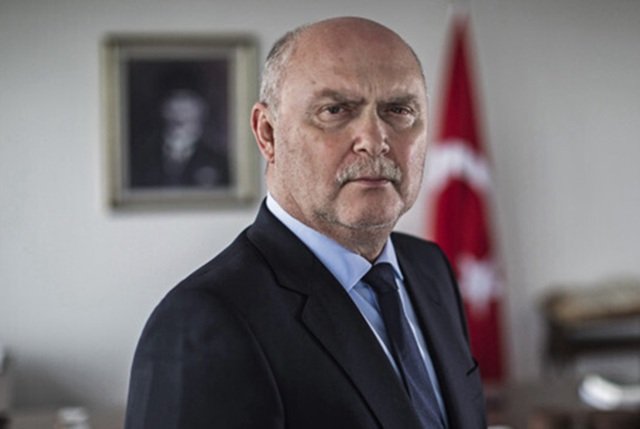
Turkey has entered the increasingly contested race to lead the United Nations, nominating veteran diplomat Feridun Sinirlioglu for the organisation’s top position as negotiations over the successor to Secretary-General António Guterres remain deadlocked. The move by President Recep Tayyip Erdogan’s government introduces another experienced diplomatic figure into a selection process that has so far failed to produce a candidate capable of securing the necessary support among the powerful members of the UN Security Council.
The nomination, formally submitted on October 31, 2026, was confirmed on November 2 by Sanita Pavluta-Deslandes, Latvia’s ambassador to the United Nations and president of the Security Council for November. Sinirlioglu currently serves as Secretary-General of the Organization for Security and Co-operation in Europe (OSCE), a regional security organisation whose membership spans Europe, North America and parts of Asia. His candidacy comes at a critical moment for the United Nations, which faces an increasingly complex international environment marked by armed conflicts, geopolitical rivalries and disagreements among major powers.
Turkey’s decision follows weeks of speculation about Sinirlioglu’s possible entry into the contest. It also comes after another inconclusive round of informal consultations within the Security Council, reinforcing the difficulty of finding a candidate acceptable to all five permanent members: the United States, China, Russia, France and the United Kingdom. Each possesses veto power, giving them decisive influence over who can advance to the General Assembly for appointment.
The latest developments illustrate the unusual political dynamics surrounding the selection of the world’s most senior international civil servant. Although the Secretary-General is expected to represent the interests of the entire UN membership, the appointment ultimately depends on agreement within a Security Council where the five permanent members have unequal powers compared with the organisation’s other 188 member states.
Under Article 97 of the UN Charter, the Secretary-General is appointed by the General Assembly upon the recommendation of the Security Council. In practice, a candidate must secure at least nine votes in the 15-member council without receiving a veto from any permanent member. This means that broad international support alone cannot guarantee success. A single permanent member’s opposition can prevent a candidate from reaching the final appointment stage.
The selection process has included a series of informal straw polls, in which council members indicate whether they support, oppose or have no opinion on individual candidates. These consultations are designed to identify potential objections before a formal recommendation is made. However, the latest round has failed to resolve the divisions, with the candidates continuing to encounter opposition from members of the council.
Costa Rican diplomat Rebeca Grynspan has emerged as a prominent contender in the process, but no candidate has secured the consensus required to move forward. The entry of Sinirlioglu, alongside that of Emirati diplomat Lana Zaki Nusseibeh in October, demonstrates that the field remains open even as diplomats face growing pressure to reach an agreement.
Besides Sinirlioglu and Grynspan, the candidates identified in the latest contest include Argentina’s Rafael Grossi, director-general of the International Atomic Energy Agency; Guyana’s Carolyn Rodrigues-Birkett; Ecuador’s María Fernanda Espinosa and Ivonne Baki; Uganda’s Olara Otunnu; and the United Arab Emirates’ Lana Zaki Nusseibeh. Former Senegalese president Macky Sall withdrew his candidacy in October.
Sinirlioglu brings extensive experience in international diplomacy and Turkish foreign policy. Before taking charge of the OSCE, he served as Turkey’s permanent representative to the United Nations from 2016 to 2023, giving him several years of direct experience within the organisation he is now seeking to lead. He also served as Turkey’s foreign minister in the country’s interim government in 2015 and held senior positions within the Ministry of Foreign Affairs, including that of permanent undersecretary.
His diplomatic background also includes direct involvement in one of the United Nations’ most sensitive recent international assessments. In 2023, Guterres appointed Sinirlioglu as special coordinator for an independent assessment on Afghanistan, mandated under UN Security Council Resolution 2679. The assessment formed part of international efforts to examine the UN’s approach to Afghanistan following the Taliban’s return to power in 2021 and the subsequent deterioration of the country’s political and humanitarian situation.
At the OSCE, Sinirlioglu has occupied a position involving cooperation among states with differing security interests and political priorities. The organisation works across issues including conflict prevention, arms control, human rights and regional stability. His current responsibilities provide him with experience in multilateral negotiations at a time when international cooperation faces significant challenges.
The Afghanistan assignment is particularly relevant to his international profile. The independent assessment was intended to help the United Nations develop a coherent approach to engagement with Afghanistan, where the Taliban authorities’ restrictions, particularly on women and girls, have complicated relations with the international community. Sinirlioglu’s involvement placed him within a diplomatic effort requiring engagement with competing international positions and difficult questions about recognition, humanitarian assistance and political legitimacy.
The contest also carries wider implications for Turkey’s international diplomatic ambitions. By nominating a former foreign minister and current head of a major multilateral organisation, Ankara is seeking a place in discussions over the future leadership of the United Nations. The nomination provides Turkey with an opportunity to participate directly in a process shaped heavily by the interests of the Security Council’s permanent members. However, the extent to which Sinirlioglu’s candidacy can attract support across competing diplomatic blocs remains to be established.
The position he is seeking extends far beyond ceremonial representation. The Secretary-General serves as the chief administrative officer of the United Nations, oversees its Secretariat and plays an important role in international diplomacy, conflict prevention and humanitarian coordination. The office also provides an independent platform for raising concerns about threats to international peace and security. Although the Secretary-General does not possess the authority of a national government, the position carries considerable diplomatic influence through engagement with world leaders and the wider international community.
The appointment process has undergone reforms intended to make the selection more transparent and inclusive. For the 2026 transition, the General Assembly introduced procedures requiring candidates to be formally nominated by member states and to submit their curriculum vitae, vision statements and disclosures concerning campaign financing. Candidates have also participated in interactive dialogues with member states, allowing governments to examine their priorities and approach to the organisation’s challenges.
Nevertheless, the decisive stage remains concentrated within the Security Council. Its permanent members can block a nomination regardless of the level of support among other countries, making diplomatic acceptability a central consideration. This arrangement reflects the structure established when the United Nations was founded in 1945, balancing the principle of collective international representation with the privileged position of the major powers.
With Guterres’s second term scheduled to end on December 31, 2026, the selection process is entering a period of increasing urgency. His successor is expected to assume office on January 1, 2027, leaving limited time for the Security Council to agree on a recommendation and for the General Assembly to complete the appointment. Latvia’s ambassador, Pavluta-Deslandes, has acknowledged the pressure to accelerate negotiations, although she has not announced a definitive timetable for further voting.
Sinirlioglu’s arrival therefore adds another dimension to a contest that reflects the broader difficulties of international diplomacy. The next Secretary-General will inherit an organisation expected to respond to conflicts, humanitarian emergencies and disagreements among its most influential members, while maintaining the confidence of countries with widely different political and economic interests. Turkey’s nomination has widened the field of possibilities, but the central challenge remains unchanged: securing agreement among the powers whose support is essential to determining who will lead the United Nations into its next five-year term.