


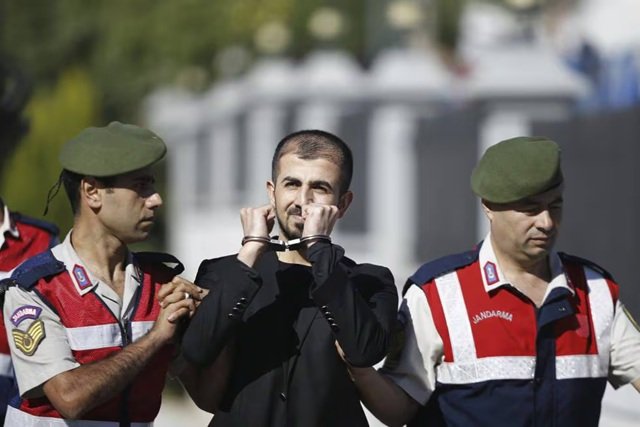
The evening of July 15, 2016, began like any other summer Friday in Istanbul. Traffic flowed across the Bosphorus bridges as commuters headed home, residents made their way into the city’s nightlife, and others escaped the heat for the coast. Then, without warning, trucks carrying soldiers blocked one of the crossings, bringing traffic to a standstill. At first, confusion prevailed. Some wondered whether the military had launched an anti-terrorism operation or was conducting an exercise. Instead, the scene marked the opening moments of an attempted coup that would become one of the most consequential events in modern Turkish history.
Ten years later, the failed coup remains the central political and emotional reference point of President Recep Tayyip Erdoğan’s rule. Officially commemorated as the “Epic of July 15,” the uprising is remembered as the moment when civilians and loyal security forces defended the elected government against military plotters. More than 250 civilians and government loyalists were killed during the confrontation, and their deaths have become a defining element of the state’s annual remembrance ceremonies, held each year on Democracy and National Unity Day.
The attempted overthrow unfolded against the backdrop of a country with a long history of military intervention in politics. Since the founding of the Turkish Republic by Mustafa Kemal Atatürk, who himself left military service before entering politics, the armed forces had repeatedly intervened in civilian government. Successful coups in 1960, 1971, 1980, and 1997, along with other failed attempts and periods of military influence, established a legacy that made the troop movements on the Bosphorus immediately alarming for many observers.
According to political scientist Selim Koru, author of New Turkey and the Far Right, the failed coup gave Erdoğan and his political movement a decisive opportunity at a critical moment. Koru argues that the events allowed the government to reshape Turkey’s political system in ways it had long sought but previously lacked sufficient support to achieve.
By the time soldiers occupied strategic points in Istanbul that evening, the conspiracy had already been unfolding for several hours. Chief of the General Staff Hulusi Akar had reportedly been abducted after refusing to endorse the coup. Confusion spread through government institutions, with senior political leaders initially unaware of the scale of the operation. Prime Minister Binali Yıldırım and President Erdoğan were among the last to learn of the unfolding events. Erdoğan, who was on holiday on Turkey’s Mediterranean coast, later said he was alerted by his brother-in-law after reports of unusual military activity near the Bosphorus. Attempts to contact intelligence officials and military commanders reportedly went unanswered.
The communication breakdown remains one of the unresolved questions surrounding the coup attempt. Information later emerged suggesting that both Turkey’s intelligence service and military leadership had received indications of the planned operation earlier that afternoon, yet the warnings were apparently not effectively transmitted. Despite the unanswered questions, several officials who occupied senior positions at the time later continued to serve in prominent roles. Hulusi Akar became defense minister before entering parliament, while intelligence chief Hakan Fidan remained in office and later became foreign minister.
As government authorities regained control and determined that only a small segment of the armed forces supported the coup, loyal military units, police officers, and civilians mounted a counteroffensive. Erdoğan called on supporters to take to the streets, while mosque loudspeakers urged citizens to resist. Civilians confronted tanks and armed soldiers using little more than sticks, personal firearms, or their bare hands. Fighting erupted across multiple locations as air strikes, shootings, and violent clashes claimed the lives of 253 people, many of whom are now officially recognized as martyrs.
The failed coup was quickly attributed by the government to the Hizmet movement, a political-religious organization led by exiled cleric Fethullah Gülen, who died in the United States in 2024. Turkish authorities accused the movement of spending decades infiltrating state institutions and the security services, particularly during the years when it maintained an alliance with Erdoğan’s Justice and Development Party before relations collapsed. Hizmet denied responsibility for organizing the coup, although several generals and senior officers convicted during subsequent trials acknowledged links to the movement.
For many observers, however, questions surrounding the events of that night have never been fully resolved. Koru argues that, unlike situations in which independent institutions conduct comprehensive investigations following major political crises, Turkey never produced an account that satisfied the broader public. He says many citizens believe important aspects of the coup remain unexplained, while suspicions persist among some that government officials possessed advance knowledge of the events or allowed them to unfold. He also notes that there was no meaningful accountability for those who oversaw the expansion of Gülenist influence within state institutions before the alliance collapsed.
The aftermath fundamentally altered the Turkish state. More than 113,000 people were imprisoned and approximately 152,000 public officials were dismissed over alleged links to the Gülen movement. The sweeping purge enabled Erdoğan to reshape the bureaucracy with officials considered loyal to his governing Justice and Development Party and to its nationalist ally, the Nationalist Movement Party.
The failed coup also provided the context for a prolonged state of emergency under which Turkey carried out extensive institutional reforms. A closely contested referendum replaced the country’s parliamentary system with a powerful executive presidency, dramatically expanding presidential authority. Before the attempted coup, such constitutional changes had lacked sufficient political backing.
These developments occurred during a period of widespread instability. Turkey was confronting deadly attacks by the Islamic State group, whose bombings killed more than 200 people between 2015 and 2017, while renewed conflict with Kurdish insurgents followed the collapse of peace negotiations in 2015. More than 5,000 people died during the subsequent military campaign over the following five years. Within this broader climate of violence and insecurity, the coup attempt became intertwined with the government’s argument that stronger executive powers were necessary to preserve stability.
Although the state of emergency formally ended two years later after Erdoğan was elected under the new presidential system, many practices introduced during that period continued. Authorities have repeatedly removed opposition mayors and replaced them with government-appointed administrators. Political rivals have remained in detention for extended periods before final court rulings, including pro-Kurdish politician Selahattin Demirtaş, imprisoned since November 2016, and former presidential candidate Ekrem İmamoğlu, who has spent nearly a year and a half in custody. Their cases, along with those involving journalists, trade unionists, artists, and numerous local political figures, reflect changes in Turkey’s political landscape that emerged in the wake of the failed coup.
A decade after tanks rolled onto the Bosphorus bridges and civilians flooded into the streets, the events of July 15 continue to shape Turkey’s institutions, politics, and public memory. The failed coup remains both a defining national trauma and the pivotal moment from which the country’s current political system emerged.









