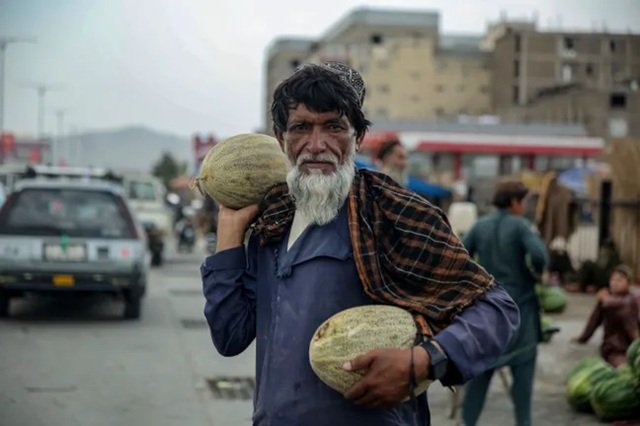
Five years after the withdrawal of international troops from Afghanistan, the country is confronting a humanitarian crisis that is becoming harder to contain. Millions are struggling with hunger and disease, families have exhausted their savings and livelihoods, and aid organisations are increasingly running out of the resources needed to respond.
Nearly half of Afghanistan’s minors are reported to be malnourished. The United Nations has warned that an entire generation is suffering from inadequate nutrition, while some parents have resorted to selling their children as a last means of keeping the rest of the family alive. At the same time, international donors are cutting assistance, leaving humanitarian organisations with fewer resources precisely as the need is expanding.
Sajjad Mohammad Sajid, who heads the Afghanistan programme of Welthungerhilfe in Kabul and has worked in international development assistance for more than 25 years, described the situation in an interview reported by Der Spiegel as one in which families have exhausted almost every strategy available to them.
They have spent their savings, accumulated debts, sold livestock and tools, withdrawn children from school and reduced the amount of food they eat. For many families, he said, one shock has followed another for years. There is now little left that can be sold, reduced or sacrificed.
The consequences are visible across the country.
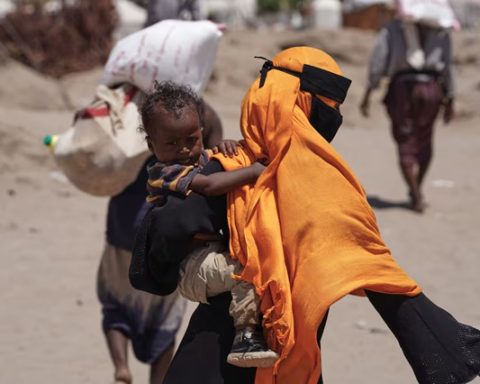
During a recent visit to Mazar-i-Sharif, Sajid encountered a family, predominantly women, sitting outdoors under the intense sun after being deported from Pakistan. Male relatives remained detained in Pakistan, leaving the women without anyone able to organise assistance.
Some members of the family were suffering health problems, while the psychological strain was visible. Yet their most urgent concern was not food or assistance for themselves. They wanted food and water for their children.
The family, Sajid said, embodied several of Afghanistan’s overlapping crises at once: deportation, displacement, family separation, hunger, illness and psychological distress. The mothers could no longer provide what their children needed.
Across Afghanistan, 17.4 million people are currently experiencing acute food insecurity, according to Sajid. One in 10 Afghans is malnourished and millions are going hungry.
Yet the absence of a formal declaration of famine does not mean that the hunger crisis is not life-threatening. Three out of four people lack secure livelihoods. A single lost day of work, an illness, rising food prices or a failed harvest can push a household beyond the point at which it can meet its most basic needs.
For families with malnourished babies and young children, the consequences can be fatal.
The humanitarian system itself is under growing pressure. For 2026, only a quarter of the $1.71 billion considered necessary for Afghanistan had been received at the time of Sajid’s interview. The United States, previously the country’s largest donor, was providing no support at all.
The European Union had become the largest donor, providing $148 million, while Britain had provided $65 million and Germany $36 million. Yet, as Sajid observed, governments have increased defence spending while reducing development assistance. No donor has filled the gap left by the United States.
The effects are particularly severe among children. Nearly 90 per cent of children under two are experiencing food insecurity, according to Sajid. Single-woman households are especially vulnerable, as are pregnant and breastfeeding women, returnees, internally displaced people, people with disabilities, landless families, day labourers and small farmers.
Communities affected by floods and landslides are also at heightened risk.
For many of these families, dependence on humanitarian assistance is not a choice. They want to work, cultivate their land, educate their children and determine their own futures. But years of conflict, displacement and climate-related disasters have stripped many of them of the assets and opportunities that once allowed them to do so.
The problem is complicated by the fact that hunger does not necessarily disappear when agricultural production improves.
Afghanistan can have a good harvest and still have people going hungry because food availability is not the same as access to food. Farmers carrying debt may be forced to sell their harvest to repay creditors. What remains may provide little more than bread and tea.
Calories may be available, but proteins, vitamins and minerals remain beyond the reach of many households. Vegetables, fruit, dairy products and meat are often unaffordable.
This creates a form of deprivation that cannot be measured simply by whether food exists in the marketplace.
International humanitarian organisations have remained in Afghanistan since the Taliban returned to power, but many have significantly reduced their programmes. Afghan organisations have taken on more responsibilities, but they face the same fundamental problem: insufficient funding.
Relations between international organisations and the Taliban government also remain difficult. International sanctions mean that many non-governmental organisations avoid being publicly seen working alongside the Taliban. At the same time, the authorities provide assistance with work permits, visas and permissions for projects and travel.
The Taliban have developed a five-year plan intended to improve agriculture and expand storage and refrigeration capacity. But they have limited resources with which to implement it, while cooperation between the authorities and international NGOs remains weak.
The crisis is also being intensified by climate change.
Droughts are increasingly followed by irregular rainfall. Extreme heat can be followed by flash floods, which in turn destroy crops and livestock. Each event compounds existing vulnerabilities, leaving farmers and rural households with fewer opportunities to recover before the next shock arrives.
Afghanistan once had the potential to function as a breadbasket for Central Asia, but restoring food security will require far more than producing larger harvests. Infrastructure, functioning markets and reliable incomes are equally important.
Without investment in these areas, families can remain trapped in a cycle of expensive land rents, debt and repeated humanitarian emergencies.
The challenge, therefore, extends beyond keeping people alive during the next food crisis. It is whether Afghanistan can develop systems capable of preventing the same emergency from returning year after year.
Sajid argues that long-term investment must accompany immediate humanitarian assistance. Irrigation systems, restoration of water ecosystems, drought-resistant seeds, veterinary services, access to credit and functioning markets could strengthen the resilience of agricultural communities.
Women would also need unrestricted access to education and economic activity, while international financing would have to become more reliable.
The scale of the funding crisis makes such ambitions difficult. Aid organisations are increasingly being asked to accomplish more with fewer resources, while Afghanistan’s population faces a combination of economic insecurity, displacement, climate shocks and food shortages.
The result is a humanitarian emergency that risks becoming normalised.
Yet amid the bleakness, there are examples of what targeted investment can achieve. In a remote area, Sajid’s organisation recently installed rainwater collection basins with filtration systems. The system now provides an entire village with clean drinking water.
Men, women and children immediately gathered to collect it.
For Sajid, the reaction demonstrated something larger than the value of a single infrastructure project. Clean water brought relief, but it also restored something that prolonged crisis can gradually erode: dignity.
That may be one of Afghanistan’s central challenges after five years of Taliban rule and the withdrawal of international forces. Humanitarian assistance can prevent death, but it cannot by itself rebuild livelihoods, restore economic security or create resilience against the next drought, flood, displacement or economic shock.
The choice facing the international community is increasingly stark. It can continue to respond to Afghanistan through emergency relief as crises become more severe, or it can invest in the systems that allow communities to withstand those crises in the first place.
For millions of Afghans, the distinction is not theoretical. Their savings are gone. Their livestock and tools have been sold. Their children have missed school. Their food has been reduced. And with international funding shrinking, even the organisations trying to help them are being forced to ration their response.
Five years after the international withdrawal, Afghanistan’s crisis is therefore not simply about hunger. It is about whether a society repeatedly stripped of its means of survival can rebuild them before another generation pays the price.