Afghanistan’s expanding CCTV network is giving the Taliban new power to monitor public life, while women, activists and political opponents describe a growing climate of fear five years after the fall of Kabul.
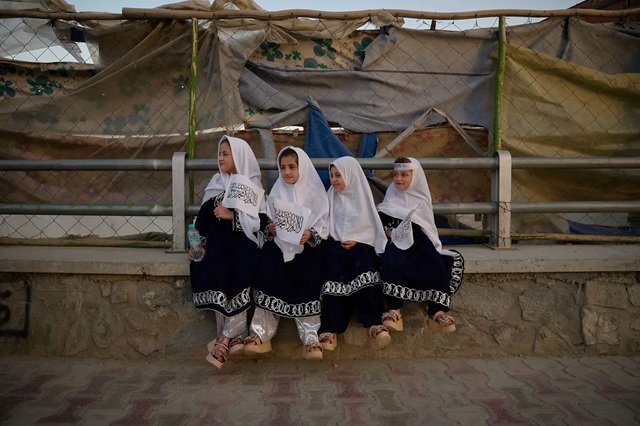
A simple trip to a local shop has become a daunting task for 25-year-old Tahmina, a former teacher living in Kabul. A poorly worn headscarf, a stray word or the absence of a male guardian can expose women to questioning by the Taliban’s morality police, with detention a possible consequence.
“The Taliban have cameras everywhere – you feel you are constantly being watched. They are waiting for you to break their laws so they can come and take you away,” Tahmina said.
Her account, reported by The Observer, reflects a broader transformation in Afghanistan since the Taliban returned to power in August 2021. Five years after the collapse of the Western-backed republic, thousands of CCTV cameras have been installed across the country, creating an expanding surveillance system alongside restrictions that have progressively narrowed women’s rights, media freedoms and space for dissent.
In 2023, the Taliban announced plans to install about 60,000 CCTV cameras in Kabul and other cities. Within a year, more than 90,000 Chinese-built security cameras had appeared across the capital. In Khair Khana, a northern neighbourhood of Kabul, about 8,000 cameras were reportedly monitoring the area.
Taliban officials said the project was intended to combat crime. But Khalid Zadran, a Kabul police spokesperson, offered a broader description of its reach: “We can see everything happening in different parts of the city and monitor public activities.”
For people who have already experienced threats from the authorities, such statements have carried a different meaning. Aqeela, a 30-year-old civil society activist, participated in anti-Taliban protests demanding equal rights for women shortly after the group retook Kabul. She subsequently received threats, and in August 2022 Taliban fighters raided her home while she was away.
She never returned. After moving between several residences, she described her life as that of a fugitive. Now, she rarely leaves home because of the fear that surveillance cameras could identify her.
“For someone who has been threatened for their civic and protest activities, the cameras create this feeling of dread. This feeling that your every movement is being recorded, your behaviour is being monitored… that you are not safe, even in your own home,” she told The Observer.
The surveillance network has become particularly significant during periods of dissent. When large protests erupted in Herat in June, following the detention of dozens of women accused of violating the Taliban’s strict dress code, two people were killed as the demonstrations were suppressed.
Omari, one of the protesters who later fled the city, said the authorities subsequently collected footage from CCTV cameras installed on streets and in shops and used it to arrest people who had participated in the demonstrations. The United Nations mission in Afghanistan also documented instances in which the Taliban intelligence department conducted random checks of mobile phones for messages and videos connected to the protests.
“The cameras aren’t here to protect us – they are here to protect the Taliban’s power over us,” Omari said.
Taliban officials have claimed that the cameras are equipped with facial recognition technology. Experts, however, question whether the authorities possess the financial and technical capacity to create a surveillance system comparable with those of China, Russia or Iran.
Fereshta Abbasi, a researcher at Human Rights Watch, said the Taliban remained far from developing such sophisticated systems because of financial constraints. But she also warned that the authorities could use the footage for purposes extending beyond monitoring social behaviour.
The expansion of surveillance is taking place alongside an acute economic and humanitarian crisis. Afghanistan remains under severe economic sanctions, while many humanitarian and development projects supported by foreign funding were cut following the Taliban takeover. The country’s damaged banking system has also complicated the delivery of international assistance, with funds having to be transported as cash shipments facilitated by the United Nations.
The United States remains Afghanistan’s largest donor despite major cuts to its foreign aid budget since Donald Trump returned to power last year. The UK and European Union have also continued to fund projects, but at levels far below what is required by a country that has long depended heavily on international assistance.
Nearly 28 million Afghans are living in poverty, according to a UN report, representing almost two-thirds of the population. Afghanistan received $1.1bn in humanitarian aid last year, while the current requirement exceeds $2bn. Questions have increasingly emerged over how much assistance reaches the people and projects for which it is intended.
A US watchdog reported in 2024 that the Taliban was siphoning off foreign aid through taxes, fees and other duties, warning that this risked “contributing to the legitimisation of the Taliban-controlled government in the eyes of the Afghan people”. The UN, however, has maintained that “robust safeguards” are in place to ensure that critical international assistance reaches those who need it.
The economic hardship has not prevented the authorities from expanding their surveillance infrastructure. Reports suggested that the camera network was launched in partnership with Chinese telecommunications giant Huawei, although the company, which is sanctioned by the US, denied involvement.
Several families in Kabul told The Observer that Taliban officials had pressured residents to pay for cameras installed on their streets, as well as solar panels to power them. For many already struggling to feed their families, the additional expense has become another burden.
“They are too afraid to say no,” said Rahim, a driver in Kabul. “People don’t have enough to feed their families, but they still have to pay for this.”
Tahmina said every house on her street in central Kabul had privately installed cameras. She said her landlord had paid for the installation and that Taliban officials entered the neighbourhood to inspect cameras, search homes and sometimes detain people.
Beyond Kabul, surveillance has expanded into areas where Taliban support is traditionally weaker. Thousands of cameras have appeared in northern cities including Mazar-i-Sharif and Baghlan, as well as in Panjshir.
Fawzia Koofi, a former parliamentarian from Badakhshan now living in exile, said the Taliban remained deeply insecure in parts of the north where they lacked a meaningful constituency. She argued that increased surveillance, crackdowns and searches were consequently concentrated in those areas.
The authorities have also made use of biometric information gathered under the previous government. Human Rights Watch identified digital systems used by the Taliban to target Afghans, including iris scans, fingerprints, photographs, employment details and addresses from government identification and payroll databases, as well as information from a US Department of Defense database left behind during the American evacuation.
Yet resistance has not disappeared. In recent weeks, opposition in Badakhshan has intensified. In mid-July, the Taliban briefly lost control of a district in the region, the first such loss in five years, while clashes between local groups and the government continued and reports emerged of Taliban fighters changing sides.
For Kabul’s women, however, such developments offer little immediate relief. Tahmina remembers a city in which she could work, meet friends and visit family without fearing that every movement might attract official scrutiny. That freedom existed even during the years of war, when terror attacks remained a constant threat.
“Yes, there was always the fear of getting caught in an attack,” she said. “But we were free.”
Five years after the Taliban returned to Kabul, that distinction has become central to the experience of many Afghans. The fighting that once defined daily life has receded, but another form of insecurity has taken its place: surveillance, restrictions and the fear of being watched.
For Tahmina, the transformation is captured in a single sentence: “It’s like we live in a prison.”
Names have been changed to protect identities.