by Our Special Correspondent in Nairobi
Africa’s mission to reclaim its mining independence is a momentous, albeit fraught, endeavour, driven by a legacy of systemic exploitation that spans centuries. The winds of change are now sweeping through the continent, as African nations attempt to wrest control over their vast and valuable natural resources, long plundered by Western corporations and their proxies. Yet, despite the noble rhetoric of sovereignty and self-determination, the path forward is perilous and laden with contradictions. It is a moment of historical reckoning, one in which the very foundations of global geopolitics and economics are being reshaped, but also one that reveals the inherent tensions within Africa itself. In the battle for mining independence, Africa faces the chilling prospect of not just confronting old colonial masters, but also contending with new, opportunistic powers that may prove no less exploitative.
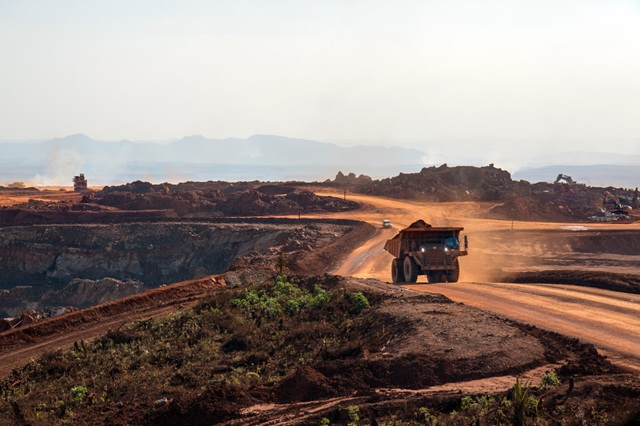
For decades, African resources have been the silent backbone of Western prosperity, their extraction and exploitation masked by neoliberal doctrines of free trade and globalisation. From the arid deserts of Niger, rich in uranium, to the goldfields of Mali and Burkina Faso, Africa’s mineral wealth has been carted off with impunity, leaving behind little more than environmental degradation and social unrest. The West, under the guise of foreign direct investment, has set up a shadow empire of multinational corporations that siphon off the continent’s wealth with little regard for the people who live atop it. Western mining giants have struck deals with pliant African elites, securing tax exemptions, favourable contracts, and near-total control over the exploitation of vital resources. The terms of these contracts have often been heavily tilted in favour of foreign interests, leaving African governments with a paltry share of the spoils. For Africa, the question has long been one of how to reclaim what was never truly theirs to begin with.
The recent surge of military juntas in the Sahel region has catapulted the mining question to the forefront of African politics. Mali, Burkina Faso, and Niger, countries that have been marred by insurgencies and instability, have all seen their governments topple, and the new military regimes are determined to reassert control over their mineral wealth. These regimes have begun to rewrite mining laws, impose higher taxes, demand larger stakes in the industries, and in some cases, confiscate foreign assets altogether. It is a bold stance, one that echoes the cries of post-colonial Africa for self-determination, but it is also a volatile gamble. The actions of these regimes have drawn the ire of foreign mining companies and, in some cases, entire nations. Companies like Barrick Gold, Resolute Mining, and Orano, who have long enjoyed the fruits of African resources, are now finding themselves at the mercy of governments that are increasingly willing to impose legal disputes, nationalisations, and even arbitrary arrests in order to secure greater control over the sector.
The situation has escalated to the point where mining executives are now facing arrest warrants, and gold is being seized directly from operations. This radical shift in Africa’s mining landscape is not just a localised political development; it is part of a broader, existential struggle for Africa to reclaim its position within the global economic order. The West, which has long controlled the mechanisms of global trade and mineral extraction, is finding its hegemony increasingly threatened by these assertive African regimes. The West has historically cloaked its exploitation of Africa’s resources under the pretence of investment and development, yet the new wave of nationalism in Africa is unmasking this narrative for what it is: a system of neo-colonialism that exploits Africa’s riches for the benefit of foreign powers.
At the heart of Africa’s struggle for mining independence is the desire to break free from the iron grip of Western corporations that have controlled the continent’s resources for centuries. It is no longer sufficient for African nations to merely negotiate better terms with foreign companies. They are now pushing for a radical transformation of the entire framework within which the mining industry operates. The military regimes in the Sahel, in particular, are intent on reconfiguring the power dynamics of the industry, with state ownership and control emerging as central themes. Yet, while this approach offers the tantalising promise of national sovereignty, it also raises a host of questions about governance, accountability, and the capacity of these regimes to manage the wealth of the land. The spectre of corruption, inefficiency, and political instability looms large, casting doubt on the extent to which African governments can effectively manage their newfound resources.
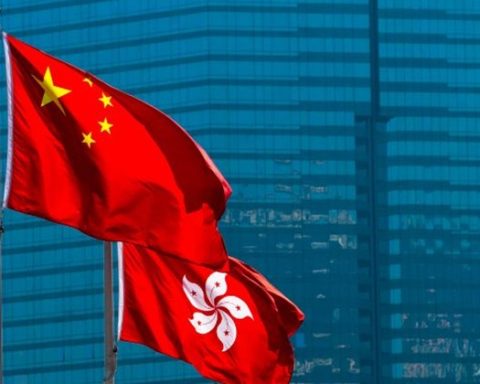
Moreover, this assertive stance towards mining is compounded by Africa’s complex geopolitical realities. The shift in allegiance from former colonial powers to Russia and China has created an uneasy balance of power. While the West has historically been the primary actor in Africa’s resource extraction, Russia and China have increasingly positioned themselves as alternative partners, eager to seize on the opportunities presented by Africa’s vast mineral wealth. China’s growing influence in particular is evident in its expansion into lithium, cobalt, and gold mining, and its dealings with African governments are often framed in terms of a strategic partnership rather than exploitation. Yet, just as Africa was previously beholden to the West, it now finds itself at the mercy of new foreign powers, each with their own agendas.
Russia’s involvement in Africa, particularly through mercenaries like the Wagner Group, has added another layer of complexity to the mining question. These new alliances present a challenge to the Western-dominated status quo, but they also come with their own set of risks. As Russia’s interests in Africa deepen, the continent may find itself in a position where it has traded one form of exploitation for another. The geopolitical game being played on African soil is one of extreme risk, where the lines between allies and adversaries are often blurred, and where economic sovereignty may come at the expense of political stability. The temptation to align with new partners promising resources and investment is powerful, but the historical lesson of Africa’s exploitation by foreign powers, regardless of their origin, must not be forgotten.
At the same time, African nations are grappling with the dilemma of how to make use of their mineral wealth in a way that benefits their people. For so long, African resources have been seen as mere commodities to be extracted, refined, and sold to the highest bidder. The potential for Africa to utilise its own resources to drive its industrialisation, infrastructure development, and energy independence is enormous, but this ambition is thwarted by the same forces that have long sought to maintain the status quo. The exploitation of Africa’s minerals by foreign companies has ensured that the continent remains locked in a state of economic dependency. However, in a global economy increasingly driven by concerns over energy security and environmental sustainability, Africa’s resources have taken on a new significance. The world’s demand for energy minerals such as uranium and lithium, coupled with rising gold prices, has intensified competition for African resources, forcing the continent to confront both the opportunities and challenges that this presents.
Yet, the reality remains that the extraction of these resources is rarely accompanied by significant benefits for the local populations. Corruption, poor governance, and the exploitation of workers continue to plague the mining industry across much of Africa. For Africa to truly reclaim its mining independence, it must confront these internal contradictions and ensure that the benefits of its resources are distributed equitably. This will require a radical overhaul of the governance structures that have historically facilitated the extraction of wealth for foreign powers while leaving African citizens mired in poverty.
The path to mining independence is neither straightforward nor without risk. Africa’s journey towards reclaiming its resources is fraught with political, economic, and social challenges that will require not just national will, but also regional cooperation and a long-term vision for sustainable development. As the Sahelian regimes push to reclaim their mineral wealth, they must also confront the reality that the forces of exploitation, whether Western, Russian, or Chinese, will not relinquish their hold without a fight. The future of Africa’s mining sector, and by extension its broader economic independence, hinges on its ability to navigate this complex terrain. It is a struggle that will define Africa’s place in the world for decades to come, and it is one that will require both audacity and caution, strength and diplomacy. Only time will reveal whether Africa can truly reclaim its mining independence or whether it will fall prey to the same forces of exploitation that have defined its history.