The map of the new war over minerals stretches from the lithium flats of South America to the rare-earth deposits of Greenland. Its vocabulary is familiar: supply-chain resilience, national security, diversification, and partnership. Beneath these neutral phrases lies an older project. The United States wants to reorganise the mineral wealth of the Western Hemisphere around its own industrial and military needs while keeping China at arm’s length. The latest name for this ambition is President Donald Trump’s Corollary to the Monroe Doctrine of 1823 – crudely nicknamed the ‘Donroe Doctrine’. The joke is crude, but the politics are not.
Critical minerals are not inherently critical. Copper, lithium, graphite, cobalt, nickel, and rare earths become critical within a particular system of production that increasingly requires electrical grids, batteries, data centres, semiconductors, satellites, and fighter aircraft. The International Energy Agency expects demand for these minerals to almost double by 2040 under stated policies, with lithium demand more than tripling. The decisive bottleneck is not geology but the command of metallurgy, patents, finance, separating, refining, and markets. China refines more than 90% of global gallium, graphite, manganese, and several key categories of rare earths. This is the industrial fact that Washington’s security documents translate into the language of ‘threat’.
In April 2025, the White House ordered a Section 232 investigation into processed critical minerals and their derivative products, treating import dependence as a possible threat to national security. In January 2026, after the investigation concluded that such imports did threaten US security, President Trump directed negotiations with trading partners and proposed price floors and other trade restrictions. In July, he invoked the Defense Production Act for the recovery of critical minerals from scrap and used goods. Taken together, these measures by the United States government describe a belligerent industrial policy that is backed by tariffs and military threats.
US critical minerals policy is designed not only to seek mines abroad but also to enforce political authority over where these minerals may be sold, whose technology may process them, and which banks may finance the chain. The 2025 Trump executive order on seabed minerals stated its objective with unusual clarity: the United States will strengthen ‘partnerships with allies and industry to counter China’s growing influence over seabed mineral resources’. The Trump Corollary extends that logic across the hemisphere, treating Latin America and the Caribbean not as a region of sovereign development projects but as the near abroad of the United States: a protected reservoir of agricultural commodities, metals, minerals, ports, and sea-lanes. In his monumental book Open Veins of Latin America (1971), Eduardo Galeano wrote of the ‘mortality of wealth’ – how the region’s natural abundance brought sorrow to its peoples. This ugly contradiction between wealth and exploitation continues.
Greenland reveals the Trump Corollary in its most naked form. Far from an empty white space as it is often portrayed, this Inuit society of roughly 57,000 people has a long history of Danish colonial rule and an unfinished struggle for self-determination. Its position between North America and Europe, the US military base at Pituffik, the opening Arctic sea routes, and deposits that include rare-earth minerals have made it an object of renewed attention. Trump’s repeated desire to acquire Greenland reduces the Inuit people’s homeland to real estate and military strategy. Trump claims that he has now taken Greenland from Denmark, but the details of the security agreement are far more ambiguous than his social media posts.
The pressure on Greenland and on Latin America is part of the same imperial imagination. The US sees the former as its northern shield and the latter as its southern storehouse. In both, the stated aim is to prevent Chinese capital, infrastructure, and technology from gaining a durable position. Yet what is at stake is not the freedom of Chinese investment but the sovereignty of countries to chart their own independent foreign and economic policy. The issue is that Washington claims the authority to decide which relationships are permissible. The promise of sovereignty becomes conditional on alignment with US imperial ambitions.
Latin America has lived through this story. Galeano’s book details the journey of silver from Bolivia, guano from Peru, nitrates from Chile, copper from Chile and Peru, iron ore from Brazil, and oil from Venezuela to successive centres of capitalist accumulation. The commodity changes from country to country but the structure endures: extraction at the periphery, technology and finance elsewhere, and socialised damage at the pithead. The so-called green transition can repaint this structure without overturning it.
The figures reveal both the opportunity and the danger. The International Energy Agency reports that, excluding lithium, Latin American countries refined on average only 20% of the key energy minerals they extracted in 2025. Under the existing project pipeline, the region could capture about $185 billion in economic value by 2035, but only one-fifth would come from refining. Greater local refining could raise that value to roughly $220 billion. The UN Conference on Trade and Development argues for a regional industrial policy with greater public investment in infrastructure and education, clear rules for locally sourced goods and labour (local-content rules) and technology transfer, and control over the pace and terms of extraction. The question is whether these tools will serve public planning or merely subsidise foreign corporations.
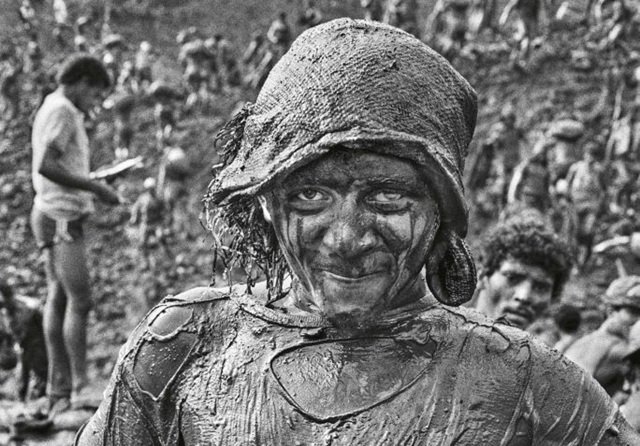
The epicentre of this debate is Brazil, which holds about 23% of known rare-earth reserves but produces roughly 1% of global output and lacks an integrated processing chain that runs from separation through metal and alloy production to permanent magnet manufacturing. At the Pela Ema mine in Goiás, the Serra Verde Group produces a mixed rare-earth carbonate. The difficult and profitable stages take place abroad. Brazil keeps the excavation, some jobs and taxes, and the environmental liabilities while higher-value production, patents, and strategic control leave the country.
This is why the proposed acquisition of Serra Verde by US-backed USA Rare Earth matters. The deposit contains dysprosium and terbium, indispensable for high-performance magnets used in electric motors and military systems. US financing and purchase commitments turn the acquisition into more than a private transaction: it is part of a state-directed attempt to construct a supply chain that excludes China. Around the mine, rural and quilombola communities face polluted streams, threats to their land, and mining claims that menace agrarian-reform settlements. A mineral cannot be called ‘green’ when its costs are transferred to the people who live above it.
Brazil’s answer cannot be a simple change of customer. Cooperation with China, the United States, or Europe should be judged by what knowledge and capacity remain in Brazil, not by the nationality of the buyer. Certain basic rules must apply:
- Public control over geological information and strategic deposits.
- Public finance through the Brazilian Development Bank (BNDES).
- Public investigation of the ecological impact, including environmental licensing to examine cumulative watershed impacts.
- Indigenous, quilombola, and local agrarian communities must have enforceable rights to free, prior, and informed consultation.
- Scrutiny of foreign takeovers of mines.
- Technology transfer requirements written into contracts.
- Research led by Brazilian universities and public research institutes.
- Mandatory domestic separation and refining of the ore.
- Regional cooperation to build scale in batteries, chemicals, machinery, magnets, and recycling.
The countries of the South must reject the false choice between serving a Chinese-centred chain and entering a US-controlled one. Social movements must fight for popular sovereignty, which would require that these arrangements be made with public companies, through public institutions, with transparent mandates, common environmental standards, and shared research. The extraction of metals and minerals must be planned for socially necessary uses and not by the dictates of luxury consumption and permanent war.
The deepest vulnerability exposed by the mineral contest is not dependence on one country. It is the subordination of life to supply chains governed elsewhere. The Trump Corollary promises to secure the hemisphere and its wealth for the United States. A people’s doctrine would secure natural resources for the benefit of those who live on the land, prioritising electricity before exports, water before waste, knowledge before royalties, and sovereignty before alignment. The wealth beneath the soil must become visible in schools, hospitals, research centres, laboratories, restored ecosystems, and dignified lives – a future that cannot be shipped away in sacks of concentrate.
In 1904, the Nicaraguan poet Rubén Darío wrote ‘A Roosevelt (To Roosevelt)’. Addressed to US President Theodore Roosevelt, the poem is a powerful indictment of imperialismo yanqui (Yankee imperialism). The stanzas below allude to Victor Hugo’s 1872 ‘Le Message de Grant’ (Grant’s Message), in which Hugo writes to US President Ulysses S. Grant that the US flag, ‘sown with stars’, is ‘obscured’ with a ‘stain of mud’ (tache de boue):
| Los Estados Unidos son potentes y grandes. Cuando ellos se estremecen hay un hondo temblor que pasa por las vértebras enormes de los Andes. Si clamáis, se oye como el rugir del león. Ya Hugo a Grant le dijo: “Las estrellas son vuestras”. (Apenas brilla, alzándose, el argentino sol y la estrella chilena se levanta…) Sois ricos. Juntáis al culto de Hércules el culto de Mammón; y alumbrando el camino de la fácil conquista, la Libertad levanta su antorcha en Nueva York. | The United States is powerful and great. When it shudders, a deep tremor runs through the enormous vertebrae of the Andes. If you cry out, it sounds like a lion’s roar. Hugo already told Grant: ‘The stars are yours’. (The Argentine sun, now dawning, has hardly begun to shine, and the Chilean star now rises…) You are rich. You worship Hercules and Mammon alike; and lighting the path of easy conquest, Liberty raises her torch in New York. |