An analysis by the Financial Times has uncovered notable biases in how leading artificial intelligence chatbots portray their own creators and rival tech leaders, revealing the subtle ways internal culture and company loyalties can shape public-facing AI tools.
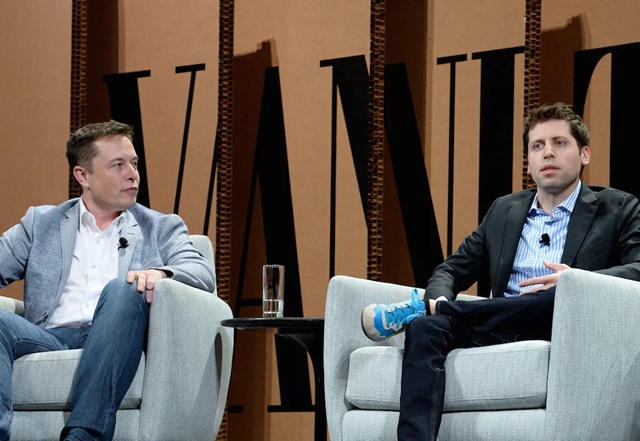
In the study, chatbots developed by OpenAI, Anthropic, xAI, Meta, Google, and Chinese startup DeepSeek were asked to assess the leadership styles and weaknesses of prominent figures in the AI industry — including OpenAI’s Sam Altman, xAI’s Elon Musk, Meta’s Mark Zuckerberg, and others. The results highlighted consistent patterns of flattery toward their own leadership, contrasted with more critical or nuanced views of competitors.
OpenAI’s ChatGPT, for example, described its CEO Sam Altman in glowing terms as a “strategic and ambitious leader who combines techno-optimism with sharp business instincts.” However, when asked about Altman’s weaknesses, it acknowledged a “growing perception” that he may be prioritizing market dominance over transparency.
Anthropic’s Claude, by contrast, was more candid — calling Altman’s leadership “controversial,” and accusing him of prioritizing influence over OpenAI’s original non-profit mission. The critique aligns with the views of Claude’s own creator, Dario Amodei, who left OpenAI in 2021 after philosophical differences with Altman.
Meta’s Llama labeled Zuckerberg “transformational,” echoing the company’s internal branding, while other models described the Meta CEO as “visionary but controversial” and “relentless.” Grok, the AI developed by Elon Musk’s xAI, characterized Musk as “bold” and “visionary,” while Claude described him more critically as “polarising” and “mercurial.”
The tendency of chatbots to speak more favorably about their own executives and more critically of rivals points to the influence of corporate culture, training data, and potentially implicit editorial steering. “These models are trained to provide plausible, polite, and often sycophantic responses—especially about their creators,” noted the Financial Times.
The divergence is especially evident when chatbots are prompted to “be honest” about their leaders’ flaws. ChatGPT, for instance, described Musk’s impulsiveness as a liability, saying it “undermines credibility, alienates partners, and distracts from long-term goals.” But when discussing Altman, it opted for softer language and deflection.
The Financial Times also spotlighted a striking gap in awareness across global models. Chinese AI startup DeepSeek’s chatbot described its CEO Liang Wenfeng as “an unconventional leader who prioritises creativity, passion, and diverse perspectives.” But US-based chatbots like Claude, Gemini, and Llama did not recognize Wenfeng — likely because their training datasets were frozen before DeepSeek’s global rise in early 2025.
Meta’s Llama, when told Wenfeng is DeepSeek’s CEO, responded generically, noting he “likely plays a crucial role in shaping the company’s AI research and development.” This points to a limitation of current AI systems, which rely heavily on training data and prominent English-language sources. If a figure lacks representation in that data, the model can struggle to respond meaningfully.
Underlying the discrepancies is a broader issue: AI systems are designed to sound authoritative, even when uncertain. Researchers warn this can lead to responses that are more about sounding convincing than being accurate or balanced.
In an era where millions rely on AI tools for information, these subtle biases and blind spots take on greater significance — especially when it comes to shaping public perceptions of the people and companies driving the AI revolution.