Less than a year ago, Texas Governor Greg Abbott was presenting his state as a destination for the technology industry. On November 14, 2025, the Republican governor described Texas as “the epicentre of AI development”, shortly after Google announced plans to invest $40 billion in the state, primarily in data centres for artificial intelligence.
Nine months later, Abbott was attacking the same industry he had promoted. “They basically dug their own grave,” the 68-year-old Republican said of the technology companies. “And that’s why they’ve earned the backlash they’ve gotten.”
The reversal captures a striking shift taking place across the United States. Google, Amazon, OpenAI and Meta are among the companies confronting growing resistance to the construction of hundreds of data centres, some of them enormous facilities intended to support the development of AI. The opposition is no longer confined to small local campaigns. It has become a national political issue, drawing in governors, members of Congress and voters from both major parties.
David S. Meyer, a protest researcher at the University of California in Irvine, said data centres had become symbols of broader public anxiety. “These data centres embody all kinds of fears and discontent about AI and the technology industry,” he said.
The scale of the change is reflected in national polling. In August 2025, 43 per cent of voters supported the construction of data centres in their communities, while 42 per cent opposed them. A year later, only 15 per cent supported such projects, while 75 per cent opposed them. Opposition is strongest among Democratic voters, but Republican voters, who had predominantly supported data centres a year earlier, now reject them by a large majority.
The political consequences are becoming increasingly visible. Data centres are emerging as an issue in the midterm elections on November 3, when governors will be elected in 36 states and voters will also determine whether Donald Trump retains Republican majorities in both chambers of the US Congress. Numerous members of the House of Representatives, senators and governors have shifted their positions as concern over the projects has grown.
Abbott has moved sharply. He recently accused technology companies of building too quickly while failing to secure support from local communities. At the beginning of the month, he announced that new data centres would temporarily be prevented from connecting to the electricity grid until authorities assessed their effects on power supplies and grid stability. Projects that fail those assessments, he warned, would not receive grid connections. Abbott said, “My directive has stopped up to 1800 projects.”
The political pressure extends even into traditionally Republican Texas. Some long-standing Republican voters are considering supporting Abbott’s Democratic opponent, Gina Hinojosa, who is calling for a comprehensive moratorium on data centres. A Fox News poll conducted at the end of July placed Hinojosa only one percentage point behind Abbott, an extraordinary position in a state traditionally regarded as a Republican stronghold.
The Senate contest in Texas is also closely watched. Fifty-one per cent of respondents said they intended to support Democratic candidate James Talarico, compared with 48 per cent for his Republican rival Ken Paxton. The result could help determine whether Democrats take control of the US Senate and gain the ability to mount serious opposition to Trump.
The concerns driving voters are varied. Some fear that AI will eventually cost them their jobs. Others worry about noise from data centres and its possible effects on health. Large numbers are concerned that the facilities consume substantial quantities of electricity and water, potentially increasing scarcity and costs. Residents also fear that giant industrial sites could make their neighbourhoods less pleasant or reduce property values. Above these individual concerns sits a broader frustration with the power of Big Tech companies.
Meyer said data centres provided a tangible target for local opposition. “Data centres are concrete targets that you can fight locally,” he said. “It’s very difficult to stand up against Amazon. Unless they’re building in your neighbourhood.”
That local resistance is now producing policy changes. In New York, Democratic Governor Kathy Hochul imposed a moratorium in July, suspending environmental approvals for new large data-centre projects with a capacity of at least 50 megawatts until mid-2027. “Progress should not come with a higher electricity bill, depleted water supplies or noise pollution,” Hochul said.
In Pennsylvania, Democratic Governor Josh Shapiro, who had previously actively courted data centres, has introduced strict approval requirements. Legislatures in more than a dozen other states have considered bills proposing moratoriums or outright bans, while more than 500 municipalities and counties have introduced measures against new data centres, including Indianapolis and Oklahoma City.
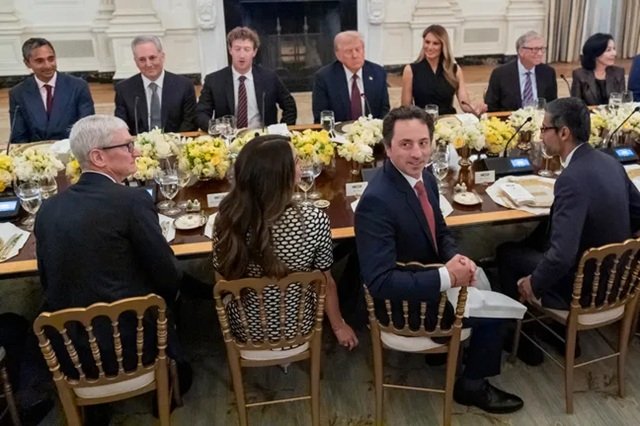
The resistance presents a direct challenge to the strategy pursued by Trump. After taking office in January 2025, the president aligned himself with technology leaders including Meta founder Mark Zuckerberg, Amazon founder Jeff Bezos and Google chief executive Sundar Pichai. His administration subsequently weakened environmental requirements for data centres in the hope of generating economic growth and strengthening the US position in the global AI competition with China.
Trump continues to defend the industry. “Communities that don’t allow a data centre are making a mistake,” he said in an interview last weekend with his former lawyer Michael Cohen. He argued that the facilities create “enormous numbers of jobs and bring in a lot of money”.
Yet the employment benefits are disputed within the source material. Once operational, data centres generally function with little human involvement beyond a few dozen technicians and security personnel. A study by the Washington-based Brookings Institution found that data centres often create fewer jobs than the industry had previously promised. In some areas, technology companies also pay little tax after local and regional authorities offered tax incentives to attract their investment.
The backlash has reached even Florida, Trump’s political home state. In Palm Beach County, which includes Trump’s Mar-a-Lago residence, the county commission rejected “Project Tango” in mid-July. The proposal involved converting and expanding a local commercial area into a “hyperscale AI campus” containing a huge data centre.
The confrontation now exposes a fundamental divide over the physical costs of the AI race. Trump wants the United States to dominate the global AI industry. Local communities are demanding affordable electricity, secure water supplies and peace in their homes. The rapid expansion of AI may depend on infrastructure that voters increasingly view not as an abstract symbol of technological progress, but as something that directly changes the places where they live.